UC professor works to create a smartphone COVID-19 test
Aashish Priye pivoted his work to focus on the pandemic


Aashish Priye, a University of Cincinnati assistant professor of chemical engineering, has spent much of his research career developing a smartphone diagnostic device for the rapid detection of viruses.
When the novel coronavirus emerged, Priye turned his focus toward COVID-19. Priye and the UC students in his lab are exploring a smartphone-based DNA analyzer that could allow a user to test themselves at home.
Priye is focused on perfecting a process known as LAMP — loop-mediated isothermal amplification — as a potential alternative to the current process of pathogen detection called polymerase chain reaction (PCR), which has been used for more than 30 years and is mostly done in a lab.
“Today’s gold standard PCR system is a bulky machine that uses a lot of power — we know this can be improved,” Priye said. “Our work is curiosity driven — we aim to create the next generation of microfluidic devices using rapid micro-fabrication techniques.”
Priye is heading up one of 13 research teams, each awarded a phase-one $10,000 planning grant last year in the Digital Futures Anchor Development Program from the UC Office of Research. The anchor teams will carry on their research inside the new Digital Futures space, when it opens in 2022.
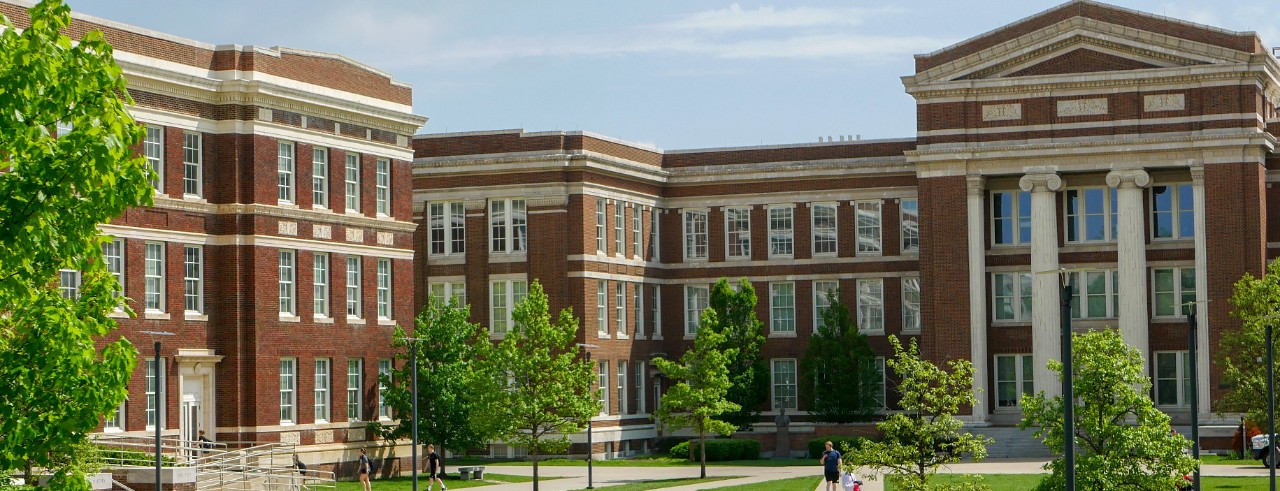
Featured image at top: Baldwin Quad on UC's campus. Photo/Corrie Mayer/CEAS Marketing.
Related Stories
UC Foundation reveals 2025 philanthropy winners
October 27, 2025
The University of Cincinnati Foundation recognized its Outstanding Philanthropic Volunteer Award honorees at the George Rieveschl Recognition Dinner on Oct. 23, 2025.
Moth-like drone navigates autonomously without AI
October 22, 2025
Engineering researchers at the University of Cincinnati developed a moth-like drone that flies autonomously using extremum-seeking feedback systems instead of artificial intelligence. The research could help explain how tiny insects with small brains are such adroit flyers.
UC, Cincinnati Children's partnership lands $37.2M in federal funding
October 21, 2025

The Center for Clinical & Translational Science & Training, a partnership between the University of Cincinnati and Cincinnati Children’s Hospital, has received a seven-year, $37.2 million grant renewal from the National Center for Advancing Translational Sciences at the National Institutes of Health to help further biomedical research and innovation.