The Atlantic: The breathtaking ingenuity of incarcerated artists

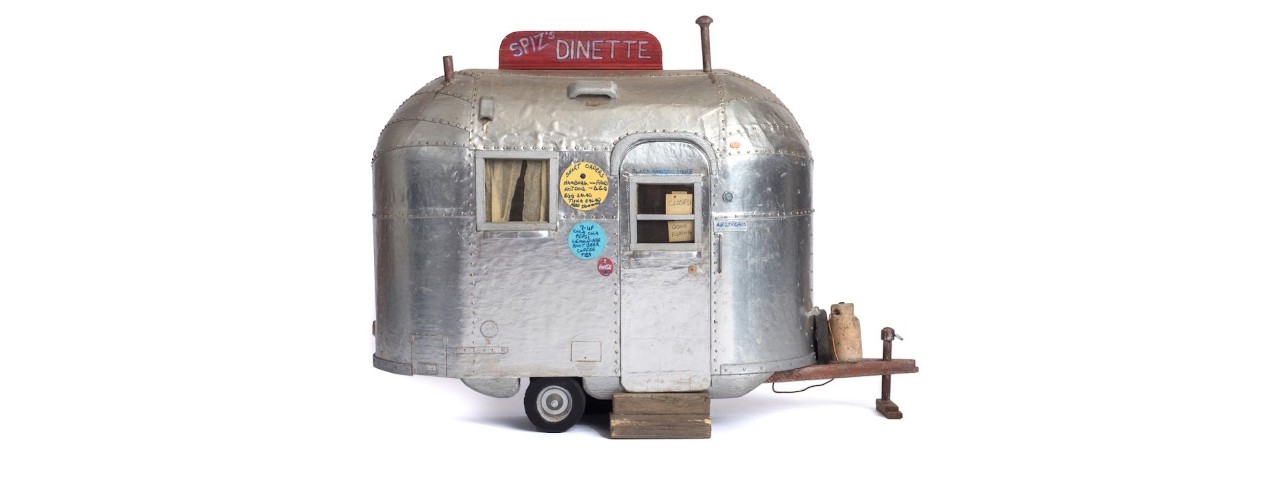
Spiz’s dinette, a toaster-size trailer with a propane tank no bigger than your thumb, was painstakingly crafted during Dean Gillispie’s years of incarceration at an Ohio prison.
Gillispie was freed thanks to UC's Ohio Innocence Project in December 2011 after serving 20 years in prison for rapes he did not do. Gillispie’s miniatures are part of an exhibition at MoMA PS1 through early April called “Marking Time: Art in the Age of Mass Incarceration,” guest-curated by Nicole R. Fleetwood, a professor at Rutgers and an activist who has written a book by the same name.
The Atlantic featured Gillispie in a Feb. 7 feature article explaining that he "constructed the silver trailer by spreading cigarette-pack foil across notebook cardboard, and used pins taken from the prison sewing shop to hold the whole structure together. The window curtains, made from used tea bags, are partially closed. A tiny sign on the trailer door reads, in nearly microscopic inky script: gone fishing."
Impact Lives Here
The University of Cincinnati is leading public urban universities into a new era of innovation and impact. Our faculty, staff and students are saving lives, changing outcomes and bending the future in our city's direction. Next Lives Here.
Related Stories
‘Designer drug’ shows early neuroprotective signal in acute ischemic stroke
October 28, 2025

Medscape highlighted new trial results led by the University of Cincinnati's Eva Mistry that found an experimental drug shows promise in protecting injured brain cells for patients with acute ischemic stroke.
Meet the young talent reshaping Cincinnati’s startup scene
October 28, 2025
Five University of Cincinnati students were honored for their impactful entrepreneurship on the Cincy Inno Under 25 list. We’ll explain what makes each student – and their startup – stand out.
Is menstrual fluid ‘the most overlooked opportunity’ in women’s health?
October 27, 2025

The Guardian recently reported that period blood has long been thought of as ‘stinky and useless’, but startups are exploring using the fluid to test for a wide range of health conditions — including endometriosis.