UC stroke researchers integral to MOST clinical trial
Trial data published in New England Journal of Medicine

Adding blood thinners to clot-busting medications to treat ischemic strokes did not improve long-term outcomes, according to new research published Sept. 4 in the New England Journal of Medicine, coauthored by University of Cincinnati researchers.
The majority of strokes are caused by blood clots preventing oxygen from reaching the brain. Blood clots in smaller brain vessels can only be treated with a singular clot-busting medication.
Following pioneering work completed by UC stroke researchers over the last 20 years, the trial examined if an additional medication can help break up blood clots better than the standard clot busting agent alone.
The MOST clinical trial tested the effect of additional blood thinners (argatroban and eptifibatide) to see if their additional use could improve patient outcomes. All patients received standard of care clot-busting medications and then were randomly selected to receive one of two additional therapies or to receive a placebo infusion.
The study had an adaptive design that called for an independent review of outcomes after the first 500 out of a planned 1,200 participants were enrolled. The trial was stopped after the first 500 patients, because early results showed it was highly unlikely that the extra blood thinners could lead to better patient outcomes if the research continued.
“I think this study was well-designed and the answers were definitive,” said coauthor Stacie Demel, DO, PhD, associate professor in UC’s College of Medicine and a UC Gardner Neuroscience Institute physician. “Thankfully the addition of these medications did not cause harm to patients, but we know now that they did not help patients either. As a field, we now have an answer to the question that we’ve been asking for years.”
Demel noted the standardization of endovascular therapy (EVT) in addition to clot-busting medications just prior to the start of the trial may have contributed to the outcome. EVT is a minimally invasive stroke procedure that removes blood clots from large vessels in the brain.
“I think it is getting harder to show benefit of anything more effective than EVT,” Demel said. “EVT is really good at taking clots out, restoring and reperfusing the brain. It’s hard to show something more effective than that.”
Former UC faculty member Opeolu Adeoye, MD, now BJC HealthCare professor and chair in the Department of Emergency Medicine at Washington University School of Medicine in St. Louis, was lead author of the published research. Other UC coauthors on the research include Joseph Broderick, Pooja Khatri, Arthur Pancioli, Achala Vagal, Melissa Hoffman, Iris Davis and Noor Sabagha.
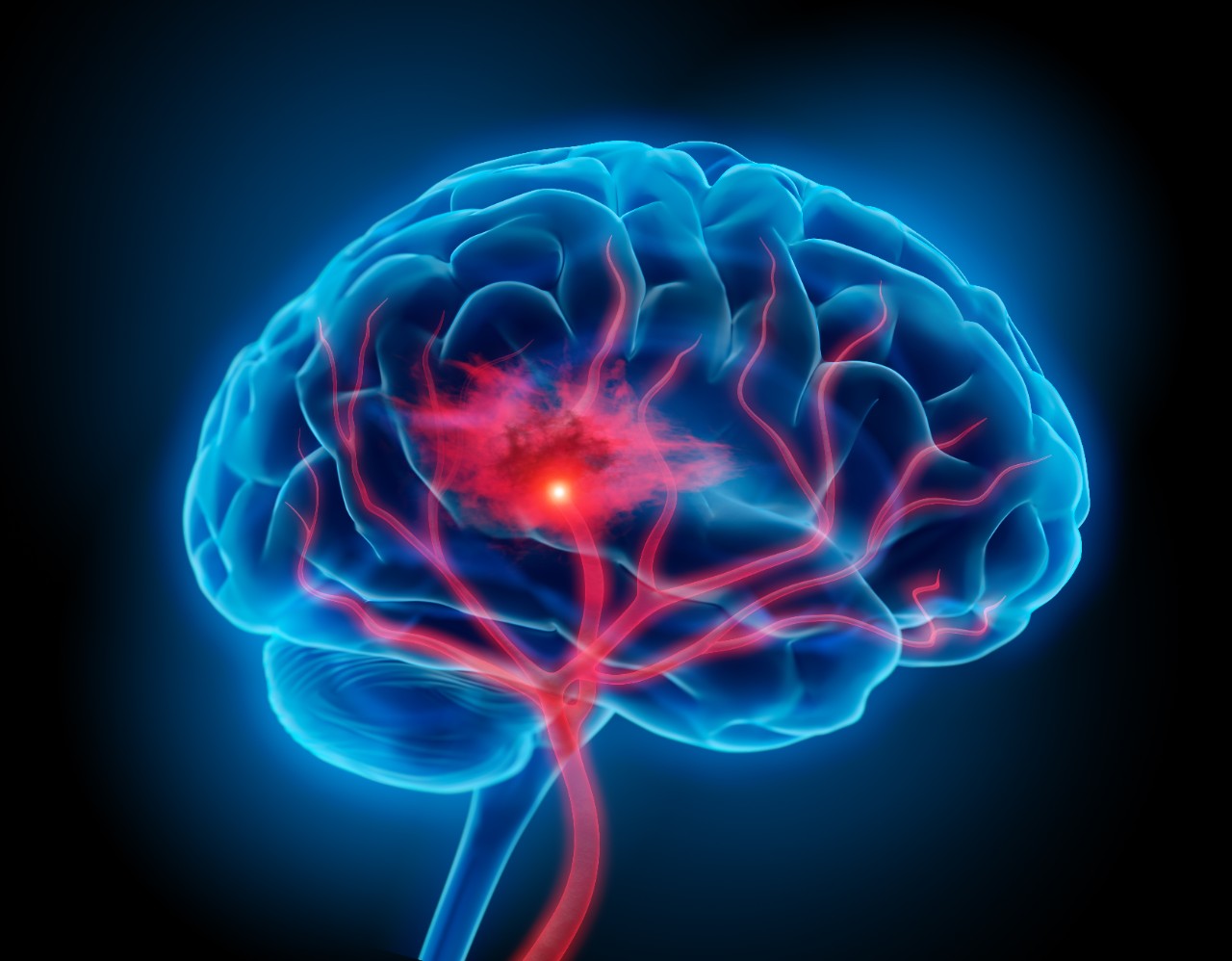
Featured photo at top of illustration of brain with stroke symptoms. Photo/PeterSchreiber.media/iStock.
Related Stories
‘Designer drug’ shows early neuroprotective signal in acute ischemic stroke
October 28, 2025

Medscape highlighted new trial results led by the University of Cincinnati's Eva Mistry that found an experimental drug shows promise in protecting injured brain cells for patients with acute ischemic stroke.
UC Board votes to fund design for YMCA renovation
October 28, 2025
At its October 28, 2025 meeting, the University of Cincinnati Board of Trustees approved $5 million in funding to complete all design and pre-construction services required to renovate the interior of a former YMCA building located at 270 Calhoun Street.
Is menstrual fluid ‘the most overlooked opportunity’ in women’s health?
October 27, 2025

The Guardian recently reported that period blood has long been thought of as ‘stinky and useless’, but startups are exploring using the fluid to test for a wide range of health conditions — including endometriosis.