Removing cancer without a stitch
Cancer Center expert featured in Memphis, Tennessee news report

The University of Cincinnati Cancer Center's Moamen Gabr, MD, was featured in a news report from Memphis, Tennessee television station Action News 5 discussing endoscopic submucosal dissection, a new approach to remove certain gastrointestinal tumors without surgery.
In the procedure, a thin, flexible scope with tiny tools and a camera is inserted through the mouth or rectum. When it reaches the tumor, a special fluid is released to lift the cancerous lesion away from healthy tissue. Then, doctors can safely peel away the tumor from the deeper lining of the digestive tract.
“We’re cutting through all the lateral margins until that whole precancerous area is removed,” explained Gabr, a Cancer Center physician and associate professor in UC's College of Medicine. “The key advantage is that we’re keeping that organ in place, no incisions from the outside, and no one likes to have an incision, even small ones."
Gabr stressed the key to make this method more widespread and useful is early detection of GI cancers.
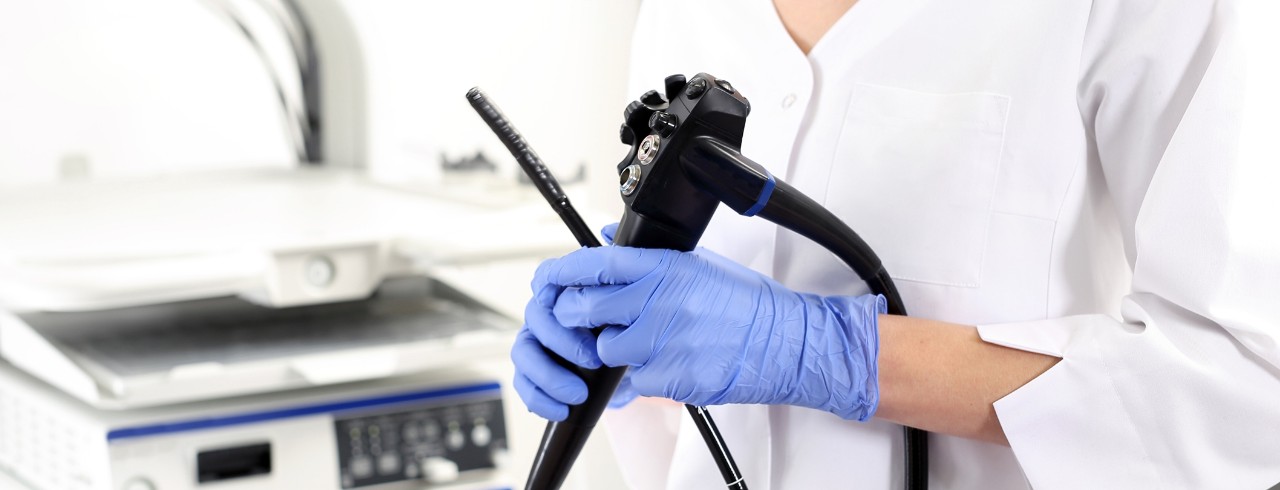
Featured photo at top of a medical professional holding a colonoscope. Photo/robertprzybysz/iStock.
Related Stories
UC launches Bearcats Affordability Grant
January 7, 2026
The University of Cincinnati is making college more attainable for students across Ohio with the creation of the Bearcats Affordability Grant. The new grant will provide a pathway to tuition-free college for students of families who make less than $75,000 per year. Beginning in fall 2026, the Bearcats Affordability Grant will cover the remaining cost of tuition for Ohio residents who are Pell eligible.
BearcatGPT AI platform now available to all UC faculty and staff
December 9, 2025
University of Cincinnati Digital Technology Solutions is excited to announce that BearcatGPT, the university’s private, secure AI platform, is now available to all UC faculty and staff.
‘Designer drug’ shows early neuroprotective signal in acute ischemic stroke
October 28, 2025

Medscape highlighted new trial results led by the University of Cincinnati's Eva Mistry that found an experimental drug shows promise in protecting injured brain cells for patients with acute ischemic stroke.