Cincinnati Enquirer talks about mosquito risk with UC expert
UC biology professor Joshua Benoit says heavy rain isn't always best predictor for mosquito season

This spring's heavy rains are not necessarily a harbinger of a summer plague of mosquitoes, University of Cincinnati biologist Joshua Benoit told The Cincinnati Enquirer.
The Enquirer turned to Benoit to see if the near-record wet spring will mean lots of mosquitoes at summer barbecues and backyard events.

UC associate professor of biological sciences Joshua Benoit says wet weather can create more breeding pools for mosquitoes. Photo/Andrew Higley/UC Creative Services
"People have always said, 'If there's a lot more rainfall, there's a lot more mosquitoes,'" Benoit told The Enquirer. "If you get too much rainfall or too little rainfall, it can be bad on both ends."
Benoit said some mosquitoes that prefer to breed in storm drains will be unsuccessful with a deluge from new storms. But standing water around homes can give mosquitoes more places to breed.
Benoit has been studying mosquitoes in his biology lab in UC's McMicken College of Arts and Sciences.
One of his recent studies, published last year in the Nature journal Scientific Reports, found that mosquitoes will bite you just to quench their thirst, not just when seeking a blood meal to lay eggs.
This means that droughts, too, can pose a challenge for health officials who are trying to combat mosquito-borne illness.
Mosquito experts say one way to reduce mosquito popuplations is to remove standing water from sources as small as flower pots around the home to give the pests fewer places to breed.
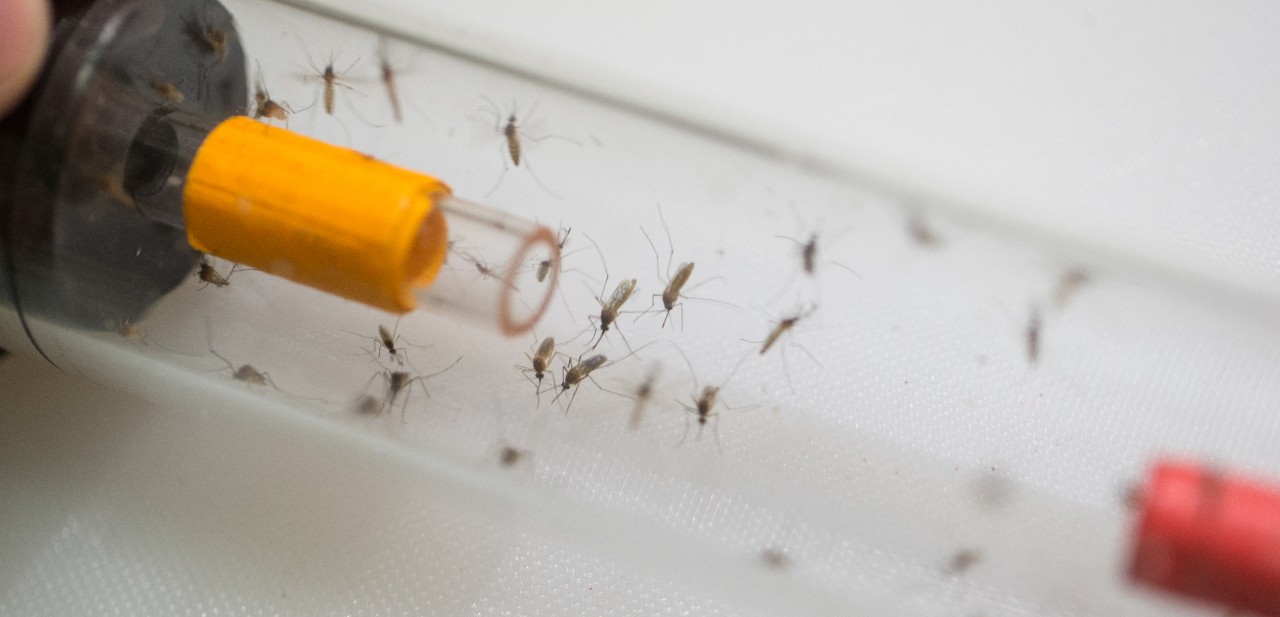
Featured image at top: A vial of mosquitoes in a UC biology lab. Photo/Andrew Higley/UC Creative Services
Related Stories
UC Foundation reveals 2025 philanthropy winners
October 27, 2025
The University of Cincinnati Foundation recognized its Outstanding Philanthropic Volunteer Award honorees at the George Rieveschl Recognition Dinner on Oct. 23, 2025.
UC team unveils Wyandot Removal Trail across Ohio
October 24, 2025

Rebecca Wingo, an associate professor of history and director of the public history program in the University of Cincinnati’s College of Arts and Sciences, is featured in a WVXU story about new historical markers honoring the Wyandot people—the last Indigenous nation forcibly removed from Ohio.
John Updike called his letters dull. They’re anything but.
October 23, 2025

James A. Schiff, founding editor of The John Updike Review and UC English professor, edited Selected Letters of John Updike, the first comprehensive collection of the author’s correspondence. Drawing from thousands of letters spanning Updike’s life, Schiff offers new insight into the writer’s personal and literary world. The volume was edited by The New York Times.