WLW: UC geologist explains risks of supervolcanoes
Geology professor Thomas Algeo talks to "Eddie & Rocky" about Yellowstone's caldera


UC geology professor Thomas Algeo has been studying the world's biggest mass extinctions. Photo/Joseph Fuqua II/UC Creative Services
The "Eddie and Rocky" show on 700-WLW talked to University of Cincinnati geologist Thomas Algeo about the supervolcano in the heart of Yellowstone National Park.
An op-ed about the volcano by author Bryan Walsh in The New York Times has generated a lot of social media discussion this month about the looming existential threat to human life on Earth.
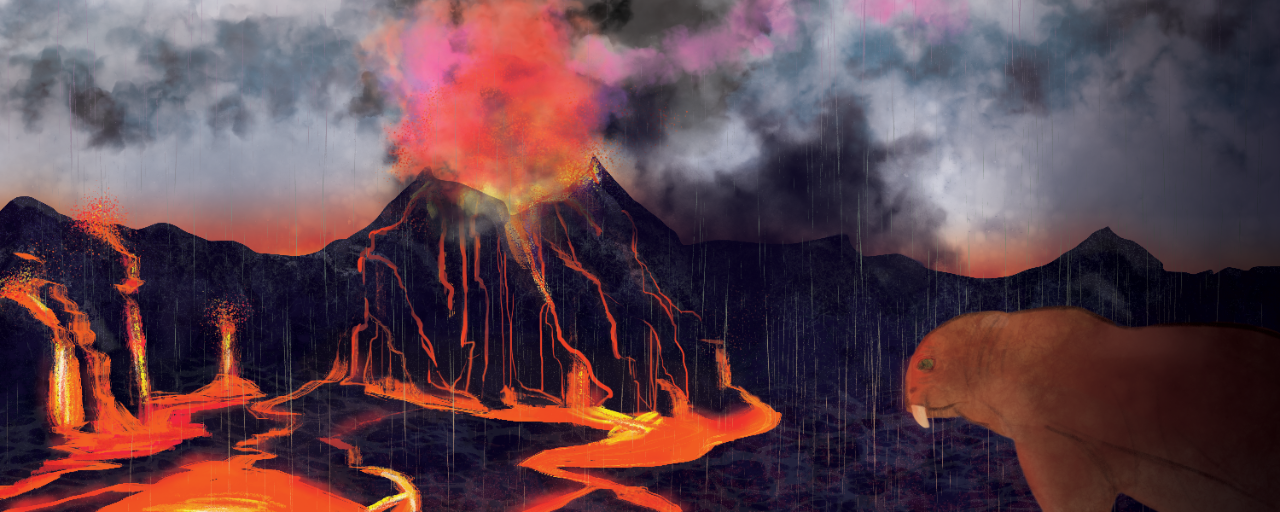
Algeo has studied the world's biggest mass extinctions, including "the Great Dying" 252 million years ago that wiped out 95 percent of life on Earth. In a study published this year in the journal Nature Communications, Algeo found evidence that the extinction was caused by intense volcanic activity over hundreds of thousands of years.
Algeo said the historical eruptions at Yellowstone have been 1,000 times bigger than the 1980 eruption of Mount St. Helens in Washington that sent ash raining down hundreds of miles away.
"In the last 2 million years there have been three major eruptions of this volcano at intervals of 600,000 years. And the last major eruption was about 600,000 years ago," Algeo said. "In a geological sense, we're ready for another big eruption. But it doesn't happen like clockwork."
Algeo, a professor in UC's McMicken College of Arts and Sciences, said nobody knows for sure when Yellowstone's caldera might pose an imminent risk, but it will give us ample warning.
"There will be a lot of inflation of the magma chamber before it blows," he said. "If you ask me the probability of it happening tomorrow, it's effectively zero. But if you talk the next 100,000 years, it's almost a certainty."
Featured image at top: An illustration of life 252 million years ago when volcanic activity wiped out most life on Earth. Most of the big animals that pre-dated dinosaurs went extinct. Illustration/Margaret Weiner/UC Creative Services
Related Stories
UC Foundation reveals 2025 philanthropy winners
October 27, 2025
The University of Cincinnati Foundation recognized its Outstanding Philanthropic Volunteer Award honorees at the George Rieveschl Recognition Dinner on Oct. 23, 2025.
UC team unveils Wyandot Removal Trail across Ohio
October 24, 2025

Rebecca Wingo, an associate professor of history and director of the public history program in the University of Cincinnati’s College of Arts and Sciences, is featured in a WVXU story about new historical markers honoring the Wyandot people—the last Indigenous nation forcibly removed from Ohio.
John Updike called his letters dull. They’re anything but.
October 23, 2025

James A. Schiff, founding editor of The John Updike Review and UC English professor, edited Selected Letters of John Updike, the first comprehensive collection of the author’s correspondence. Drawing from thousands of letters spanning Updike’s life, Schiff offers new insight into the writer’s personal and literary world. The volume was edited by The New York Times.