Mongabay: Forest loss moves swiftly at 50% deforestation 'tipping point'
UC geography professor Tomasz Stepinski found that landscapes trend toward homogeneity over time

The nonprofit conservation news service Mongabay was among the many news outlets around the world that examined University of Cincinnati research showing a "tipping point" for deforestation.
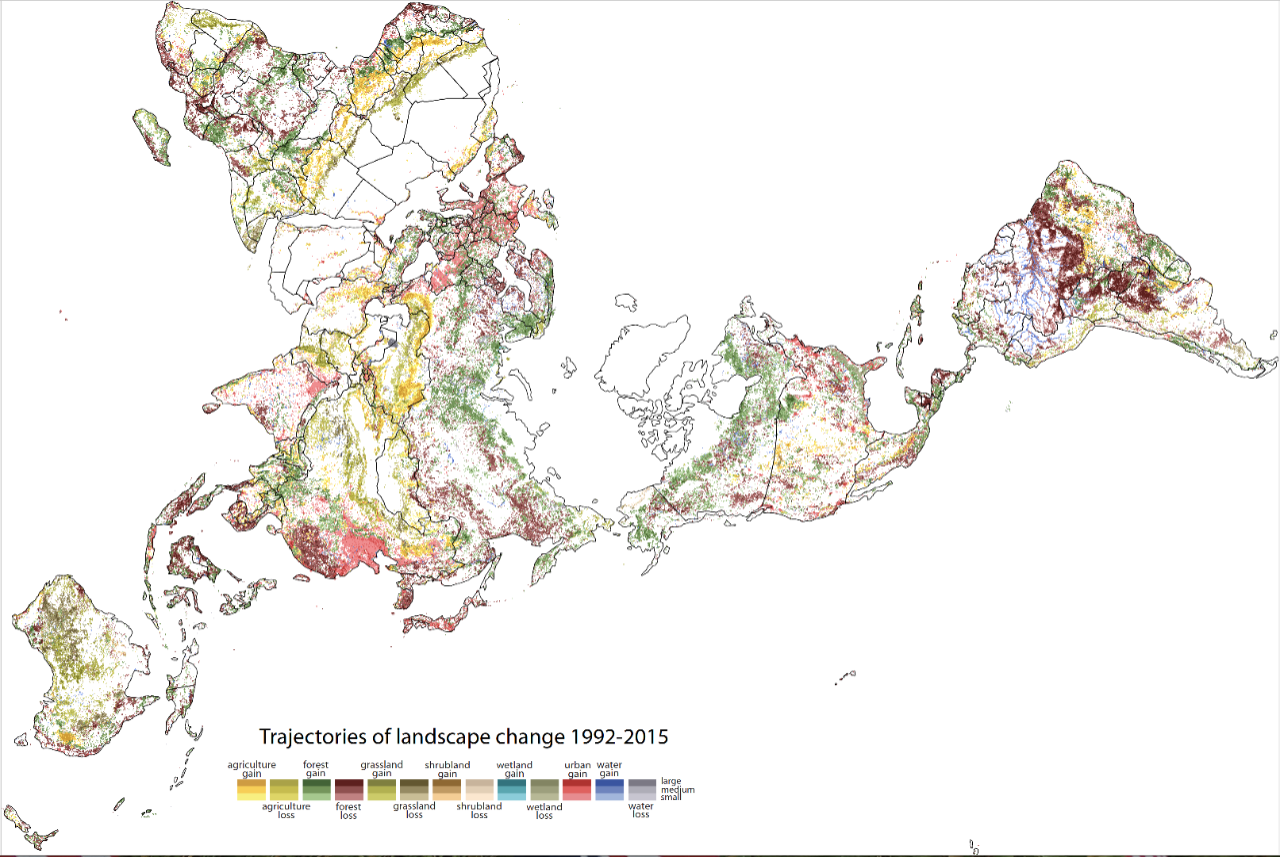
Geography professor Tomasz Stepinski in UC's College of Arts and Sciences used high-resolution satellite images from the European Space Agency to study landscapes in 9-kilometer-wide blocks across every inch of the planet between 1992 and 2015. He found that deforestation occurs comparatively slowly in these blocks until about half of the forest in a block is gone. Then the remaining forest disappears very quickly.
The study was published in the journal Geophysical Research Letters.
Stepinski also observed an intriguing phenomenon in the way people are changing the planet. His research showed that very few blocks were mixed landscapes such as forest and agriculture or agriculture and urban development. And those that were mixed didn't stay mixed for long.
"Planet Earth wants to be homogeneous. The land wants to be the same in all these patches," Stepinski said. "And when they start to change, they don't stop until they convert everything into another homogeneous block."
UC geography research in the news
- ZME Science: There's a deforestation 'tipping point' past which trees disappear quickly
- Environmental News Network: UC Study Finds Tipping Point in Deforestation
- Ecoticias (Spain): Geographers find point of no return for deforestation
- Outlook India: Landscape change may happen very rapidly after forests lose half their cover
- Inside Ecology: Study finds tipping point in deforestation
- Futura Sciences (France): Deforestation: An identified point of no return
- Science Daily: Geographers find tipping point in deforestation
- Daily Excelsior (Kashmir): Landscape change may happen very rapidly after forests lose half their cover
Featured image at top: UC geography professor Tomasz Stepinski used satellite images to track landscape change across the planet from 1992 to 2015. The data shows mixed landscapes don't stay mixed for long. Graphic/Tomasz Stepinski

UC professor Tomasz Stepinski creates maps that change the way we think about the world. Photo/Andrew Higley/UC Creative Services
Next Lives Here
The University of Cincinnati is classified as a Research 1 institution by the Carnegie Commission and is ranked in the National Science Foundation's Top-35 public research universities. UC's graduate students and faculty investigate problems and innovate solutions with real-world impact. Next Lives Here.
Become a Bearcat
- Apply online or get more information about undergraduate enrollment by calling 513-556-1100.
- Learn more about UC's many undergraduate and graduate programs.
Related Stories
UC Foundation reveals 2025 philanthropy winners
October 27, 2025
The University of Cincinnati Foundation recognized its Outstanding Philanthropic Volunteer Award honorees at the George Rieveschl Recognition Dinner on Oct. 23, 2025.
UC team unveils Wyandot Removal Trail across Ohio
October 24, 2025

Rebecca Wingo, an associate professor of history and director of the public history program in the University of Cincinnati’s College of Arts and Sciences, is featured in a WVXU story about new historical markers honoring the Wyandot people—the last Indigenous nation forcibly removed from Ohio.
John Updike called his letters dull. They’re anything but.
October 23, 2025

James A. Schiff, founding editor of The John Updike Review and UC English professor, edited Selected Letters of John Updike, the first comprehensive collection of the author’s correspondence. Drawing from thousands of letters spanning Updike’s life, Schiff offers new insight into the writer’s personal and literary world. The volume was edited by The New York Times.