Drug Target Review: Pinpointing function in cancer T cells could be new immunotherapy
UC research has found that increasing a certain function in cancer T cells could mean a new therapy

A previously unknown T cell mechanism that could explain the reason behind decreased immune function in cancer patients has been discovered. According to University of Cincinnati researchers, their finding may present a new immunotherapeutic target for patients with head and neck cancers.
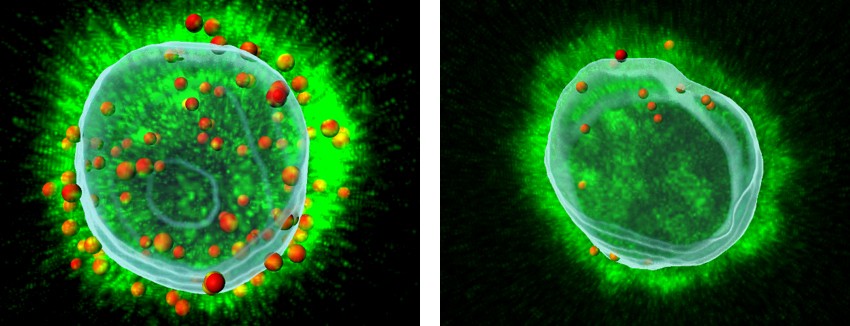
The study, led by Laura Conforti and Ameet Chimote, in the Division of Nephrology and Hypertension, UC Department of Internal Medicine, revealed that a reduced interaction between a molecule called calmodulin and the ion channel KCa3.1 in the immune cells of cancer patients plays an important role in the limited function of these cells. The team performed experiments on cytotoxic T cells taken from the blood of patients with head and neck cancer.
Featured photo courtesy of Laura Conforti and Ameet Chimote.
Related Stories
‘Designer drug’ shows early neuroprotective signal in acute ischemic stroke
October 28, 2025

Medscape highlighted new trial results led by the University of Cincinnati's Eva Mistry that found an experimental drug shows promise in protecting injured brain cells for patients with acute ischemic stroke.
Meet the young talent reshaping Cincinnati’s startup scene
October 28, 2025
Five University of Cincinnati students were honored for their impactful entrepreneurship on the Cincy Inno Under 25 list. We’ll explain what makes each student – and their startup – stand out.
UC Board votes to fund design for YMCA renovation
October 28, 2025
At its October 28, 2025 meeting, the University of Cincinnati Board of Trustees approved $5 million in funding to complete all design and pre-construction services required to renovate the interior of a former YMCA building located at 270 Calhoun Street.