Pharmacy Times: Hierarchy of breast cancer cells
UC research pinpoints hierarchy of breast cancer cells as potential cause for treatment resistance

It may take cells in different stages of development to cause breast cancer to progress and spread, according to recent University of Cincinnati research published in the journal eLife.
The findings demonstrated the importance of accounting for specific cell states present in a tumor in order to determine the appropriate combination of drugs necessary to eliminate all the cell states present and halt treatment resistance. The study was led by author Syn Yeo, PhD, research instructor in the department of cancer biology.

Syn Yeo, PhD, research instructor in the department of cancer biology at the UC College of Medicine. Photo by UC Creative + Brand.
He and other researchers noted that the variation between cell states may cause difficulties during treatment if differences in cell states are not accounted for.
"This diversity poses a problem to treating patients because particular subsets of tumor cells may be drug resistant and eventually lead to disease recurrence," says Yeo. "One of the factors contributing to this diversity is the fact that tumor cells can exist in different cellular states, ranging from more stem-like cells that can become other cell types to more differentiated cells that have been coded to serve a purpose, or do a certain 'job' within the system.”
Read the full Pharmacy Times story.
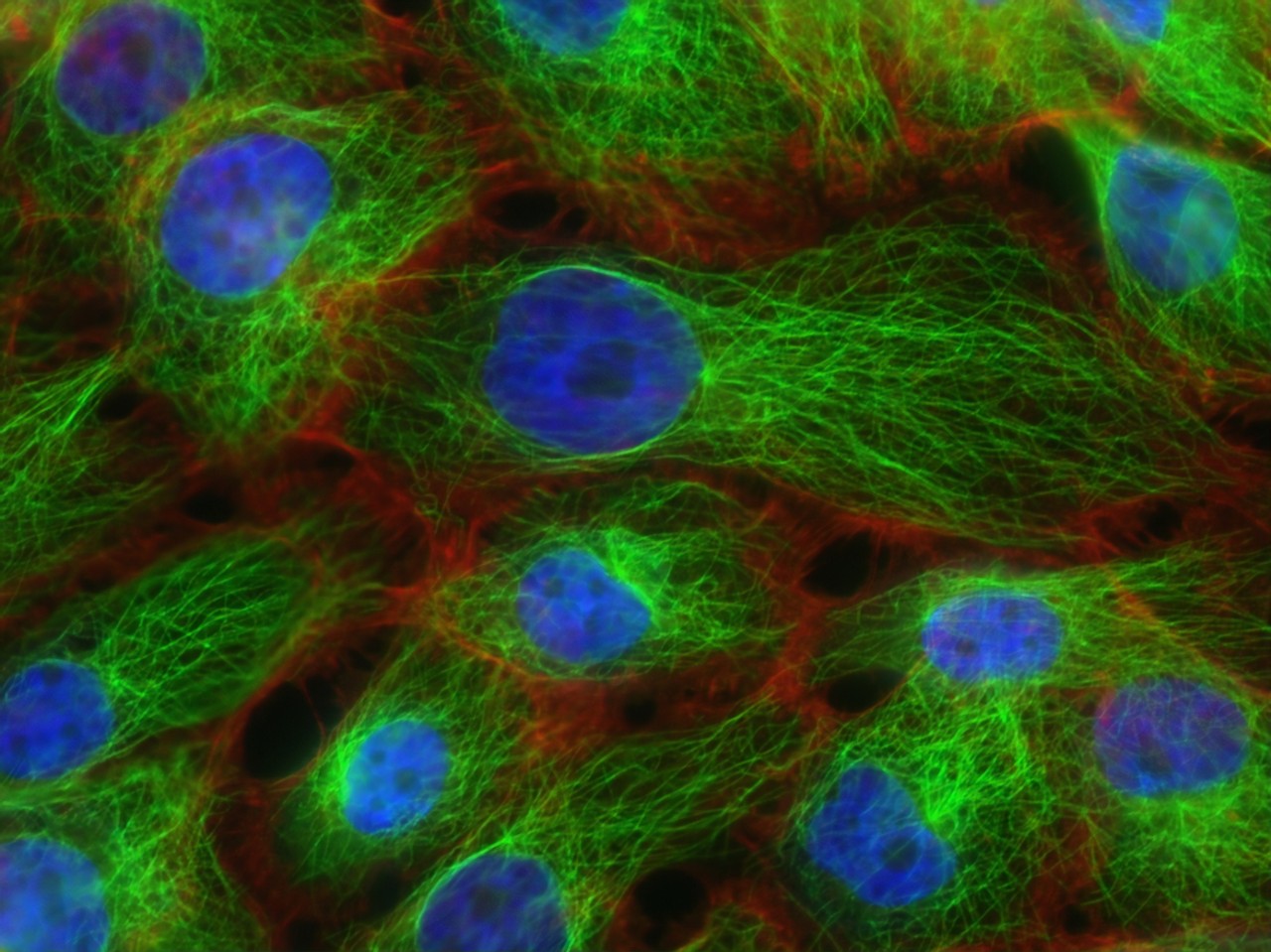
Featured photo of breast cancer cells courtesy of the National Cancer Institute.
Next Lives Here
The University of Cincinnati is classified as a Research 1 institution by the Carnegie Commission and is ranked in the National Science Foundation's Top-35 public research universities. UC's graduate students and faculty investigate problems and innovate solutions with real-world impact. Next Lives Here.
Related Stories
‘Designer drug’ shows early neuroprotective signal in acute ischemic stroke
October 28, 2025

Medscape highlighted new trial results led by the University of Cincinnati's Eva Mistry that found an experimental drug shows promise in protecting injured brain cells for patients with acute ischemic stroke.
Meet the young talent reshaping Cincinnati’s startup scene
October 28, 2025
Five University of Cincinnati students were honored for their impactful entrepreneurship on the Cincy Inno Under 25 list. We’ll explain what makes each student – and their startup – stand out.
Is menstrual fluid ‘the most overlooked opportunity’ in women’s health?
October 27, 2025

The Guardian recently reported that period blood has long been thought of as ‘stinky and useless’, but startups are exploring using the fluid to test for a wide range of health conditions — including endometriosis.