Drug Target Review: Could a nasal spray prevent COVID-19?
A UC study shows that a lipid might prevent infection and could potentially be easily administered

According to a study led by UC researchers, the lipid sphingosine may have the ability to inhibit SARS-CoV-2 infection and could potentially be delivered in a nasal spray to prevent COVID-19 infections.
Researchers, led by a visiting professor in the UC Department of Surgery Erich Gulbins, MD, have examined pre-existing research into bacterial respiratory tract infections and applied the findings to COVID-19, with some success. According to the scientists, a sphingosine nasal spray could potentially prevent or treat SARS-CoV-2 infections.
“We investigated whether a specific lipid [sphingosine] is able to interfere with the binding of SARS-CoV-2 to human epithelial cells,” said Gulbins, corresponding author on the study, published in the Journal of Biological Chemistry.
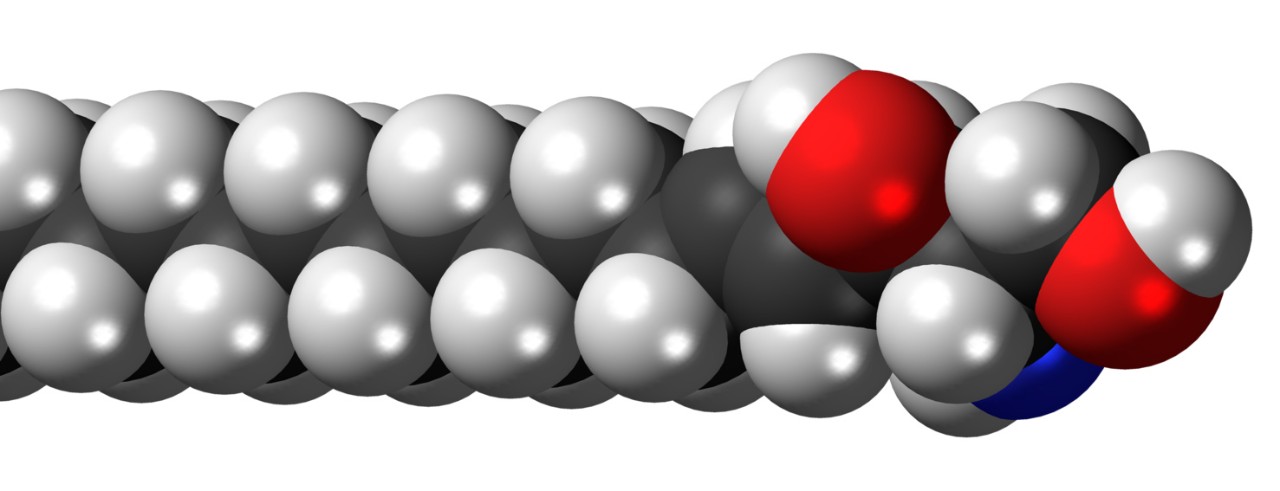
Featured photo of the lipid sphingosine courtesy of Jynto.
Next Lives Here
The University of Cincinnati is classified as a Research 1 institution by the Carnegie Commission and is ranked in the National Science Foundation's Top-35 public research universities. UC's graduate students and faculty investigate problems and innovate solutions with real-world impact. Next Lives Here.
Related Stories
‘Designer drug’ shows early neuroprotective signal in acute ischemic stroke
October 28, 2025

Medscape highlighted new trial results led by the University of Cincinnati's Eva Mistry that found an experimental drug shows promise in protecting injured brain cells for patients with acute ischemic stroke.
Meet the young talent reshaping Cincinnati’s startup scene
October 28, 2025
Five University of Cincinnati students were honored for their impactful entrepreneurship on the Cincy Inno Under 25 list. We’ll explain what makes each student – and their startup – stand out.
Is menstrual fluid ‘the most overlooked opportunity’ in women’s health?
October 27, 2025

The Guardian recently reported that period blood has long been thought of as ‘stinky and useless’, but startups are exploring using the fluid to test for a wide range of health conditions — including endometriosis.