Science News for Students: Parasite survives seal's deep dives
UC biologist Joshua Benoit explains how a tiny louse can dive deep with elephant seals

University of Cincinnati biologist Joshua Benoit explained to Science News for Students how a tiny parasite the size of a sesame seed can withstand the extreme atmospheric pressure of diving more than a mile below the ocean's surface with its host – an elephant seal.
Elephant seals are champion divers. They can hold their breath for more than 90 minutes while diving for food a mile deep. This depth would crush even many modern submarines.
But not only do the seals survive the trip, but their parasites called seal lice do as well.
The Institute of Biology of Marine Organisms in Argentina put seal lice to the pressure test under lab conditions and found that most survived pressures equal to diving 6,500 feet.
Benoit told Science News for Students that it makes sense that lice that live on seals must be evolved to go where the seals go.
Benoit has studied other "extremophiles" in Antarctica. Extremophiles are creatures that live on the fringes of what's considered possible in extreme environments. Benoit's research found that a wingless fly in Antarctica cover their eggs in a kind of antifreeze to protect them from routine freezing and thawing.
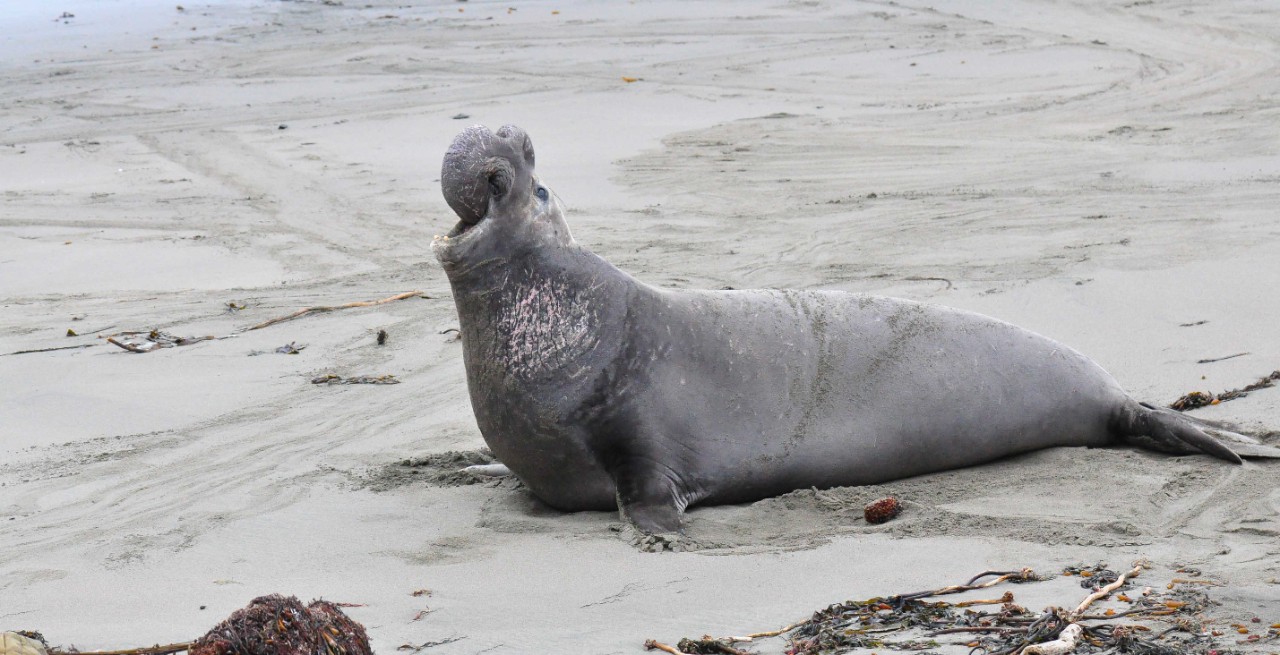
Featured image at top: A northern elephant seal. Photo/Michael Miller

UC biologist Joshua Benoit studies insects in his UC lab. Photo/Joseph Fuqua II/UC Creative + Brand
Related Stories
‘Designer drug’ shows early neuroprotective signal in acute ischemic stroke
October 28, 2025

Medscape highlighted new trial results led by the University of Cincinnati's Eva Mistry that found an experimental drug shows promise in protecting injured brain cells for patients with acute ischemic stroke.
Is menstrual fluid ‘the most overlooked opportunity’ in women’s health?
October 27, 2025

The Guardian recently reported that period blood has long been thought of as ‘stinky and useless’, but startups are exploring using the fluid to test for a wide range of health conditions — including endometriosis.
What is squalane, and how does it work to moisturize skin?
October 27, 2025

The University of Cincinnati's Kelly Dobos was featured in a Women's Health article discussing squalane, an ingredient being increasingly used in moisturizing skincare products.