Cincinnati Enquirer: UC College of Medicine launches addiction research center
The center is devoted to the science of addiction and hopes to help end stigma

A research center devoted to the science of addiction and determined to make a national impact has launched at the University of Cincinnati College of Medicine.
The UC Center for Addiction Research is an endeavor "to expand the university’s scope as a national leader in addiction science," officials said.
The center's director is Theresa Winhusen, PhD, vice chair for addiction sciences in the Psychiatry and Behavioral Neurosciences department at the UC College of Medicine.
"This is a chance to take all the work that we've been doing to the next level," says Winhusen, who's been engaged in addiction research for more than 20 years.
Read the full story. [This article is password protected.]
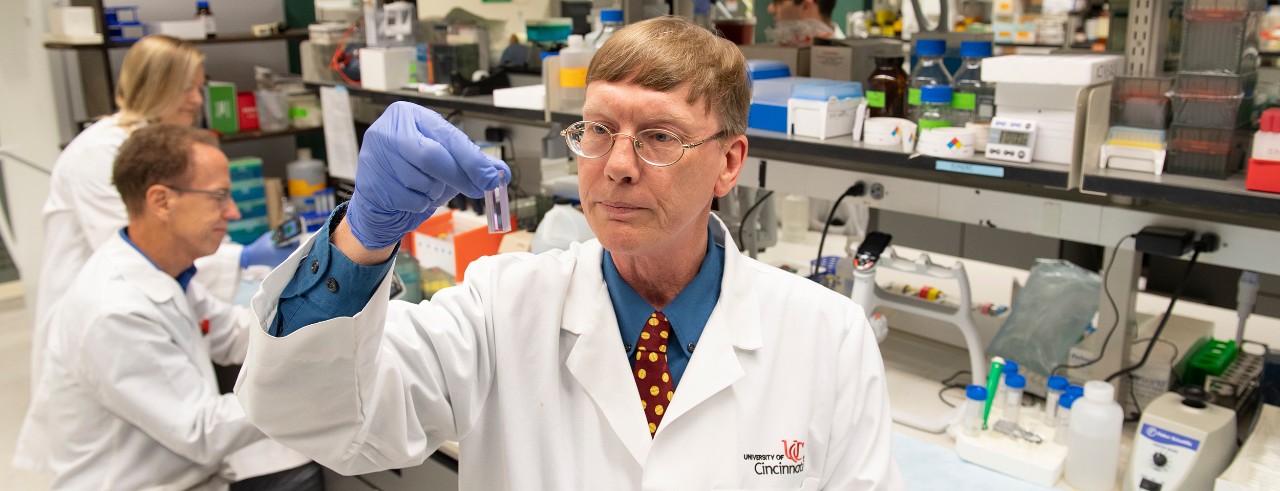
Featured photo of Andrew Norman, PhD, a leader of one of the cores of the Center for Addiction Research, in his lab. Photo credit/Colleen Kelley/UC Creative + Brand
Next Lives Here
The University of Cincinnati is classified as a Research 1 institution by the Carnegie Commission and is ranked in the National Science Foundation's Top-35 public research universities. UC's graduate students and faculty investigate problems and innovate solutions with real-world impact. Next Lives Here.
Related Stories
‘Designer drug’ shows early neuroprotective signal in acute ischemic stroke
October 28, 2025

Medscape highlighted new trial results led by the University of Cincinnati's Eva Mistry that found an experimental drug shows promise in protecting injured brain cells for patients with acute ischemic stroke.
Meet the young talent reshaping Cincinnati’s startup scene
October 28, 2025
Five University of Cincinnati students were honored for their impactful entrepreneurship on the Cincy Inno Under 25 list. We’ll explain what makes each student – and their startup – stand out.
Is menstrual fluid ‘the most overlooked opportunity’ in women’s health?
October 27, 2025

The Guardian recently reported that period blood has long been thought of as ‘stinky and useless’, but startups are exploring using the fluid to test for a wide range of health conditions — including endometriosis.