Newsweek: UC snake research fit for Halloween
UC biologist Bruce Jayne studied snakes that rip apart their prey alive

Newsweek turned to University of Cincinnati biologist Bruce Jayne for a Halloween feature about a ghastly creature that rips its prey apart alive.
Jayne first described the unique hunting methods of Asia's cat-eyed water snakes, which look for molting soft-shelled crabs it can rip and devour in pieces.
"Like a high-end chef choosing the finest meat, these snakes will only attack prey when they are ripe for the picking, around 10 to 15 minutes after the animals have molted their shells," Newsweek wrote.
"The Halloween-like surprise is the snake's ho-hum appearance and yet savage behavior!" Jayne told Newsweek.
Jayne used infrared cameras to capture the behavior unsettlingly up close. Like the first victims in a slasher movie, the crabs stand no chance.
"Just as you can't judge a book by its cover, you would never guess that this little snake with such a mundane appearance was such a ferocious and accomplished predator," Jayne told Newsweek.
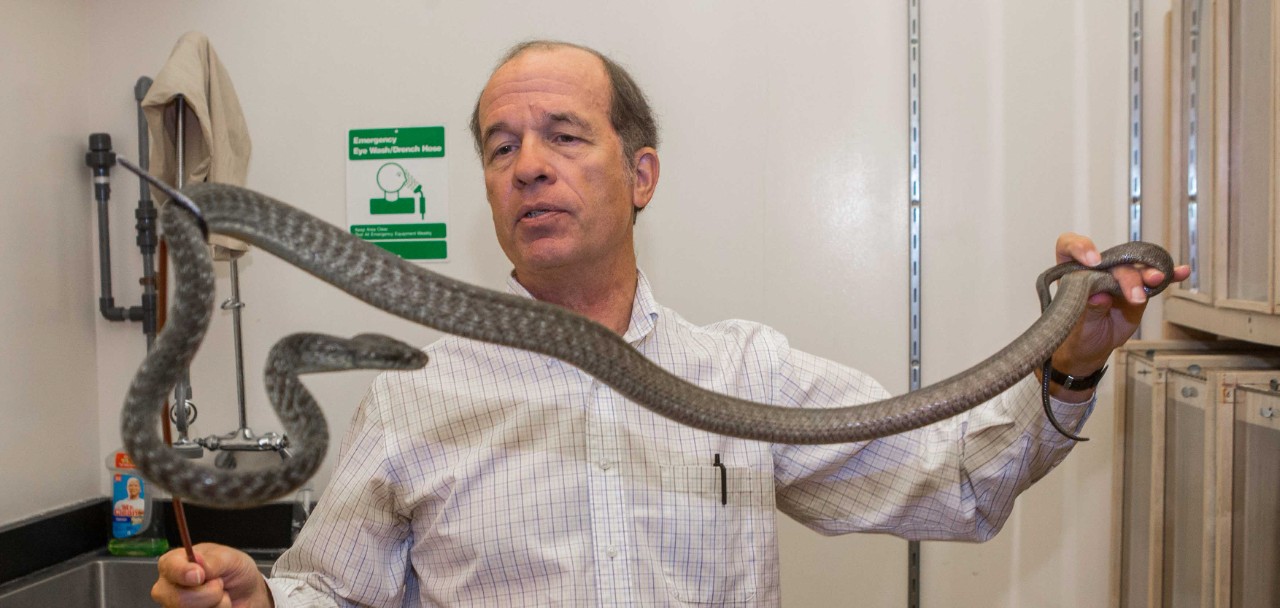
Featured image at top: UC professor Bruce Jayne holds a brown tree snake. Photo/Joseph Fuqua II/UC Creative + Brand
More UC snake research

UC professor Bruce Jayne holds a vine snake. Photo/Joseph Fuqua II/UC Creative + Brand
UC Magazine: Whither the Slither?
National Geographic: These snakes can jump and scientists want to know why
New York Times: How the Snake Pours Its Way Across the Ground
UC Magazine: Snake Surprise!
National Science Foundation: Expert unlocks mechanics of how snakes move in a straight line
Related Stories
‘Designer drug’ shows early neuroprotective signal in acute ischemic stroke
October 28, 2025

Medscape highlighted new trial results led by the University of Cincinnati's Eva Mistry that found an experimental drug shows promise in protecting injured brain cells for patients with acute ischemic stroke.
Is menstrual fluid ‘the most overlooked opportunity’ in women’s health?
October 27, 2025

The Guardian recently reported that period blood has long been thought of as ‘stinky and useless’, but startups are exploring using the fluid to test for a wide range of health conditions — including endometriosis.
What is squalane, and how does it work to moisturize skin?
October 27, 2025

The University of Cincinnati's Kelly Dobos was featured in a Women's Health article discussing squalane, an ingredient being increasingly used in moisturizing skincare products.