Cincinnati Enquirer: Pandemic leads women to delay mammograms
UC expert discusses how delay is concerning for breast cancer diagnosis


The inside of the UC Health mobile mammography unit. Photo credit/Colleen Kelley/UC Creative + Brand
Though more women are getting back on their mammogram schedules through the pandemic, alarmed cancer experts say Ohio and the nation now are caught in an unprecedented experiment with dangerous consequences.
Preventive medicine was quickly halted as a result of the pandemic, and health systems now report startling decreases in mammography. UC Health reports mammography remains down 43% as of early October even though nonessential services, including cancer screening, resumed May 1 across Ohio.
“People have to balance the risks of coming out of their homes,” says a "worried" Mary Mahoney, MD, Benjamin Felson Endowed Chair and professor of UC's Department of Radiology and chief of imaging at UC Health. “But for those people who are resuming normal activities, going to work, going to restaurants, going to social events: Where does taking responsibility for your own personal health fall into this?”
Read the full Cincinnati Enquirer story.
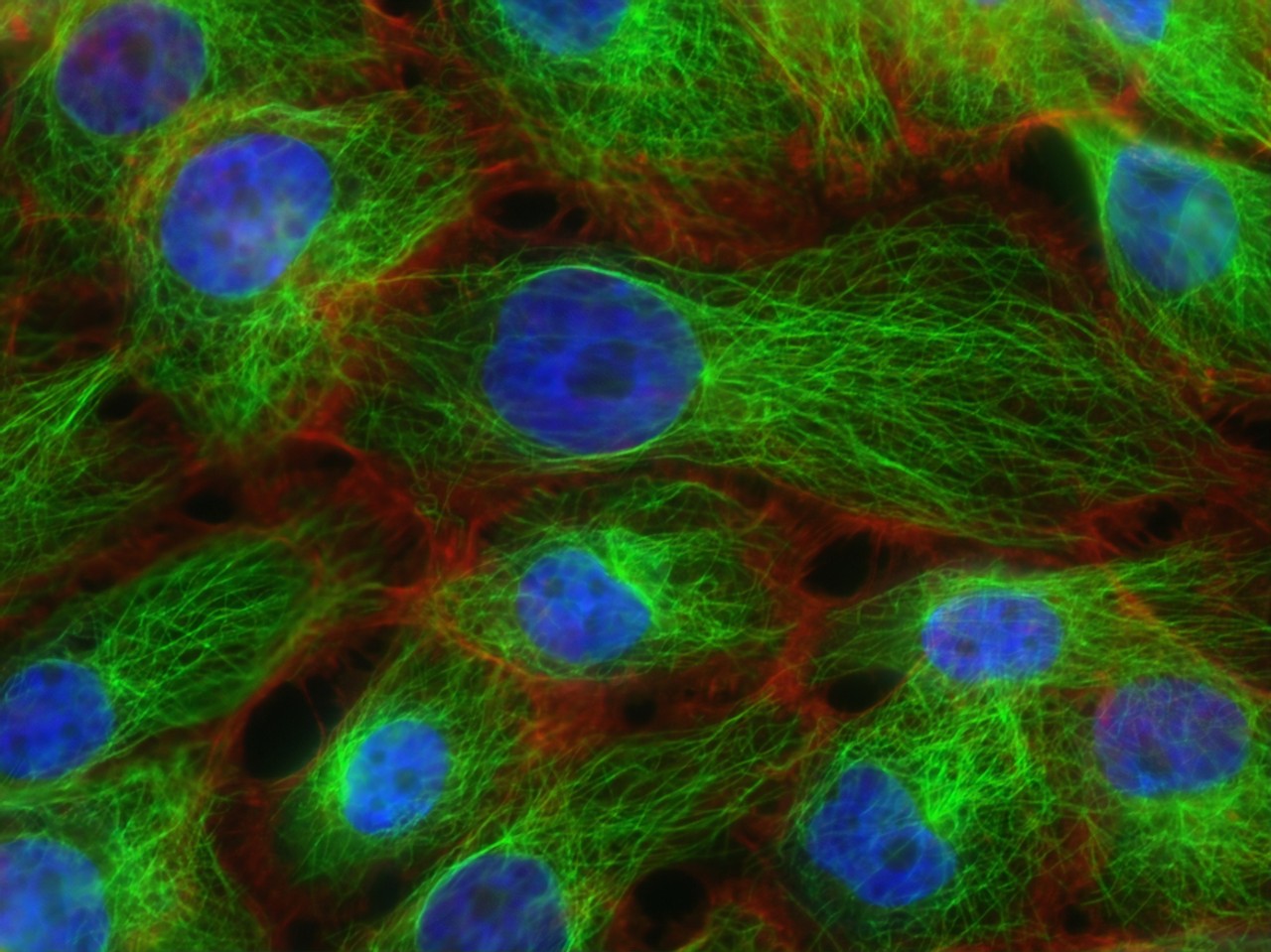
Featured image of breast cancer cells courtesy of the National Cancer Institute.
Next Lives Here
The University of Cincinnati is classified as a Research 1 institution by the Carnegie Commission and is ranked in the National Science Foundation's Top-35 public research universities. UC's medical, graduate and undergraduate students and faculty investigate problems and innovate solutions with real-world impact. Next Lives Here.
Related Stories
‘Designer drug’ shows early neuroprotective signal in acute ischemic stroke
October 28, 2025

Medscape highlighted new trial results led by the University of Cincinnati's Eva Mistry that found an experimental drug shows promise in protecting injured brain cells for patients with acute ischemic stroke.
Is menstrual fluid ‘the most overlooked opportunity’ in women’s health?
October 27, 2025

The Guardian recently reported that period blood has long been thought of as ‘stinky and useless’, but startups are exploring using the fluid to test for a wide range of health conditions — including endometriosis.
What is squalane, and how does it work to moisturize skin?
October 27, 2025

The University of Cincinnati's Kelly Dobos was featured in a Women's Health article discussing squalane, an ingredient being increasingly used in moisturizing skincare products.