WVXU: Meet the UC doctor trying to change minds skeptical of the COVID-19 vaccine
Louito Edje, MD, says the COVID-19 vaccine is based on years of science

Louito Edje, MD, associate dean of graduate medical education at the University of Cincinnati College of Medicine and UC Medical Center, spoke with WVXU about why she is on a public relations blitz – she was featured in segments on CNBC, TMZ, BET and MSNBC - to change minds about vaccinations for COVID-19. The pandemic is having a disproportionate impact on Black Americans and Edje, a Black female physician, is hoping her participation in the Moderna vaccine trial and her voice may sway some opinions about vaccine safety and efficacy.
After her second dose, Edje was pretty sure she didn’t get a placebo as part of the vaccine trial. "I had a lead arm and it lasted about 24 hours and not much longer than that," Edje told WVXU listeners. "I was able to continue working." She feels fine now and says the risk of being in a trial group was worth it to her because she's lost four family members to COVID-19.
Listen to the WVXU interview with Louito Edje, MD, online.
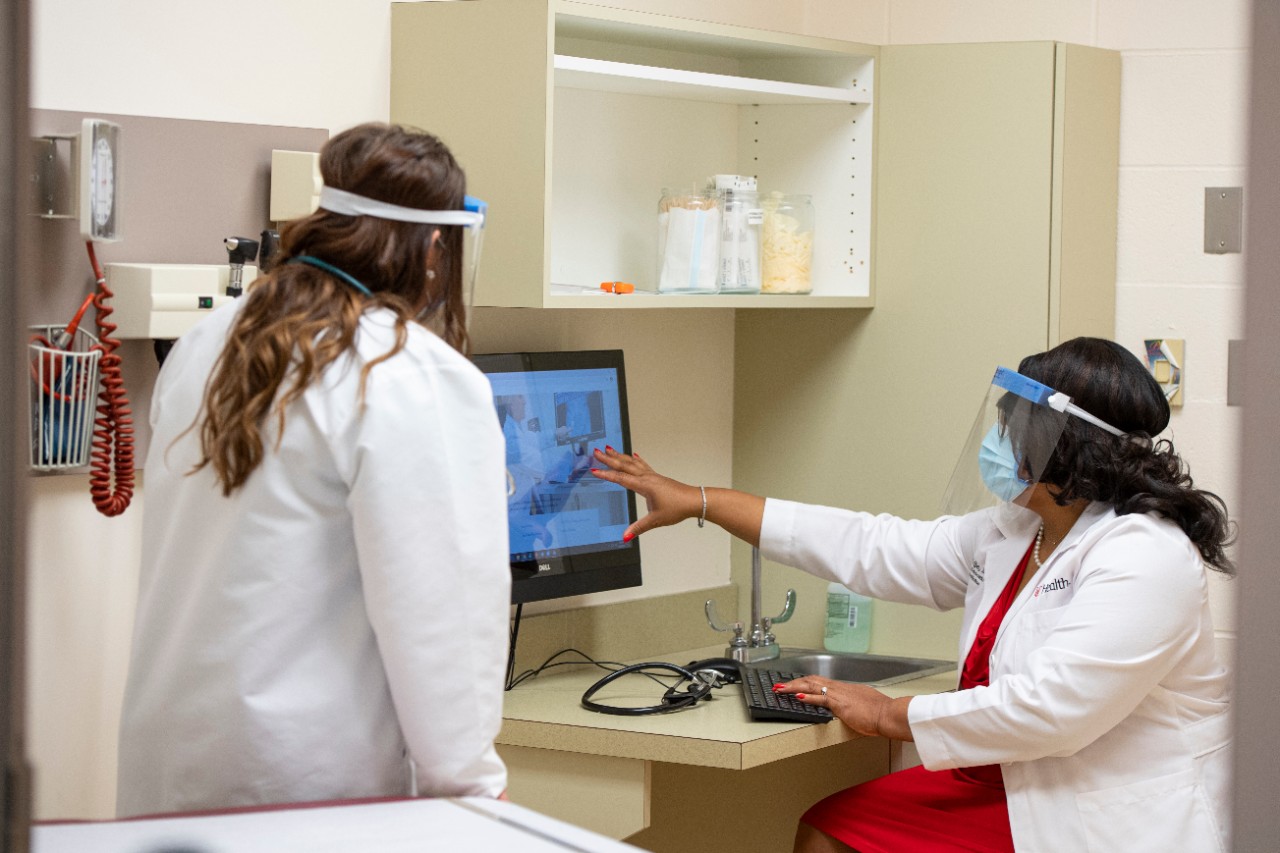
Louito Edje, MD, seated is shown in the UC College of Medicine Simulation Center. Photo by Colleen Kelley/University of Cincinnati.
Impact Lives Here
The University of Cincinnati is classified as a Research 1 institution by the Carnegie Commission and is ranked in the National Science Foundation's Top-35 public research universities. UC's medical, graduate and undergraduate students and faculty investigate problems and innovate solutions with real-world impact. Next Lives Here.
Related Stories
‘Designer drug’ shows early neuroprotective signal in acute ischemic stroke
October 28, 2025

Medscape highlighted new trial results led by the University of Cincinnati's Eva Mistry that found an experimental drug shows promise in protecting injured brain cells for patients with acute ischemic stroke.
Is menstrual fluid ‘the most overlooked opportunity’ in women’s health?
October 27, 2025

The Guardian recently reported that period blood has long been thought of as ‘stinky and useless’, but startups are exploring using the fluid to test for a wide range of health conditions — including endometriosis.
What is squalane, and how does it work to moisturize skin?
October 27, 2025

The University of Cincinnati's Kelly Dobos was featured in a Women's Health article discussing squalane, an ingredient being increasingly used in moisturizing skincare products.