Cincinnati Edition: COVID 'long haulers' face symptoms months after contracting virus
UC cardiologist says many who recover will continue to have some long-term symptoms

WVXU reporter Michael Monks spoke with Northside resident Christine Wilson who continues to recover from the effects of COVID-19 almost six months after her first diagnosis. She relies on oxygen and steroids and finds she has to budget her energy and ability to interact. Wilson says she able to do 10 minutes of activity for basically every hour of work. She is one of thousands of people across the country who continue to experience lingering symptoms after contracting COVID-19.
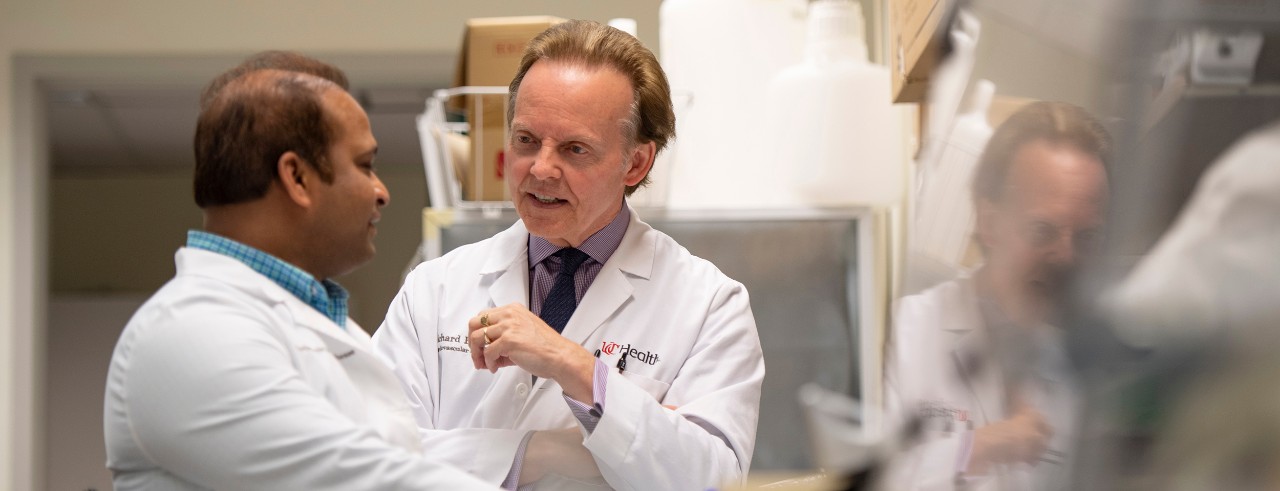
Richard Becker, MD, director of the UC Heart, Lung and Vascular Institute, also spoke with WVXU for the segment about his interaction with former COVID patients who are still battling health ailments related to fighting off the pandemic. Becker said worldwide there are 80 million known cases of COVID-19 and 1.7 million who died as a result. That means more than 78 million people have survived infection including 600,000 in the state of Ohio. Becker says 70 percent of individuals under age 50 and suffering from COVID-19 and without pre-existing condition such as high blood pressure, heart disease or diabetes will continue to have symptoms four to five months after their initial symptoms.
Listen to the full WVXU interview online (Richard Becker, MD, begins 14:30 minutes into the segment).
Impact Lives Here
The University of Cincinnati is classified as a Research 1 institution by the Carnegie Commission and is ranked in the National Science Foundation's Top-35 public research universities. UC's medical, graduate and undergraduate students and faculty investigate problems and innovate solutions with real-world impact. Next Lives Here.
Related Stories
‘Designer drug’ shows early neuroprotective signal in acute ischemic stroke
October 28, 2025

Medscape highlighted new trial results led by the University of Cincinnati's Eva Mistry that found an experimental drug shows promise in protecting injured brain cells for patients with acute ischemic stroke.
Is menstrual fluid ‘the most overlooked opportunity’ in women’s health?
October 27, 2025

The Guardian recently reported that period blood has long been thought of as ‘stinky and useless’, but startups are exploring using the fluid to test for a wide range of health conditions — including endometriosis.
What is squalane, and how does it work to moisturize skin?
October 27, 2025

The University of Cincinnati's Kelly Dobos was featured in a Women's Health article discussing squalane, an ingredient being increasingly used in moisturizing skincare products.