Drugs.com: Pandemic disrupting lung cancer screening
UC research shows how the COVID-19 pandemic impacted lung cancer screening, patient outcomes

COVID-19 caused significant disruption in lung cancer screening, according to a University of Cincinnati study published online in December in the Journal of the American College of Surgeons.
Robert Van Haren, lead author, assistant professor of surgery at UC, UC Health thoracic surgeon and member of the UC Cancer Center, and colleagues examined the impact of COVID-19 on lung cancer screening and subsequent cancer diagnosis among 2,153 patients from a screening database between January 2017 and July 2020.
"[Our] early analysis shows the unrecognized consequences related to the pandemic for screening programs and cancer care," Van Haren says.
Read the full Drugs.com article.
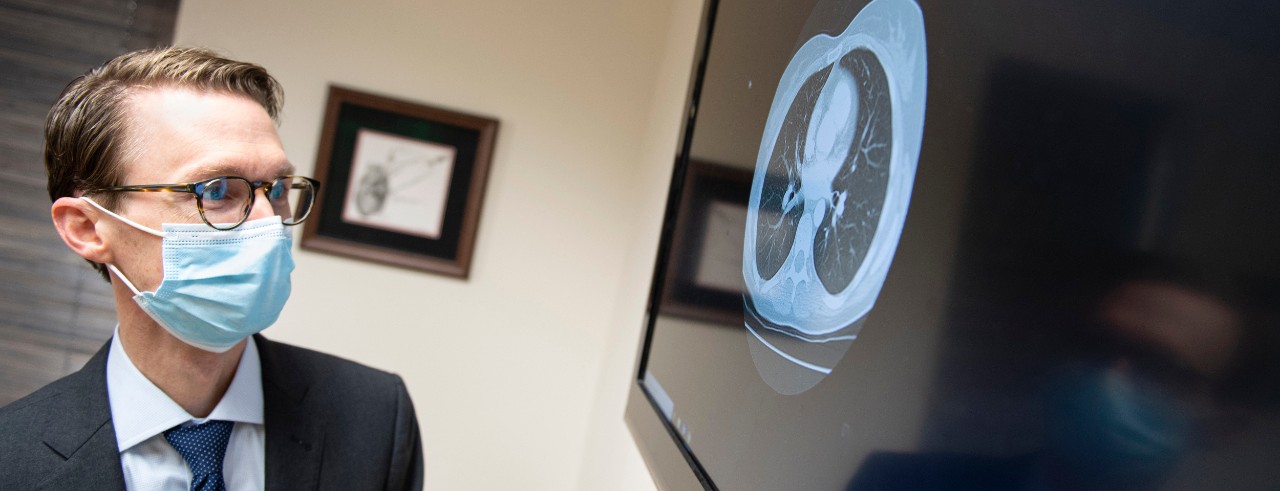
Featured photo of Robert Van Haren examining a lung image by Colleen Kelley.
Impact Lives Here
The University of Cincinnati is leading public urban universities into a new era of innovation and impact. Our faculty, staff and students are saving lives, changing outcomes and bending the future in our city's direction. Next Lives Here.
Stay up on all UC's COVID-19 stories, or take a UC virtual visit and begin picturing yourself at an institution that inspires incredible stories.
Related Stories
‘Designer drug’ shows early neuroprotective signal in acute ischemic stroke
October 28, 2025

Medscape highlighted new trial results led by the University of Cincinnati's Eva Mistry that found an experimental drug shows promise in protecting injured brain cells for patients with acute ischemic stroke.
Meet the young talent reshaping Cincinnati’s startup scene
October 28, 2025
Five University of Cincinnati students were honored for their impactful entrepreneurship on the Cincy Inno Under 25 list. We’ll explain what makes each student – and their startup – stand out.
Is menstrual fluid ‘the most overlooked opportunity’ in women’s health?
October 27, 2025

The Guardian recently reported that period blood has long been thought of as ‘stinky and useless’, but startups are exploring using the fluid to test for a wide range of health conditions — including endometriosis.