AAMC: What the end of a major medical licensing exam means
UC medical students weigh in on the end of part of a United States Medical Licensing Examination

A rite of passage for a generation of medical students is no more. A daylong, in-person Step 2 Clinical Skills (CS) test — designed to assess aspiring doctors’ communication and physical exam techniques — was put on hold last March in response to the pandemic. Then, in a shift that shocked many observers, the exam’s sponsors — the Federation of State Medical Boards and the National Board of Medical Examiners (NBME) — announced on Jan. 26 that they were no longer exploring how to revive it.

Zachary St. Clair
Replace In fact, a plan to relaunch a modified Step 2 Clinical Skills examination has been permanently shelved. The end of this segment of the three-part United States Medical Licensing Examination (USMLE) has elicited varied responses, from utter dismay to sheer delight. The new move was discussed by the Association of American Medical Colleges (AAMC) in a recent online article that included comments from two University of Cincinnati medical students, Robbie Daulton, and Zachary St. Clair.
Medical students were told that independent standardized assessments of medical knowledge and clinical skills remain important inputs for state medical licensure decisions. In the absence of Step 2 CS, elements of clinical reasoning and communication will continue to be assessed on other exams (Steps) in the USMLE sequence.

Robert Daulton
Computer-based case simulations in Step 3 and communication content recently bolstered in Step 1 are examples of these efforts that will continue. While not a replacement for Step 2 CS, these formats continue to contribute positively, e.g., measuring critical knowledge of medical communication.
"The FSMB is committed to supporting state medical boards in their principal mission to protect the public," said Humayun J. Chaudhry, DO, MACP, President and CEO of the FSMB. "As co-sponsors of the USMLE program, we will continue to seek innovative and sensible ways to assess medical licensing eligibility."
"NBME’s commitment to performance-based assessment and clinical skills has accelerated. Our newest area of focus around competency -based assessment, and our exploration of novel assessments, will allow us to work with the medical education and regulatory communities to develop assessments of these essential skills and the optimal way to integrate these assessments into the education and licensure space," said Peter J. Katsufrakis, MD, MBA, President and CEO, NBME.
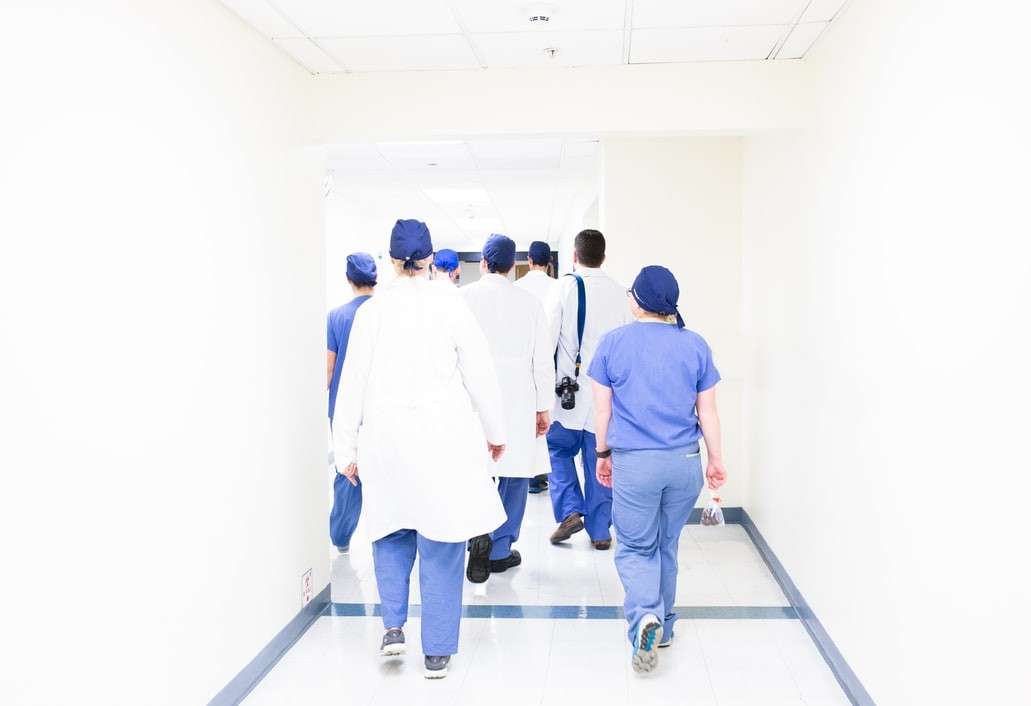
Featured image of residents and medical students courtesy of Unsplash.
Related Stories
‘Designer drug’ shows early neuroprotective signal in acute ischemic stroke
October 28, 2025

Medscape highlighted new trial results led by the University of Cincinnati's Eva Mistry that found an experimental drug shows promise in protecting injured brain cells for patients with acute ischemic stroke.
Is menstrual fluid ‘the most overlooked opportunity’ in women’s health?
October 27, 2025

The Guardian recently reported that period blood has long been thought of as ‘stinky and useless’, but startups are exploring using the fluid to test for a wide range of health conditions — including endometriosis.
What is squalane, and how does it work to moisturize skin?
October 27, 2025

The University of Cincinnati's Kelly Dobos was featured in a Women's Health article discussing squalane, an ingredient being increasingly used in moisturizing skincare products.