The Healthy: What’s a vaccine passport and do you need one?
UC expert gives the idea a thumbs down

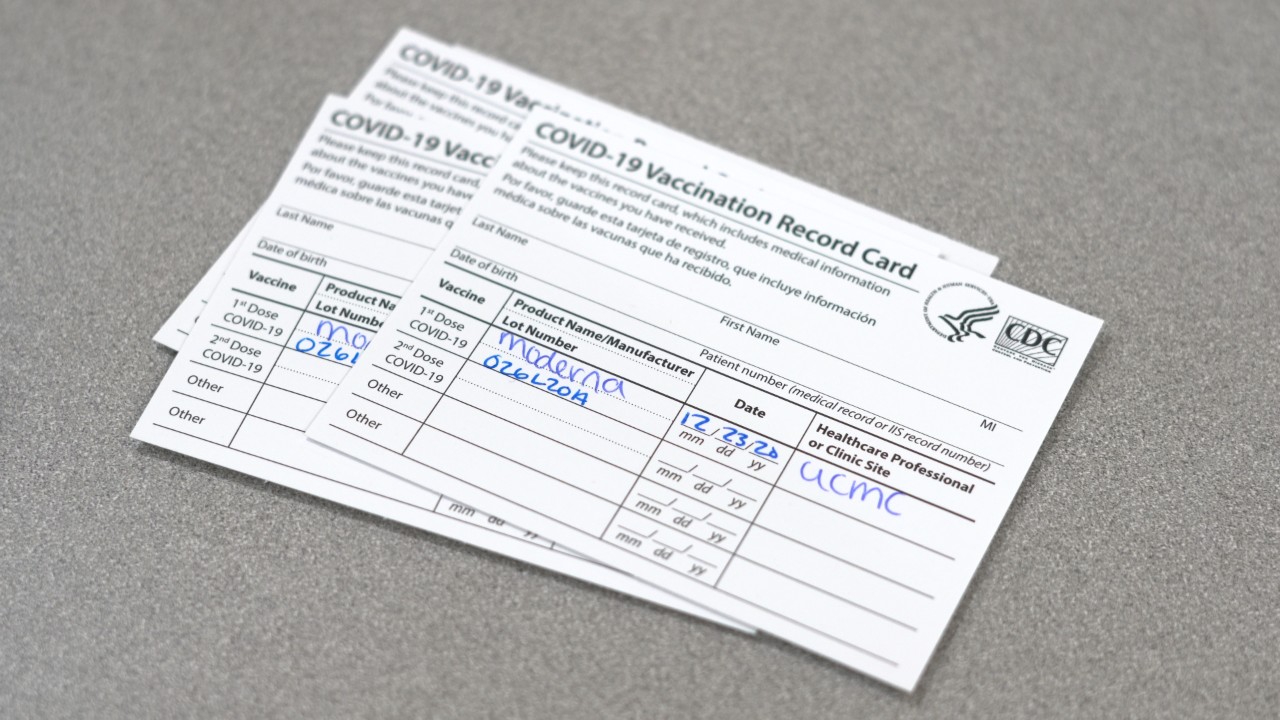
As more and more people receive the vaccine for COVID-19, talk is growing around the conecpt of a vaccine passport. In theory, the idea is very straightforward: Anyone who receives the COVID-19 vaccine gets a vaccination card that will act as an entry pass into destinations around the world. Ideally, this would ensure that the person who has been vaccinated is unlikely to spread the virus. However, the implications are more complicated.
The Healthy, a Reader's Digest website focusing on health and well being, interviewed Carl Fichtenbaum, MD, of the Division of Infectious Diseases at the UC College of Medicine. He is skeptical about how effective vaccine passports will be.

Carl Fichtenbaum, MD, of the Division of Infectious Diseases at the UC College of Medicine/Photo/Colleen Kelley/UC Creative + Brand
“Think of it this way—having a driver’s license is clearly an indication that you are qualified to drive. You passed the eye test, rule test, and driver’s exam,” says Fichtenbaum. “But having proof of vaccination does not mean you cannot currently have or get COVID infection.”
The article goes on to say the future of a vaccine passport is still uncertain as it introduces a lot of ethical and safety concerns.
The U.S. Department of State continues to “strongly recommend U.S. citizens reconsider travel abroad” altogether if possible.
Lead photo/Tommy Campbell/UC Health
Next Lives Here
The University of Cincinnati is classified as a Research 1 institution by the Carnegie Commission and is ranked in the National Science Foundation's Top-35 public research universities. UC's medical, graduate and undergraduate students and faculty investigate problems and innovate solutions with real-world impact. Next Lives Here.
Related Stories
‘Designer drug’ shows early neuroprotective signal in acute ischemic stroke
October 28, 2025

Medscape highlighted new trial results led by the University of Cincinnati's Eva Mistry that found an experimental drug shows promise in protecting injured brain cells for patients with acute ischemic stroke.
Is menstrual fluid ‘the most overlooked opportunity’ in women’s health?
October 27, 2025

The Guardian recently reported that period blood has long been thought of as ‘stinky and useless’, but startups are exploring using the fluid to test for a wide range of health conditions — including endometriosis.
What is squalane, and how does it work to moisturize skin?
October 27, 2025

The University of Cincinnati's Kelly Dobos was featured in a Women's Health article discussing squalane, an ingredient being increasingly used in moisturizing skincare products.