The Financial Times: Approval of Biogen Alzheimer’s drug reignites ‘amyloid’ debate
Scientists at UC say restoring a brain protein, not removing amyloid plaques, should be the target

The debate over a new drug to treat Alzheimer's is still going strong, with many experts rebutting the science behind its recent FDA approval. One of the most vocal voices objecting to the new drug is UC's Alberto Espay, MD.
“The FDA approval will stimulate further investments into a hypothesis that should have long ago been falsified,” Espay told The Finanical Times.
Espay and a team of researchers at UC and the Karolinska Institute in Sweden back his position with their recent, and highly publicized study, pointing to a different target for the treatment of Alzheimer's disease.
Read The Financial Times article, which has been reprinted in several international news outlets, includinh Kenya News.
Read more about Espay and the UC-led study.
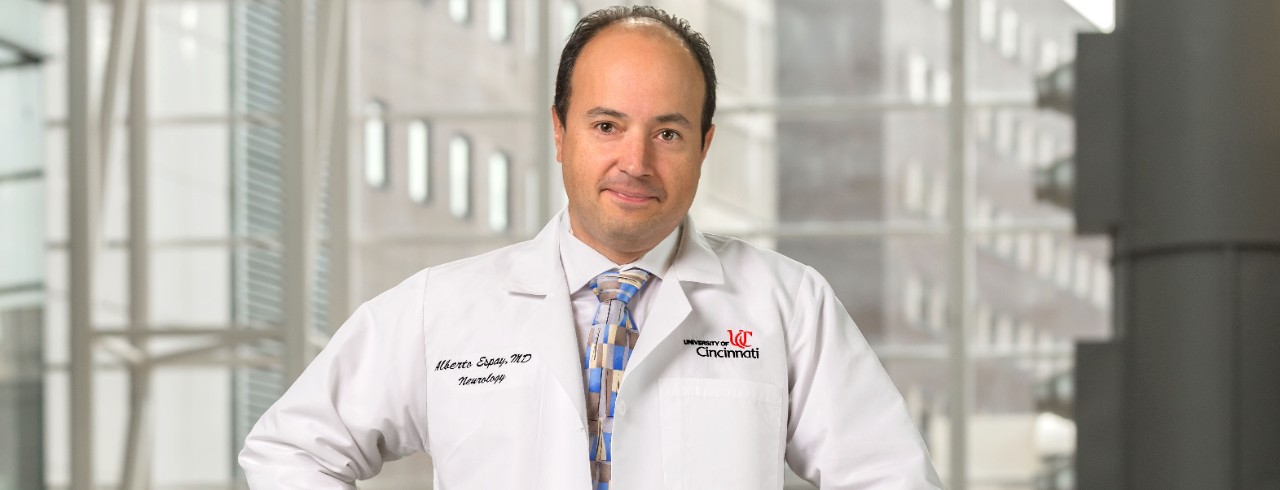
Featured image at top of Alberto Espay, MD. Photo/Colleen Kelley/UC Creative + Brand
Impact Lives Here
The University of Cincinnati is leading public urban universities into a new era of innovation and impact. Our faculty, staff and students are saving lives, changing outcomes and bending the future in our city's direction. Next Lives Here.
Related Stories
‘Designer drug’ shows early neuroprotective signal in acute ischemic stroke
October 28, 2025

Medscape highlighted new trial results led by the University of Cincinnati's Eva Mistry that found an experimental drug shows promise in protecting injured brain cells for patients with acute ischemic stroke.
Meet the young talent reshaping Cincinnati’s startup scene
October 28, 2025
Five University of Cincinnati students were honored for their impactful entrepreneurship on the Cincy Inno Under 25 list. We’ll explain what makes each student – and their startup – stand out.
Is menstrual fluid ‘the most overlooked opportunity’ in women’s health?
October 27, 2025

The Guardian recently reported that period blood has long been thought of as ‘stinky and useless’, but startups are exploring using the fluid to test for a wide range of health conditions — including endometriosis.