WVXU: Breast cancer awareness should include the trans community
UC's Dr. Annie Brown discusses recommended screenings, tips to make care more inclusive

The pink focus of Breast Cancer Awareness Month can often lead people to overlook the fact that breast cancer affects transgender and nonbinary patients as well.
Annie Brown, MD, assistant professor of radiology in the College of Medicine and a UC Health breast radiologist, said more work needs to be done to include transgender patients, from making awareness efforts and screening locations more welcoming and inclusive to gathering better data to inform screening recommendations.
"Although I still think it's a great idea to raise awareness in the month of October, it's time to reconsider how it may be uniquely affecting the LGBTQ+ community and maybe rethink about how we're outfitting our centers and websites and what messaging we're sending to be more gender neutral," Brown told WVXU.
Listen to or read the WVXU report.
Watch the Spectrum News report.
Listen to Dr. Brown discuss Breast Cancer Awareness Month on 55KRC's Simply Medicine program. (Note: segment starts at around the 36:07 mark.)
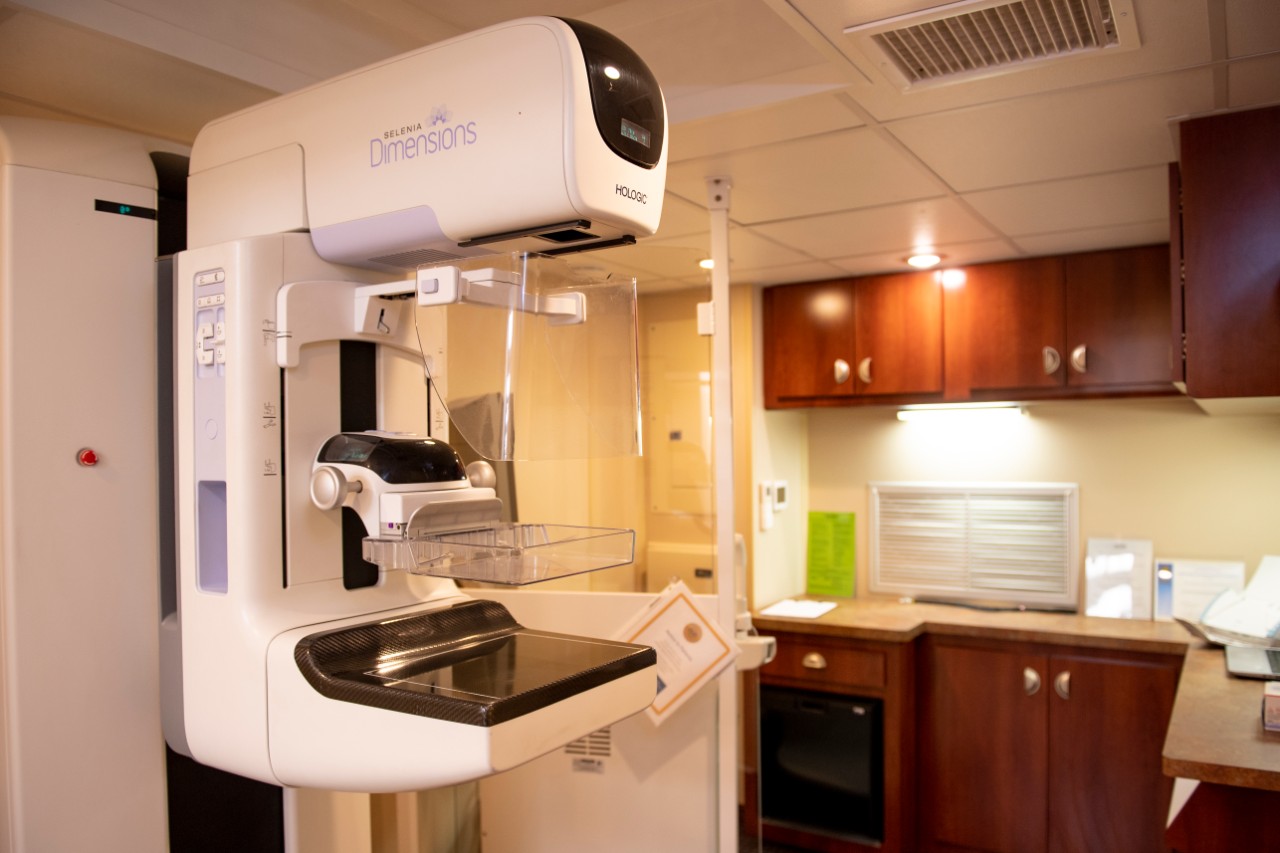
Featured photo at top of a 3D mammogram machine. Photo/Colleen Kelley/UC Creative + Brand
Related Stories
‘Designer drug’ shows early neuroprotective signal in acute ischemic stroke
October 28, 2025

Medscape highlighted new trial results led by the University of Cincinnati's Eva Mistry that found an experimental drug shows promise in protecting injured brain cells for patients with acute ischemic stroke.
UC Board votes to fund design for YMCA renovation
October 28, 2025
At its October 28, 2025 meeting, the University of Cincinnati Board of Trustees approved $5 million in funding to complete all design and pre-construction services required to renovate the interior of a former YMCA building located at 270 Calhoun Street.
Is menstrual fluid ‘the most overlooked opportunity’ in women’s health?
October 27, 2025

The Guardian recently reported that period blood has long been thought of as ‘stinky and useless’, but startups are exploring using the fluid to test for a wide range of health conditions — including endometriosis.