Cincinnati.com: Greater Cincinnati lags in COVID-19 vaccines. So, should you get a second booster?
UC expert says healthy people over 65 should feel comfortable getting boosted

The Centers for Disease Control and Prevention is updating its recommendations to allow certain immunocompromised individuals and people over 50 to be eligible for another COVID-19 booster if four months have passed since their first. Cincinnati.com reported a handful of the 16 counties in the Cincinnati region lag in the nation in getting boosters, even though most counties lag the nation in vaccination rates. Two counties, Hamilton and Warren, have booster rates just above 50%.

Louito Edje, MD, associate dean of graduate medical education at the UC College of Medicine/Photo/Colleen Kelley/UC Creative + Brand
Cincinnati.com talked to several local experts for a story, including Louito Edje, MD, associate dean for graduate medical education at the UC College of Medicine.
Edje said anyone healthy and over 65 should feel comfortable getting boosted without consulting their primary care provider. But, she added, if there's any question about whether they're at high risk, they should talk to their doctor first.
As for those 50 to 65 years old, Edje said, "We just don't have the data to support everyone getting a fourth dose." But she pointed out that if a person is at high risk for COVID-19, an additional shot is a good idea.
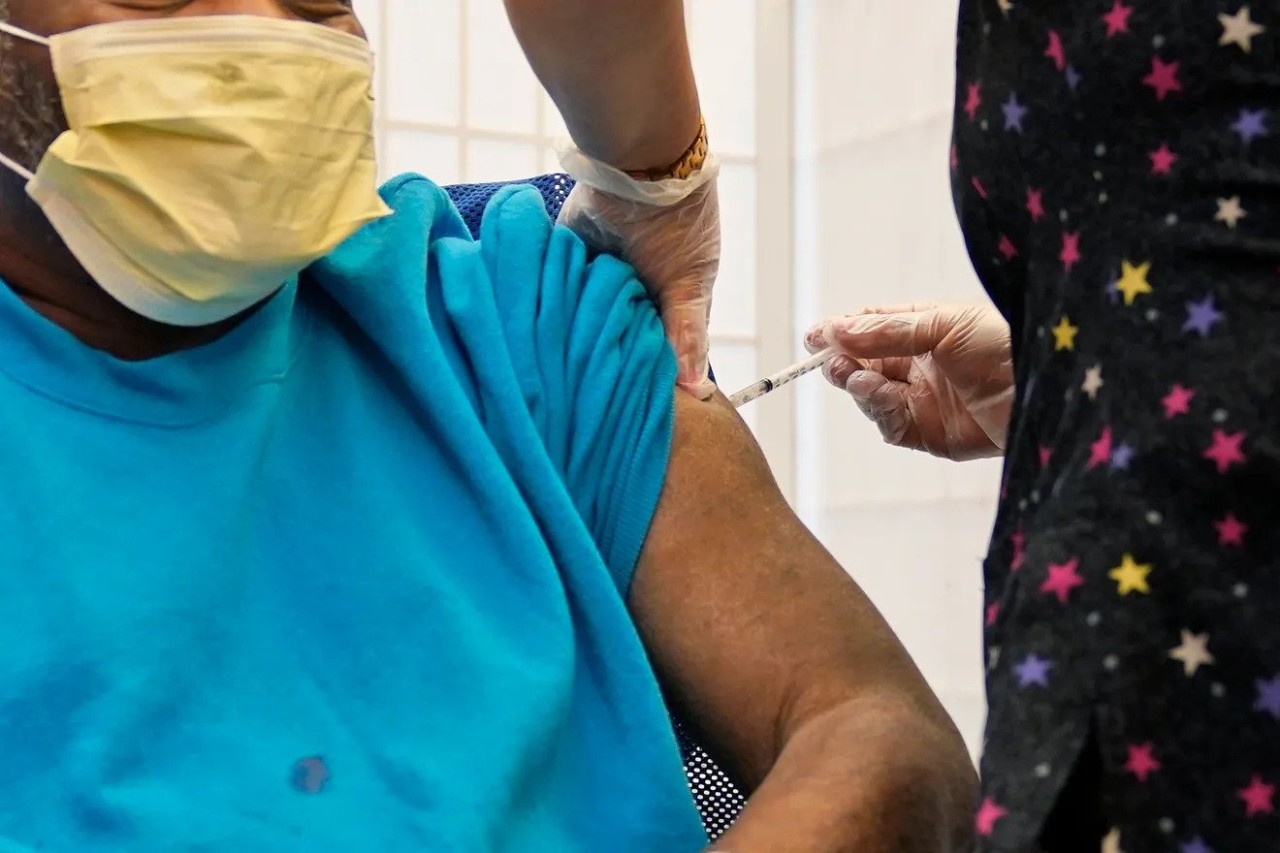
Lead photo/Seth Wenig/AP
Next Lives Here
The University of Cincinnati is classified as a Research 1 institution by the Carnegie Commission and is ranked in the National Science Foundation's Top-35 public research universities. UC's medical, graduate and undergraduate students and faculty investigate problems and innovate solutions with real-world impact. Next Lives Here.
Related Stories
‘Designer drug’ shows early neuroprotective signal in acute ischemic stroke
October 28, 2025

Medscape highlighted new trial results led by the University of Cincinnati's Eva Mistry that found an experimental drug shows promise in protecting injured brain cells for patients with acute ischemic stroke.
Is menstrual fluid ‘the most overlooked opportunity’ in women’s health?
October 27, 2025

The Guardian recently reported that period blood has long been thought of as ‘stinky and useless’, but startups are exploring using the fluid to test for a wide range of health conditions — including endometriosis.
What is squalane, and how does it work to moisturize skin?
October 27, 2025

The University of Cincinnati's Kelly Dobos was featured in a Women's Health article discussing squalane, an ingredient being increasingly used in moisturizing skincare products.