Radiology Business: In-house medical 3D print shops may save time, cut costs

New research shows surgeons and interventionalists who used 3D printing services from the University of Cincinnati's Department of Radiology to plan and practice upcoming procedures saved almost half an hour per operation over the course of a year.
The results of the study were published online Aug. 18 in the Journal of the American College of Radiology.
Led by Prashanth Ravi, PhD, research associate in the Department of Radiology, and Frank J. Rybicki, MD, professor and vice chair of quality and safety in the Department of Radiology, the researchers estimated the in-house 3D print shop saved almost $3,000 per patient in operating room costs due to shortened procedure times. The models themselves were also cheaper, around $2,200, compared to a price of approximately $2,500 if printed by an outside vendor.
"Utility and cost benchmarks for anatomic models 3-D printed in a hospital can inform health care budgets," the study authors wrote. "Realizing pecuniary benefit from the procedure time saved requires future research."
The study was recently highlighted by Radiology Business and AuntMinnie.com.
Read the Radiology Business article.
Read the AuntMinnie.com article.
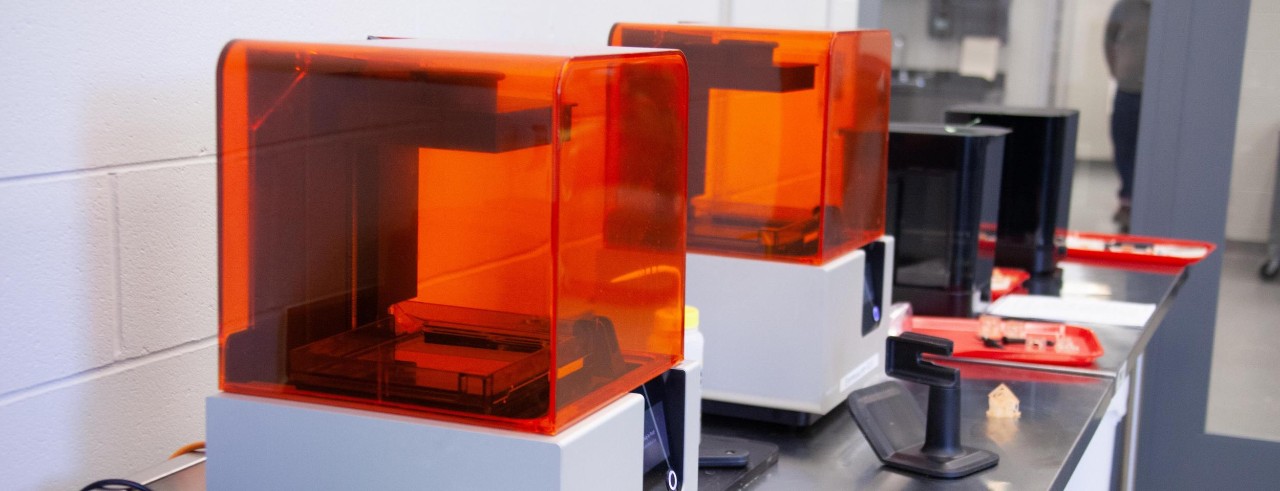
Featured photo at top of 3D printers. Photo/Ravenna Rutledge/UC Marketing + Brand.
Related Stories
‘Designer drug’ shows early neuroprotective signal in acute ischemic stroke
October 28, 2025

Medscape highlighted new trial results led by the University of Cincinnati's Eva Mistry that found an experimental drug shows promise in protecting injured brain cells for patients with acute ischemic stroke.
UC Board votes to fund design for YMCA renovation
October 28, 2025
At its October 28, 2025 meeting, the University of Cincinnati Board of Trustees approved $5 million in funding to complete all design and pre-construction services required to renovate the interior of a former YMCA building located at 270 Calhoun Street.
Is menstrual fluid ‘the most overlooked opportunity’ in women’s health?
October 27, 2025

The Guardian recently reported that period blood has long been thought of as ‘stinky and useless’, but startups are exploring using the fluid to test for a wide range of health conditions — including endometriosis.