Scientific American: Cockatoos outsmart people in garbage wars
UC ecologist explains what makes cockatoos so devilishly clever

Scientific American turned to a University of Cincinnati behavioral ecologist to explain what makes cockatoos so fiendishly intelligent.
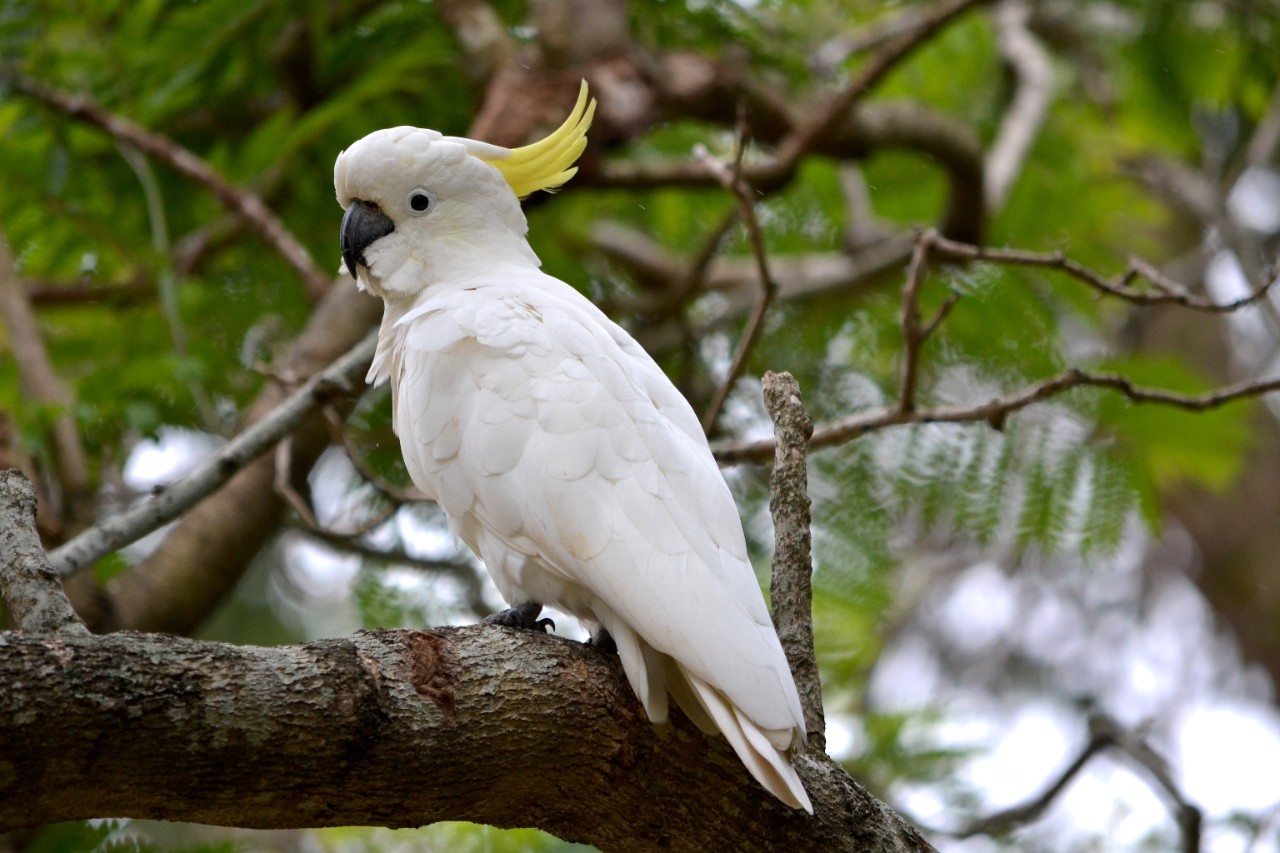
Sulphur-crested cockatoos, a type of parrot, are found in cities in Australia where they have a nasty habit of raiding garbage cans. About 10 years ago, one clever bird figured out how to pry off the lid of a garbage bin to get to food remains. Soon, cockatoos across Sydney were parroting the behavior, annoying neighbors across the city with their littering.

Elizabeth Hobson. Photo/Andrew Higley/UC Marketing + Brand
UC assistant professor Elizabeth Hobson studies parrots and other social birds in her lab in UC's College of Arts and Sciences. She told Scientific American that parrots have a formidable brain.
“[Parrots] are pretty cognitively flexible in terms of their problem-solving,” Hobson told Scientific American. “They can learn from others, and they can innovate.”
In her lab, Hobson and her students study a variety of animal behaviors, including pecking orders and the social structures of birds such as fairy penguins.
Ironically, researchers at the Max Planck Institute of Animal Behavior found that much like cockatoos, people living in Sydney seemed to adopt behavioral cues from their closest neighbors about how best to deter the birds' garbage raids rather than turning to experts elsewhere for solutions.
Some people put rubber snakes on their cans to scare off the birds. Others placed heavy weights on the lids. As with cockatoo societies, people who lived near each other seemed to adopt similar strategies in what Scientific American called “an innovation arms race” between people and cockatoos.
Read the Scientific American story.
Check out Hobson Lab for more exciting UC animal behavior research.
More UC biology in the news

UC professor Joshua Benoit conducts research in Antarctica. Photo/Provided
- National Geographic: Do spiders dream?
- Allegheny Front: UC survey finds urban woodlands dense with invasive species
Related Stories
‘Designer drug’ shows early neuroprotective signal in acute ischemic stroke
October 28, 2025

Medscape highlighted new trial results led by the University of Cincinnati's Eva Mistry that found an experimental drug shows promise in protecting injured brain cells for patients with acute ischemic stroke.
Is menstrual fluid ‘the most overlooked opportunity’ in women’s health?
October 27, 2025

The Guardian recently reported that period blood has long been thought of as ‘stinky and useless’, but startups are exploring using the fluid to test for a wide range of health conditions — including endometriosis.
What is squalane, and how does it work to moisturize skin?
October 27, 2025

The University of Cincinnati's Kelly Dobos was featured in a Women's Health article discussing squalane, an ingredient being increasingly used in moisturizing skincare products.