Cincinnati Edition: What does work look like after COVID?
3 UC professors discuss the future of in-person and remote work

After the COVID-19 pandemic upended traditional work structures, employers now are contemplating how they’ll manage their employees whether they’re working in-person or remote.
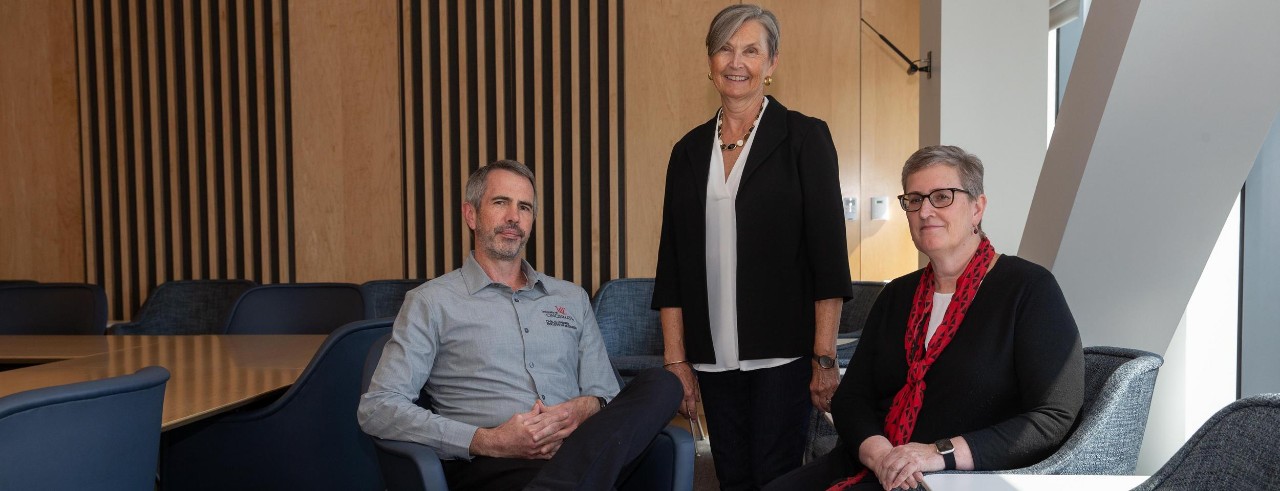
WVXU’s Cincinnati Edition had three professors from the University of Cincinnati’s Carl H. Lindner College of Business — Michael Fry, PhD, professor of operations, business analytics and information systems and academic director of the Center for Business Analytics; Suzanne Masterson, PhD, associate dean, Faculty, Research & Lindner Culture, and professor, Department of Management; and Jane Sojka, PhD, professor-educator and marketing undergraduate program director, Department of Marketing — joined host Lucy May to discuss the future of work.
During the pandemic, many companies actually saw an increase in productivity when their employees started working from home. However, data suggests productivity plunged during the first half of 2022.
“The data around this is incredibly mixed and contradictory,” Fry said. “We saw huge productivity gains a year ago, and now as you’ve pointed out we’ve seen the largest drop in productivity since World War II. I think companies are trying to figure out exactly what does it mean to have so much of our workforce remote.”
Some workers enjoy working from home while others want to return to in-person work, as evidenced by one caller who said he never wants to return to the office and another who said he cherishes his time with his colleagues.
“I think we have a spectrum of individual differences in terms of people who want and value that sense of community at work and others at the other end who consider work a means of earning pay and not necessarily a key part of their identity or their social community,” Masterson said.
While individual preferences largely account for the differences in wanting to work remotely or in-person, one group that overwhelming wants in-person interaction is those who work in sales.
“The people who were really hurting during COVID were the outside sales people,” Sojka said. “Not because of the office — because they’re never in an office. If you’re in outside sales, we don’t want you in the office; we want you in front of your customers. But they thrive on building relationships. That is their lifeblood.”
Hear more from Cincinnati Edition.
Featured image at top: From left, Michael Fry, Jane Sojka and Suzanne Masterson. Photo by Andrew Higley/UC Marketing + Brand
Impact Lives Here
The University of Cincinnati is leading public urban universities into a new era of innovation and impact. Our faculty, staff and students are saving lives, changing outcomes and bending the future in our city's direction. Next Lives Here.
Related Stories
‘Designer drug’ shows early neuroprotective signal in acute ischemic stroke
October 28, 2025

Medscape highlighted new trial results led by the University of Cincinnati's Eva Mistry that found an experimental drug shows promise in protecting injured brain cells for patients with acute ischemic stroke.
Meet the young talent reshaping Cincinnati’s startup scene
October 28, 2025
Five University of Cincinnati students were honored for their impactful entrepreneurship on the Cincy Inno Under 25 list. We’ll explain what makes each student – and their startup – stand out.
Is menstrual fluid ‘the most overlooked opportunity’ in women’s health?
October 27, 2025

The Guardian recently reported that period blood has long been thought of as ‘stinky and useless’, but startups are exploring using the fluid to test for a wide range of health conditions — including endometriosis.