Wall Street Journal: More young people are getting colorectal cancers
UC expert comments on American Cancer Society study

A new study from the American Cancer Society (ACS) found a larger share of colorectal cancer patients are being diagnosed at younger ages and with more advanced stages of the disease.
The study reported that in 2019, 20% of new colorectal cancer diagnoses were in patients younger than 55, while only 11% of cases in 1995 were diagnosed in this younger population. Approximately 60% of 2019 colorectal cases were diagnosed at advanced stages, compared to 52% in the mid-2000s.
While it is not fully known what is causing colorectal cancer rates to rise in younger people, one theory is that environmental changes and specific diets can be affecting the makeup of microorganisms in people's bodies, known as the microbiome.
Jordan Kharofa, MD, associate professor in the University of Cincinnati Department of Radiation Oncology, a University of Cincinnati Cancer Center member and a UC Health physician, has published research on how diet and the microbiome could affect colorectal cancer and commented on the new study for the Wall Street Journal.
The ACS study reported about 43% of diagnoses of colorectal cancer in patients under age 50 are in people ages 45 to 49, but Kharofa said "there are a good portion that are still younger than 45."
Kharofa's research found two species of bacteria most closely associated with causing colorectal cancer were not found in higher levels among younger patients, meaning they were unlikely to be responsible for the increased cancer rates. But five other bacteria were found in higher levels, including one species associated with a sulfur microbial diet.
A sulfur microbial diet is high in processed meats, low-calorie drinks and liquor and low in raw fruits, vegetables and legumes.
“Although these patients aren’t obese, there may be dietary patterns that happen early in life that enrich for certain bacteria such as this one,” Kharofa said. “It’s not that what you’re eating has carcinogens in them, but the byproducts produced during bacteria metabolism may lead to carcinogenic chemicals. It’s possible that interactions between diet and the microbiome may mediate the formation of colorectal cancer cells and heightened risk in younger populations over the last several decades.”
Read the Wall Street Journal article.
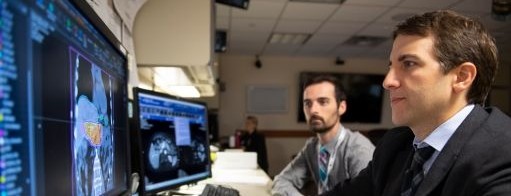
Featured photo at top of Dr. Kharofa, right. Photo/Colleen Kelley/UC Marketing + Brand.
Related Stories
‘Designer drug’ shows early neuroprotective signal in acute ischemic stroke
October 28, 2025

Medscape highlighted new trial results led by the University of Cincinnati's Eva Mistry that found an experimental drug shows promise in protecting injured brain cells for patients with acute ischemic stroke.
UC Board votes to fund design for YMCA renovation
October 28, 2025
At its October 28, 2025 meeting, the University of Cincinnati Board of Trustees approved $5 million in funding to complete all design and pre-construction services required to renovate the interior of a former YMCA building located at 270 Calhoun Street.
Is menstrual fluid ‘the most overlooked opportunity’ in women’s health?
October 27, 2025

The Guardian recently reported that period blood has long been thought of as ‘stinky and useless’, but startups are exploring using the fluid to test for a wide range of health conditions — including endometriosis.