Drug Discovery News: Silence in healthy cells makes FOXR2 a potential cancer target

Drug Discovery News recently highlighted research coauthored by the University of Cincinnati's Timothy Phoenix, PhD, focused on a gene called FOXR2.
FOXR2 is usually not expressed in most healthy cells, but the research team found it is abnormally expressed in more than 70% of 10,000 different adult and pediatric cancer types the team analyzed
The research team also found that FOXR2 bound to the DNA sequences that normally associate with E26 transformation-specific (ETS) transcription factors (ETS TFs), which control the expression of genes with a variety of cellular functions.
“FOXR2 and ETS TFs can interact on DNA and actually turn genes on and off, which can cause cancer,” said Phoenix, assistant professor in UC’s James L. Winkle College of Pharmacy Division of Pharmaceutical Sciences and a University of Cincinnati Cancer Center researcher.
Moving forward, the team aims to learn more about exactly how FOXR2 functions and the proteins it interacts with, with long-term goals of developing targets for new treatments.
Read the Drug Discovery News story.
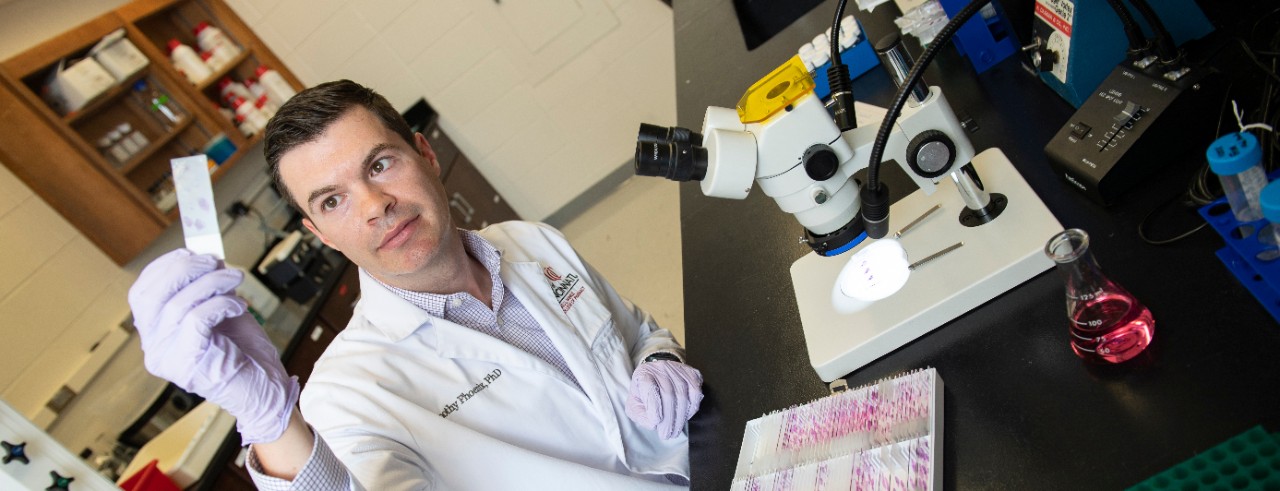
Featured photo at top of Phoenix in his lab. Photo/Colleen Kelley/UC Marketing + Brand
Related Stories
‘Designer drug’ shows early neuroprotective signal in acute ischemic stroke
October 28, 2025

Medscape highlighted new trial results led by the University of Cincinnati's Eva Mistry that found an experimental drug shows promise in protecting injured brain cells for patients with acute ischemic stroke.
UC Board votes to fund design for YMCA renovation
October 28, 2025
At its October 28, 2025 meeting, the University of Cincinnati Board of Trustees approved $5 million in funding to complete all design and pre-construction services required to renovate the interior of a former YMCA building located at 270 Calhoun Street.
Is menstrual fluid ‘the most overlooked opportunity’ in women’s health?
October 27, 2025

The Guardian recently reported that period blood has long been thought of as ‘stinky and useless’, but startups are exploring using the fluid to test for a wide range of health conditions — including endometriosis.