Pennsylvania news: Personalized treatment for deadly blood and bone marrow cancer

WFMZ-TV in Allentown, Pennsylvania recently highlighted the University of Cincinnati's John Byrd and the Beat AML study testing personalized treatment for patients with acute myelogenous leukemia.
“Although it has one name there are probably 15, 20 different types of AML. Before, when people were diagnosed with AML, they would come in and everybody would be treated the same way,” said Byrd, MD, a University of Cincinnati Cancer Center researcher, chair of the Department of Internal Medicine at the UC College of Medicine and the chief medical officer of the Beat AML study.
Using genetic sequencing, researchers are identifying what drives each patient's disease and personalizing treatments accordingly.
“Once a medicine gets approved in one indication, it can potentially be applied to a lot of other types of cancers that have that same mutation, but might be in a different part of the body,” Byrd said.
The Beat AML trial is unique because it a master trial studying multiple drugs at the same time.
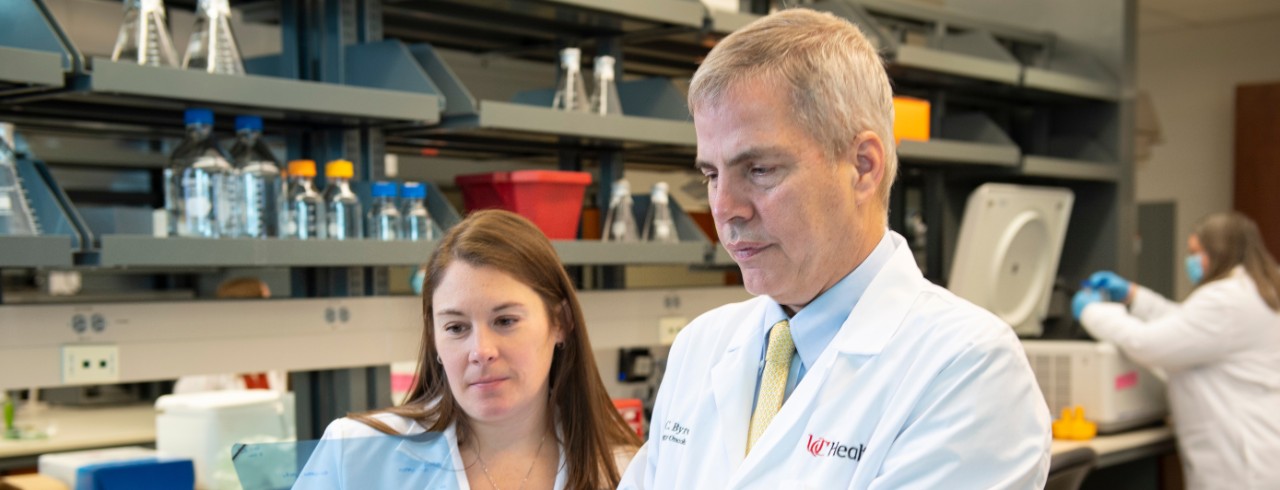
Featured photo at top of Erin Hertlein, PhD, left, and John Byrd, MD, working in the lab. Photo/UC Foundation.
Related Stories
‘Designer drug’ shows early neuroprotective signal in acute ischemic stroke
October 28, 2025

Medscape highlighted new trial results led by the University of Cincinnati's Eva Mistry that found an experimental drug shows promise in protecting injured brain cells for patients with acute ischemic stroke.
UC Board votes to fund design for YMCA renovation
October 28, 2025
At its October 28, 2025 meeting, the University of Cincinnati Board of Trustees approved $5 million in funding to complete all design and pre-construction services required to renovate the interior of a former YMCA building located at 270 Calhoun Street.
Is menstrual fluid ‘the most overlooked opportunity’ in women’s health?
October 27, 2025

The Guardian recently reported that period blood has long been thought of as ‘stinky and useless’, but startups are exploring using the fluid to test for a wide range of health conditions — including endometriosis.