NPR: Abandoned wells are leaking planet-warming methane
UC expert says only some of 4 million wells are leaking, but knowing which ones takes effort

NPR's program Here & Now turned to University of Cincinnati Professor Amy Townsend-Small to explain the extent of leaking oil and gas wells across the United States.
Townsend-Small has been studying the issue at wells across the country. In studies such as her 2021 investigation of the Permian Basin of Texas published in the journal Environmental Research Letters, Townsend-Small found that uncapped, idle oil wells could be leaking millions of kilograms of methane into the atmosphere and surface water each year. It was the first examination of its kind of methane emissions from inactive oil wells in Texas.

Amy Townsend-Small. Photo/Jay Yocic/UC
More recently, Townsend-Small examined the potential benefits of turning off marginal, low-producing wells, which would significantly reduce the amount of methane released into the atmosphere without impeding production. Turning off wells is a simple and inexpensive process compared to permanently plugging them, leading to a large reduction in methane emissions at relatively low cost. The study was published in the journal PLOS One.
"We have about 1 million active wells in the United States and about 3 million inactive ones. So we need to clean those up," she told NPR.
Townsend-Small said active wells leak more than abandoned ones. But the total scope of the problem has not been determined.
"Because there are so many abandoned wells, we don't know if we've accurately measured or captured how many of these very high-emitting abandoned wells there are," she told NPR.
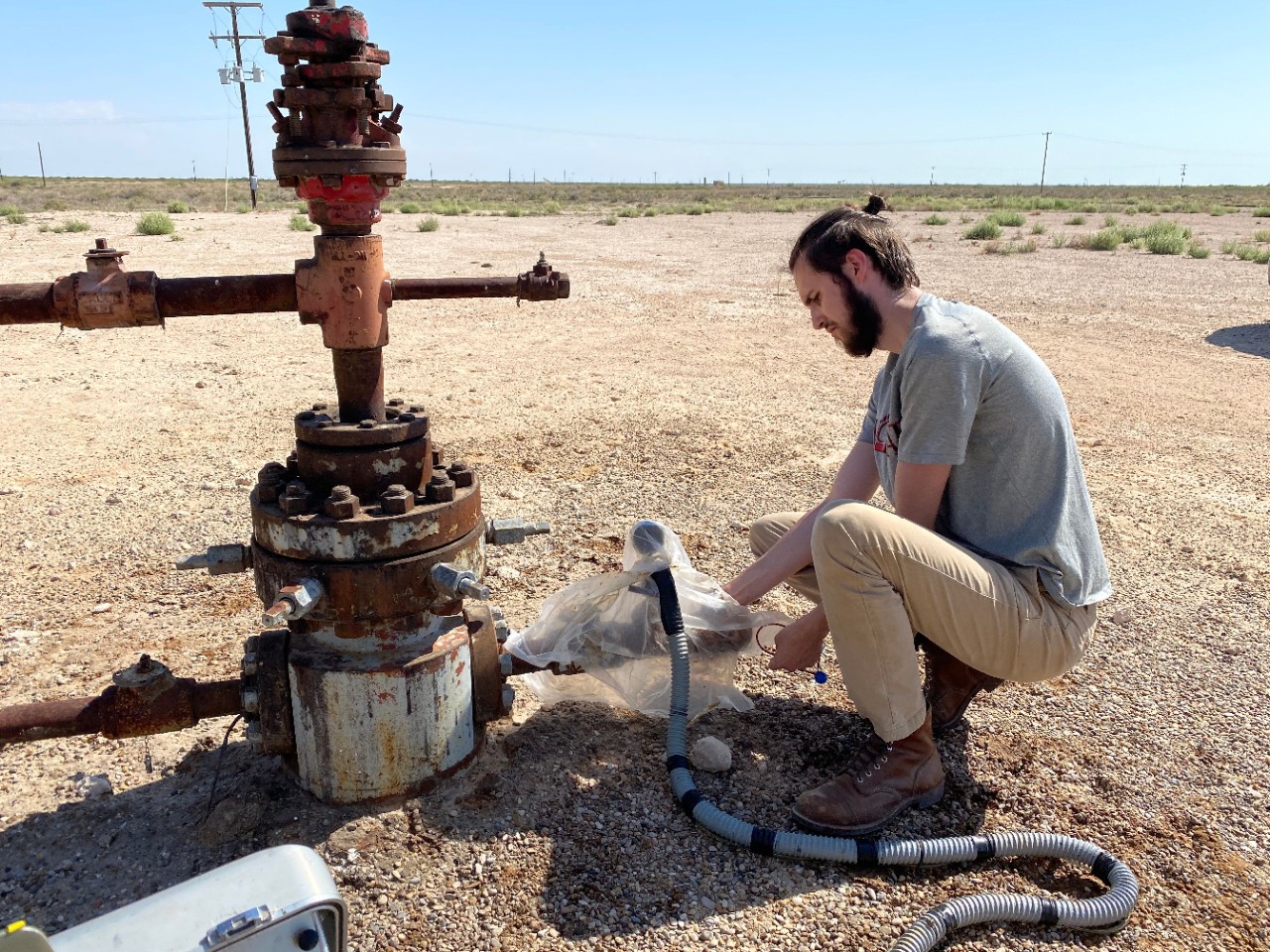
Featured image at top: UC graduate Jacob Hoschouer takes samples at the site of an oil well in Texas. Photo/Provided
Related Stories
‘Designer drug’ shows early neuroprotective signal in acute ischemic stroke
October 28, 2025

Medscape highlighted new trial results led by the University of Cincinnati's Eva Mistry that found an experimental drug shows promise in protecting injured brain cells for patients with acute ischemic stroke.
Is menstrual fluid ‘the most overlooked opportunity’ in women’s health?
October 27, 2025

The Guardian recently reported that period blood has long been thought of as ‘stinky and useless’, but startups are exploring using the fluid to test for a wide range of health conditions — including endometriosis.
What is squalane, and how does it work to moisturize skin?
October 27, 2025

The University of Cincinnati's Kelly Dobos was featured in a Women's Health article discussing squalane, an ingredient being increasingly used in moisturizing skincare products.