Cincinnati.com: Forever chemicals in Ohio's drinking water: Why Cincinnati is better off than Indian Hill
UC expert talks about the health threats from PFAS

New data from the U.S. Environmental Protection Agency shows that industrial pollutants, known as forever chemicals, which are linked to cancer and other serious ailments, are rarely detected in samples of drinking water from Cincinnati and most nearby communities.
The chemicals turn up in drinking water all over Greater Cincinnati, but how many toxins – and how much of them – flow from your tap depends on where you live. Cincinnati.com posted a story on PFAS, reporting that in Northern Kentucky and Colerain and Springfield townships, trace amounts are sometimes found at levels exceeding the EPA's minimum reporting limits.
Water districts that serve Indian Hill, Terrace Park and Loveland found the largest amount of forever chemicals in the area, with some samples measuring three to four times the reporting limits. In the Cincinnati.com article one of the experts cited was Susan Pinney, PhD, of the Department of Environmental and Public Health Sciences at the UC College of Medicine.

Susan Pinney, PhD, of the Department of Environmental and Public Health Sciences/Photo/Colleen Kelley/UC Marketing + Brand
Pinney said the half-life of PFAS compounds — the amount of time it takes the chemicals to lose half their toxicity — is about four years in the human body.
Because they take so long to break down in the body and in the environment, the amount of toxicity can build up in people who are regularly exposed to the compounds, which is why they are called “forever chemicals.”
Overhauling water treatment systems is an expensive process which poses challenges for some communities which can't afford to make the needed changes.
Every solution comes with costs, said Pinney. But she said the tougher regulations are necessary. She recently led a study that linked one PFAS compound to delays in the physical development of girls.
"As we continue to do research," she said, "we find there are health effects at lower and lower levels."
Pinney also discussed this topic as a guest on Cincinnati Edition on WVXU. Hear that interview here.
Read more about Pinney's research on how PFAS can delay puberty in girls here.
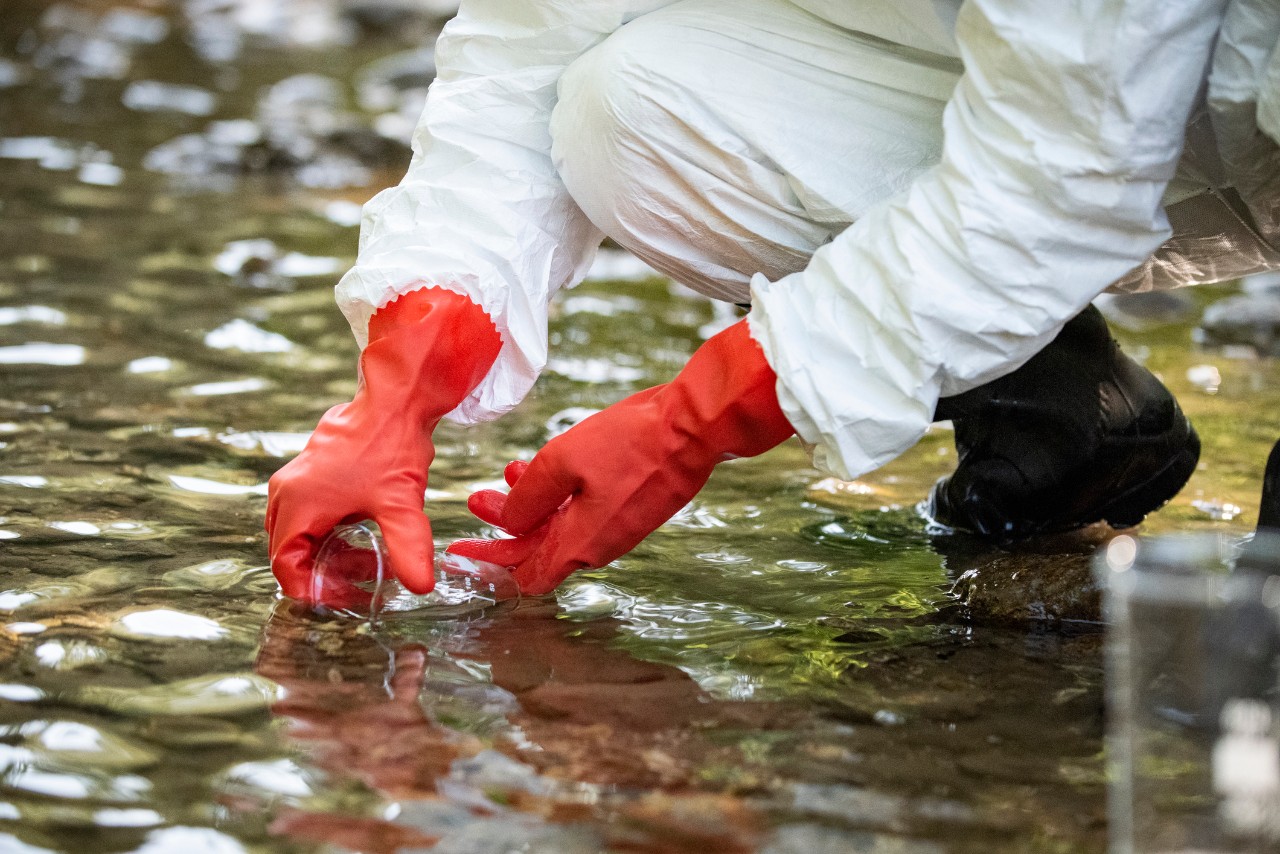
Featured image at top: vitranc/iStock
Next Lives Here
The University of Cincinnati is classified as a Research 1 institution by the Carnegie Commission and is ranked in the National Science Foundation's Top-35 public research universities. UC's graduate students and faculty investigate problems and innovate solutions with real-world impact. Next Lives Here.
Related Stories
‘Designer drug’ shows early neuroprotective signal in acute ischemic stroke
October 28, 2025

Medscape highlighted new trial results led by the University of Cincinnati's Eva Mistry that found an experimental drug shows promise in protecting injured brain cells for patients with acute ischemic stroke.
Is menstrual fluid ‘the most overlooked opportunity’ in women’s health?
October 27, 2025

The Guardian recently reported that period blood has long been thought of as ‘stinky and useless’, but startups are exploring using the fluid to test for a wide range of health conditions — including endometriosis.
What is squalane, and how does it work to moisturize skin?
October 27, 2025

The University of Cincinnati's Kelly Dobos was featured in a Women's Health article discussing squalane, an ingredient being increasingly used in moisturizing skincare products.