Popular Science: This 'blue dragon' sliced through ancient Pacific
UC College of Arts and Sciences paleontologist describes a mosasaur found in Japan

Popular Science highlighted a study by the University of Cincinnati describing a mosasaur new to science discovered in Japan.
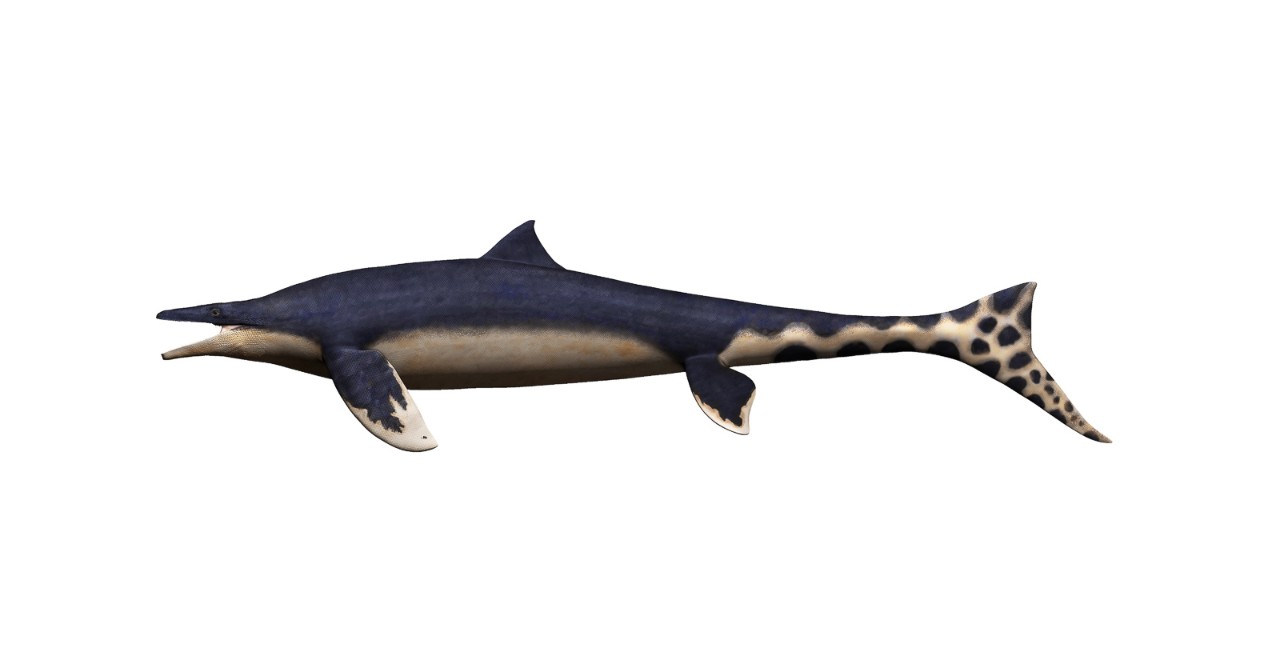
The Wakayama Soryu or “blue dragon” hunted waters off what is now Japan, according to the paper published in the Journal of Systematic Palaeontology.
The mosasaur was the size of a great white shark. But it had unusual features for mosasaurs, including a relatively shorter set of jaws, longer flippers and a dorsal fin based on the orientation of neural spines that resemble those of harbor porpoises.
“It’s still hypothetical and speculative to some extent, but that distinct change in neural spine orientation behind a presumed center of gravity is consistent with today’s toothed whales that have dorsal fins, like dolphins and porpoises,” Konishi said.
Read the Popular Science story.
Featured image at top: University of Cincinnati Associate Professor Takuya Konishi describes a mosasaur from Japan called the Wakayama Soryu. Illustration/Takumi
Related Stories
‘Designer drug’ shows early neuroprotective signal in acute ischemic stroke
October 28, 2025

Medscape highlighted new trial results led by the University of Cincinnati's Eva Mistry that found an experimental drug shows promise in protecting injured brain cells for patients with acute ischemic stroke.
Is menstrual fluid ‘the most overlooked opportunity’ in women’s health?
October 27, 2025

The Guardian recently reported that period blood has long been thought of as ‘stinky and useless’, but startups are exploring using the fluid to test for a wide range of health conditions — including endometriosis.
What is squalane, and how does it work to moisturize skin?
October 27, 2025

The University of Cincinnati's Kelly Dobos was featured in a Women's Health article discussing squalane, an ingredient being increasingly used in moisturizing skincare products.