Precision Medicine Online: UC launches clinical trial for post-spinal surgery pain management

Precision Medicine Online highlighted a University of Cincinnati Gardner Neuroscience Institute clinical trial applying a personalized approach to pain management that doctors hope can improve post-surgical pain, reduce opioid dependence and reduce length of hospital stays.
More than half of patients who undergo spine surgery report poor pain control, and between 30 and 50 percent experience chronic pain for longer than 12 weeks (the time of routine tissue healing) following surgery.
Led by the University of Cincinnati's Owoicho Adogwa, MD, the trial takes patients' blood and saliva samples to see how their unique genes respond to different medications.
"Drug reactions vary significantly among individuals," Adogwa, assistant professor of neurosurgery in UC's College of Medicine, told Precision Medicine Online. "In spine surgery, traditional 'one size fits all' pain management is often inadequate due to genetic variations in drug metabolism."
Adogwa said early results of the trial have been encouraging, including shorter hospital stays for patients in the active arm of the trial.
Read the Precision Medicine Online story.
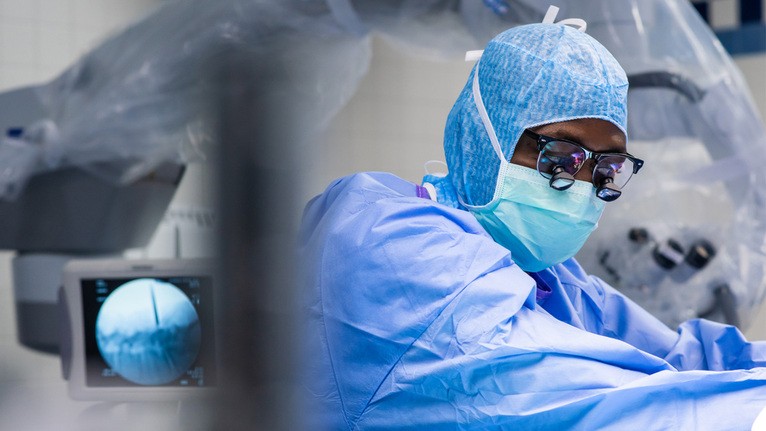
Featured photo at top of Dr. Adogwa in surgery. Photo/UC Health.
Related Stories
‘Designer drug’ shows early neuroprotective signal in acute ischemic stroke
October 28, 2025

Medscape highlighted new trial results led by the University of Cincinnati's Eva Mistry that found an experimental drug shows promise in protecting injured brain cells for patients with acute ischemic stroke.
UC Board votes to fund design for YMCA renovation
October 28, 2025
At its October 28, 2025 meeting, the University of Cincinnati Board of Trustees approved $5 million in funding to complete all design and pre-construction services required to renovate the interior of a former YMCA building located at 270 Calhoun Street.
Is menstrual fluid ‘the most overlooked opportunity’ in women’s health?
October 27, 2025

The Guardian recently reported that period blood has long been thought of as ‘stinky and useless’, but startups are exploring using the fluid to test for a wide range of health conditions — including endometriosis.