SPIA event March 19: 'Misinformation, Disinformation, and Media in Democracy'
2024 Michael Margolis Digital Citizenship event draws distinguished speakers to discuss the election

Event Information (passed)
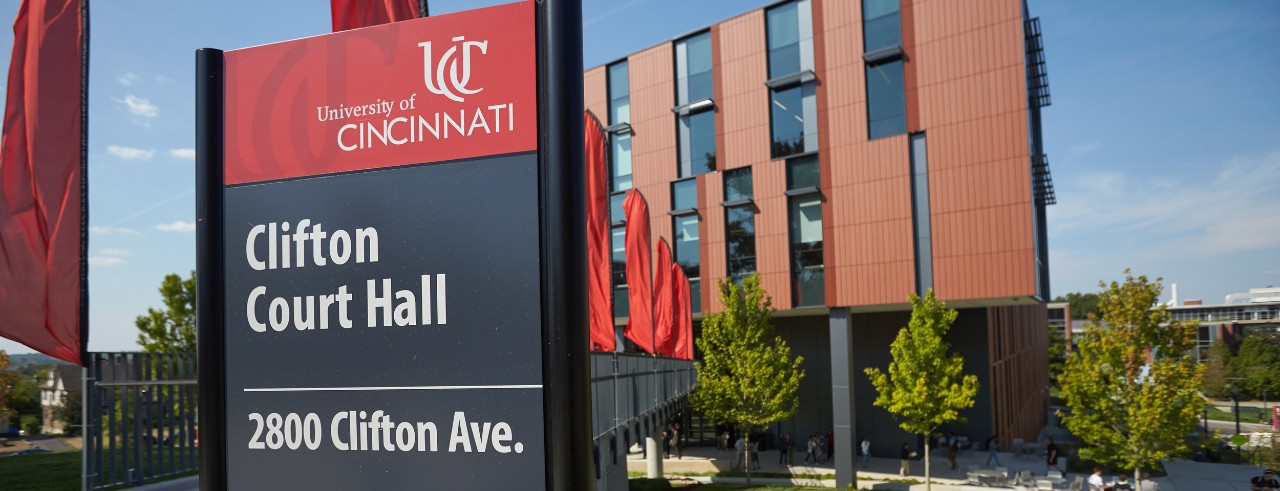
Join UC’s School of Public and International Affairs for the 2024 Michael Margolis Digital Citizenship event “Misinformation, Disinformation, and Media in Democracy” on Tuesday, March 19, from 2 - 3:20 p.m. at Clifton Court Hall, 2800 Clifton Ave., Room 1170.
A speakers book signing and reception will follow on the fifth floor, in the lobby of the School of Public and International Affairs (SPIA).
As the 2024 election cycle begins in earnest, the conversation will be about the nature and effect of misinformation and disinformation in democracies and how both traditional media and social media play a role in spreading or containing wrong information.
The discussion features distinguished scholars of political communication: Nick Anspach of York University in Pennsylvania and Dannagal G. Young of the University of Delaware. The discussion is hosted and moderated by journalist Alisyn Camarota with CNN.
About the speakers:

Journalist Alyisn Camerota. Photo credit/CNN.
Alisyn Camarota is a twice Emmy-nominated television journalist with over 30 years of experience. She previously worked at Fox News and has been at CNN since 2014. She has served as host for programs such as “New Day” and “CNN Tonight.” She has anchored numerous primetime specials, and her conversations with voters in the 2016 and 2020 elections were vital to CNN’s coverage. She is also the author of the novel “Amanda Wakes Up.”

Nick Anspach. Photo provided by SPIA
Nick Anspach works with experimental survey methods to study the effects of social media on political beliefs. Some interesting specific findings are that people rely on family and friends’ endorsements and comments, often learning false information from those comments, rather than learning factual information contained in the linked articles. Also, findings show that exposure to both implicitly and explicitly racist Donald Trump tweets increases the willingness of people to express negative views of minorities and that a significant cohort of voters has false views prior to exposure to “fake news.”

Dannagal Young. Photo provided by SPIA.
Dannagal G. Young has published on the nature and role of political satire and outrage driven media, the politics of COVID-19 and various other public opinion issues. The anchoring thread for her research involves understanding the epistemological and cognitive processes most commonly appealed to by liberals and conservatives, using this framing to help understand why some beliefs become widespread. She has also done a tremendous amount of public facing work (Vox, New York Times, the Atlantic, etc.), including a very successful TED Talk. Her latest book, “Wrong,” examines the appetite for misinformation and how the media feeds into it. That is, why are people willing — even eager — to believe things that are wrong and how is this used and reinforced by the media eco-system? The book looks at the “big picture” of how affective partisanship, polarization and sorting have combined with a fractured media environment to create an (asymmetrical) appetite for certain kinds of non-falsifiable information and an apparatus eager to feed it.
Featured image at top of Clifton Court Hall. Photo/UC Marketing + Brand.
Impact Lives Here
The University of Cincinnati is leading public urban universities into a new era of innovation and impact. Our faculty, staff and students are saving lives, changing outcomes and bending the future in our city's direction. Next Lives Here.
Related Stories
UC Foundation reveals 2025 philanthropy winners
October 27, 2025
The University of Cincinnati Foundation recognized its Outstanding Philanthropic Volunteer Award honorees at the George Rieveschl Recognition Dinner on Oct. 23, 2025.
UC team unveils Wyandot Removal Trail across Ohio
October 24, 2025

Rebecca Wingo, an associate professor of history and director of the public history program in the University of Cincinnati’s College of Arts and Sciences, is featured in a WVXU story about new historical markers honoring the Wyandot people—the last Indigenous nation forcibly removed from Ohio.
John Updike called his letters dull. They’re anything but.
October 23, 2025

James A. Schiff, founding editor of The John Updike Review and UC English professor, edited Selected Letters of John Updike, the first comprehensive collection of the author’s correspondence. Drawing from thousands of letters spanning Updike’s life, Schiff offers new insight into the writer’s personal and literary world. The volume was edited by The New York Times.