WLWT: Beautiful pear tree causes ugly invasive problem
UC biologist suggests homeowners consider replacing tree with native alternatives

WLWT spoke to a biologist with the University of Cincinnati about a pretty but invasive ornamental tree that is in bloom now across Ohio.
UC College of Arts and Sciences Professor Theresa Culley, head of UC's Department of Biological Sciences, told WLWT that the Bradford or Callery pear tree was sterile when growers introduced it to neighborhoods across the Midwest in the 1960s.

Theresa Culley. Photo/Joseph Fuqua II/UC
But this tree from Asia tended to split at its trunk, so growers introduced other varieties that cross-pollinated with Bradford pear trees and began producing seed-bearing fruit.
Soon, the pear trees were showing up in disturbed patches of forest and along highway edges in Ohio and other states.
An Ohio law went into effect last year making the selling, growing or planting of Callery pears illegal statewide.
Culley said homeowners might consider replacing pear trees in their yards with native plants.
"A lot of people really love their tree," she said.
One alternative is to spray the tree with plant-growth regulator treatments available at home and garden shops that inhibit a tree's development of fruit, she said.
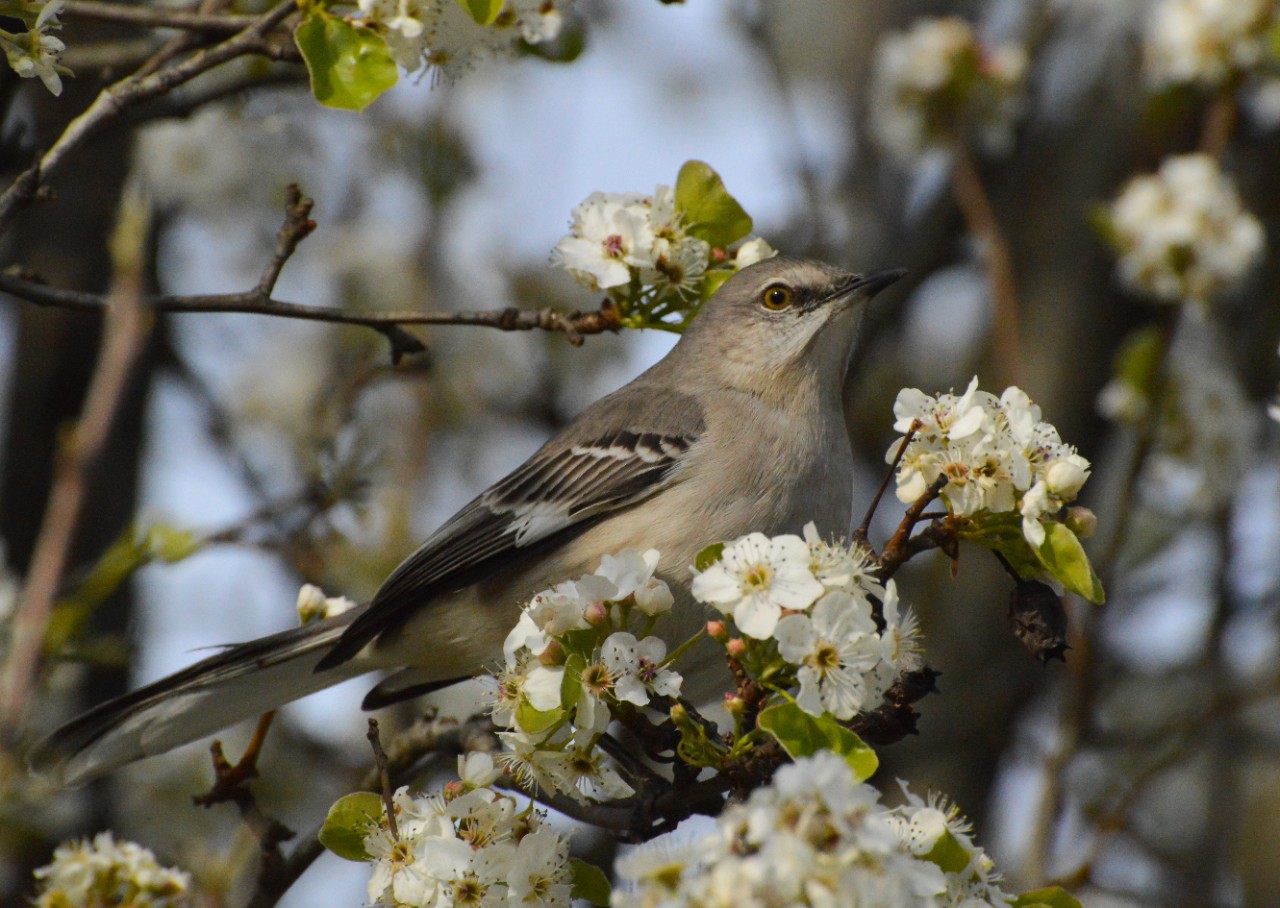
Featured image at top: A mockingbird perches in a Callery pear tree. Photo/Michael Miller
Related Stories
‘Designer drug’ shows early neuroprotective signal in acute ischemic stroke
October 28, 2025

Medscape highlighted new trial results led by the University of Cincinnati's Eva Mistry that found an experimental drug shows promise in protecting injured brain cells for patients with acute ischemic stroke.
Is menstrual fluid ‘the most overlooked opportunity’ in women’s health?
October 27, 2025

The Guardian recently reported that period blood has long been thought of as ‘stinky and useless’, but startups are exploring using the fluid to test for a wide range of health conditions — including endometriosis.
What is squalane, and how does it work to moisturize skin?
October 27, 2025

The University of Cincinnati's Kelly Dobos was featured in a Women's Health article discussing squalane, an ingredient being increasingly used in moisturizing skincare products.