New York Times, National Geographic: EPA says ‘forever chemicals’ must be removed from tap water

The University of Cincinnati's Susan Pinney was featured in the New York Times and National Geographic in stories on the EPA's recent requirement that municipal water systems remove six synthetic chemicals linked to cancer and other health problems that are present in the tap water of hundreds of millions of Americans.
The new rule states water providers must reduce levels of industrial pollutants perfluoroalkyl and polyfluoroalkyl substances, known collectively as PFAS or "forever chemicals," to nearly zero.
Pinney, professor in the Department of Environmental & Public Health Sciences in UC's College of Medicine, director of the Center for Environmental Genetics and associate director of population science in the University of Cincinnati Cancer Center, is a nationally known expert on forever chemicals who has studied the topic for years.
“The evidence of PFAS being dangerous goes all the way back to the 1980s when chemists were doing studies, noticed that PFAS had the same chemical structure as other dangerous chemicals and they reported on it,” Pinney says. “It’s taken a very long time for us to recognize it as a human toxin. Meanwhile, all of these toxins got into our environment, and it’s going to take a long time before they leave.”
The Times cited Pinney's recently published research that found exposure to PFAS may delay the onset of puberty in girls. She said the number of people exposed to PFAS nationwide is "mind boggling."
“Puberty is a window of susceptibility,” Pinney said. “Environmental exposures during puberty, not just to PFAS, but anything, have more of a potential for a long-term health effect. What these have done is extended the window of susceptibility, and it makes them more vulnerable for a longer period of time.”
Pinney told National Geographic she "applauds" the EPA decision.
“It’s in line with what we know about the health effects of PFAS,” Pinney said.
Read the New York Times story.
Read the National Geographic story.
Pinney's research was also featured in a Columbus Dispatch story on the new EPA rule. Read the Dispatch story.
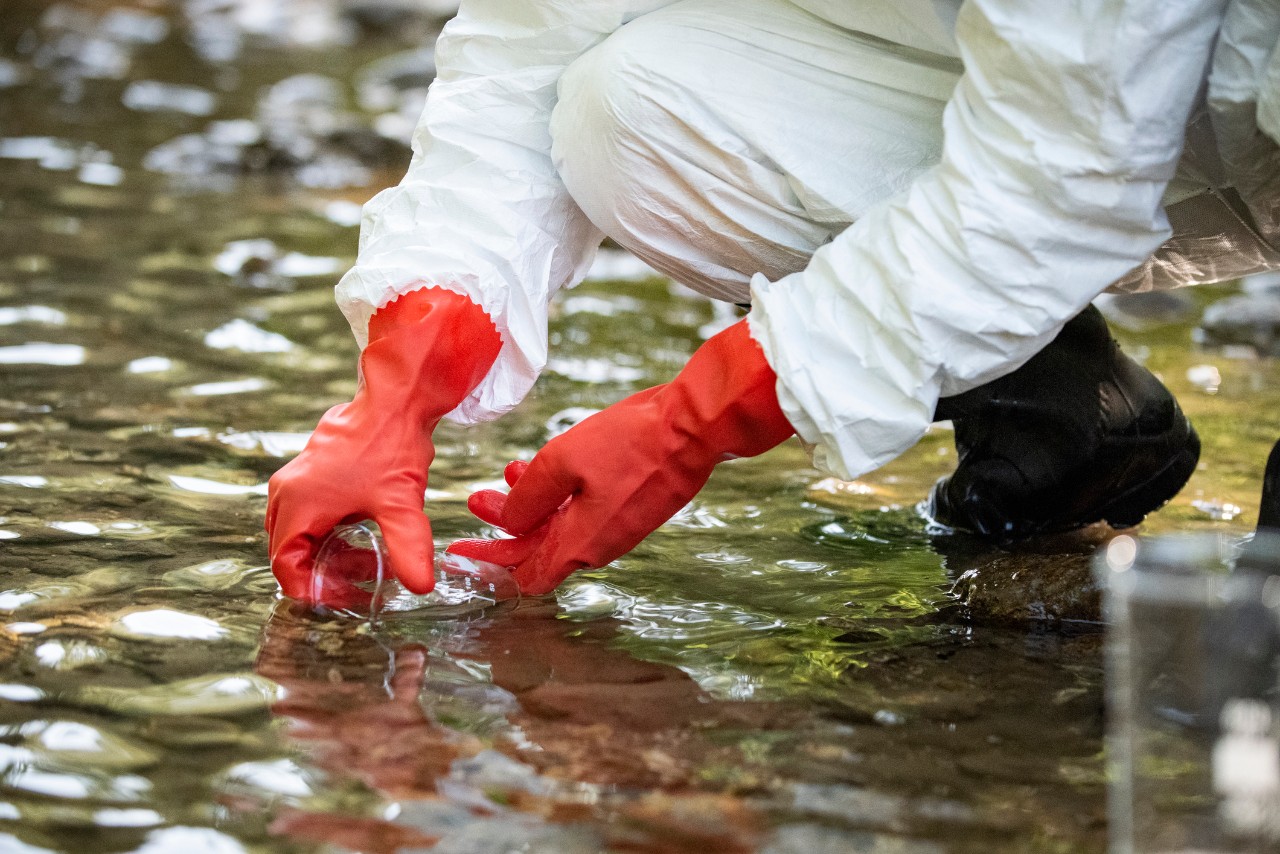
Featured photo at top of water sampling. Photo/iStock/vitranc.
Related Stories
‘Designer drug’ shows early neuroprotective signal in acute ischemic stroke
October 28, 2025

Medscape highlighted new trial results led by the University of Cincinnati's Eva Mistry that found an experimental drug shows promise in protecting injured brain cells for patients with acute ischemic stroke.
UC Board votes to fund design for YMCA renovation
October 28, 2025
At its October 28, 2025 meeting, the University of Cincinnati Board of Trustees approved $5 million in funding to complete all design and pre-construction services required to renovate the interior of a former YMCA building located at 270 Calhoun Street.
Is menstrual fluid ‘the most overlooked opportunity’ in women’s health?
October 27, 2025

The Guardian recently reported that period blood has long been thought of as ‘stinky and useless’, but startups are exploring using the fluid to test for a wide range of health conditions — including endometriosis.