Washington Post: The hour after leaving day care is a nutritional fail for kids

The Washington Post highlighted research led by University of Cincinnati and Cincinnati Children's Hospital researchers that found kids eat fewer healthy foods and take in 22% of their day’s added sugar intake in the single hour after they’re picked up from child care.
Published in the journal Children’s Health Care, the study used dietary intake data from 307 children attending 30 child-care centers in Hamilton County, Ohio, between 2009 and 2011. The children were an average of 4.3 years old, and 57% were eligible for subsidized meals through the federal Child and Adult Care Food Program, which reimburses child-care centers for providing nutritious foods.
Children ate an average of 1,471.6 calories a day, the study found, but the kids ate fewer servings of dairy and vegetables in the hours before and after child-care pickup and drop-off and more added sugar and snack foods. In the hour after arriving at a child-care center, the researchers found, the children ate less and took in less added sugar and sweet and salty foods, and were more likely to eat dairy and fruit.
“Every parent knows how busy that time of day can feel. Parents can feel stressed, the kids may be cranky, hungry, or tired. There’s nothing wrong with treats once in a while,” the study’s senior author, Kristen Copeland, MD, professor in UC's Department of Pediatrics in the College of Medicine and an attending physician at Cincinnati Children’s, said. “But that car ride home also can be an opportunity to instill healthier habits instead of less healthy ones.”
Read the Washington Post article. (Note: Subscription may be required to view full story.)
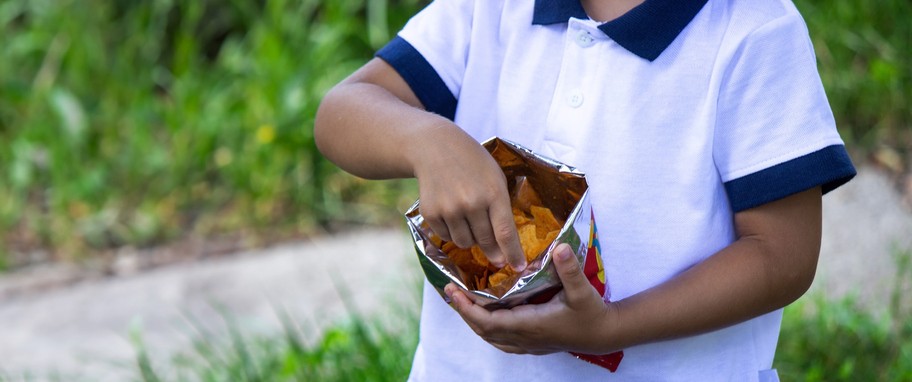
Featured photo at top of a child reaching into a bag of chips. Photo/Anna Solovel/iStock.
Related Stories
‘Designer drug’ shows early neuroprotective signal in acute ischemic stroke
October 28, 2025

Medscape highlighted new trial results led by the University of Cincinnati's Eva Mistry that found an experimental drug shows promise in protecting injured brain cells for patients with acute ischemic stroke.
Is menstrual fluid ‘the most overlooked opportunity’ in women’s health?
October 27, 2025

The Guardian recently reported that period blood has long been thought of as ‘stinky and useless’, but startups are exploring using the fluid to test for a wide range of health conditions — including endometriosis.
What is squalane, and how does it work to moisturize skin?
October 27, 2025

The University of Cincinnati's Kelly Dobos was featured in a Women's Health article discussing squalane, an ingredient being increasingly used in moisturizing skincare products.