Trial finds new drug safe, effective to treat deadliest form of epilepsy
MSN highlights UC trial data presentation

MSN highlighted research presented by the University of Cincinnati’s Brandon Foreman that found ganaxolone is a safe and effective treatment for refractory status epilepticus, the most severe and deadly form of epilepsy where seizures do not stop.
Current standards of care include administering an intravenous antiseizure medicine, a benzodiazepine such as midazolam, as soon as possible to stop seizures. When those do not work, a second intravenous antiseizure medication is started, but about one quarter of patients continue to experience seizures, termed refractory status epilepticus (RSE).
The Phase 3 RAndomized Therapy In Status Epilepticus (RAISE) trial tested a neurosteroid called ganaxolone for patients hospitalized with seizures that progressed to RSE despite receiving two or more antiseizure medications.
Researchers found a statistically significant proportion of patients who received ganaxolone stopped seizing within 30 minutes: 80% of those patients receiving ganaxolone saw their RSE stop a median of just 4 minutes after the drug was administered.
“Ganaxolone as a rapidly effective medication would fill a specific gap in care for which there are no current treatment options beyond intubation and anesthetic medications if standard antiseizure medications fail,” he said. “It is recognized that the use of anesthetics increases the morbidity and mortality of RSE, so ganaxolone has the potential to save lives and avoid prolonged intensive care.”
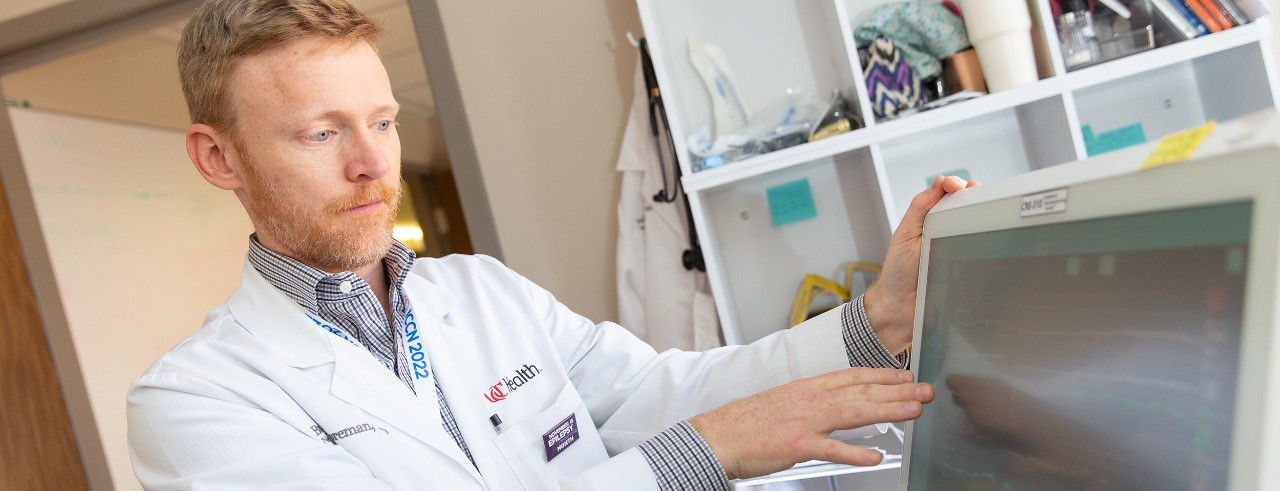
Featured photo at top of Foreman looking at a brain monitor. Photo/Andrew Higley/UC Marketing + Brand.
Related Stories
UC launches Bearcats Affordability Grant
January 7, 2026
The University of Cincinnati is making college more attainable for students across Ohio with the creation of the Bearcats Affordability Grant. The new grant will provide a pathway to tuition-free college for students of families who make less than $75,000 per year. Beginning in fall 2026, the Bearcats Affordability Grant will cover the remaining cost of tuition for Ohio residents who are Pell eligible.
BearcatGPT AI platform now available to all UC faculty and staff
December 9, 2025
University of Cincinnati Digital Technology Solutions is excited to announce that BearcatGPT, the university’s private, secure AI platform, is now available to all UC faculty and staff.
‘Designer drug’ shows early neuroprotective signal in acute ischemic stroke
October 28, 2025

Medscape highlighted new trial results led by the University of Cincinnati's Eva Mistry that found an experimental drug shows promise in protecting injured brain cells for patients with acute ischemic stroke.