UC expert: More oil production means more leaks
Environmental studies professor talks about railcar leak that prompted evacuations

The Cincinnati Enquirer turned to an environmental studies professor to explain why Ohio has seen several high-profile rail disasters that have led to neighborhood evacuations.
Neighborhoods in southwest Ohio were evacuated as a precaution on Sept. 24 after a rail car was discovered spewing a toxic chemical called styrene commonly used in plastics.
In 2023, a train derailed outside East Palestine, Ohio, prompting evacuations after vinyl chloride spilled into the Ohio River.

UC Professor Amy Townsend-Small teaches environmental studies in UC's College of Arts and Sciences. Photo/Jay Yocis/UC
UC College of Arts and Sciences Professor Amy Townsend-Small told the Enquirer that both chemicals are byproducts of oil. She teaches in UC's School of Environment and Sustainability.
“These train cars that we see throughout Cincinnati, they’re all carrying petrochemicals,” she said.
Styrene is an organic molecule that's used in making Styrofoam and other plastics, she said.
It's considered a likely carcinogen, according to the National Research Council.
Townsend-Small said the likelihood of rail accidents increases with the increase in rail use. Ohio ranks fourth in the nation in miles of active freight rail, according to the Association of American Railroads.
And as the United States turns to greener transportation, gas and oil companies are dedicating more petrochemicals to plastics production, Townsend-Small said.
The Ohio River is home to dozens of oil, gas and petrochemical facilities.
Read the Cincinnati Enquirer story.
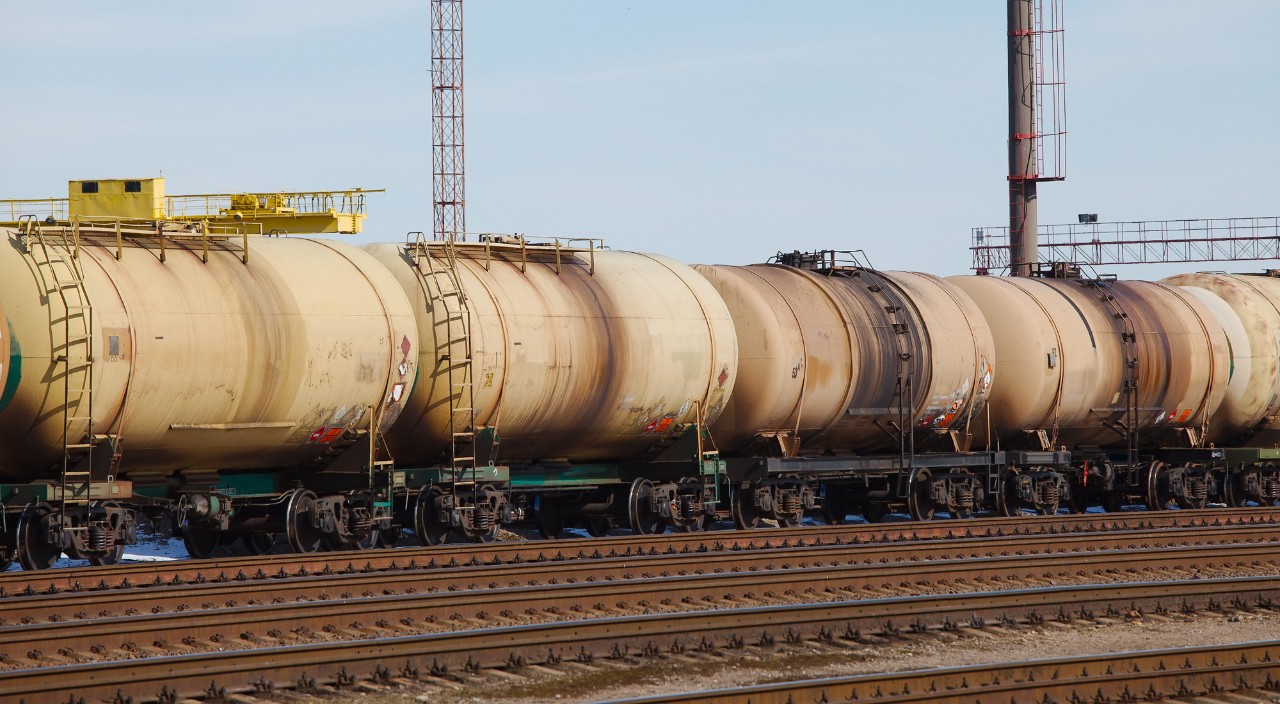
Featured image at top: UC Professor Amy Townsend-Small said the booming production of oil and natural gas has led to increased transportation of toxic chemicals across America's rail system. Photo/iStockPhoto
Related Stories
‘Designer drug’ shows early neuroprotective signal in acute ischemic stroke
October 28, 2025

Medscape highlighted new trial results led by the University of Cincinnati's Eva Mistry that found an experimental drug shows promise in protecting injured brain cells for patients with acute ischemic stroke.
Is menstrual fluid ‘the most overlooked opportunity’ in women’s health?
October 27, 2025

The Guardian recently reported that period blood has long been thought of as ‘stinky and useless’, but startups are exploring using the fluid to test for a wide range of health conditions — including endometriosis.
What is squalane, and how does it work to moisturize skin?
October 27, 2025

The University of Cincinnati's Kelly Dobos was featured in a Women's Health article discussing squalane, an ingredient being increasingly used in moisturizing skincare products.