Why is anxiety worse at night?
UC expert featured in TIME article

The University of Cincinnati's Jeffrey Strawn was featured in a TIME article discussing why anxiety can often be worse at night and tips to address nighttime anxiety.
Strawn said during the day, people are likely preoccupied with work, errands, chores and other obligations, but at night the brain has fewer distractions. Especially once you get into bed, this can create a “perfect setup for that runaway anxiety, that ruminative thinking about ‘what if’ and ‘what about,’ and then also replaying the prior day,” he said.
Getting into a good sleep routine and a good night's rest can help ease anxiety.
“Sleep is medicine,” said Strawn, MD, professor in the Department of Psychiatry and Behavioral Neuroscience in UC’s College of Medicine and a UC Health child and adolescent psychiatrist.
If you're spiraling into anxiety while in bed and unable to fall asleep, Strawn said it's important to get out of the bed. He recommends doing something that isn't cognitively stimulating, like reading your dishwasher's manual, to avoid subconsciously associating your bed with worry and wakefulness.
“If folks aren’t able to fall asleep in about 15 minutes, I want them to get out of bed,” he said.
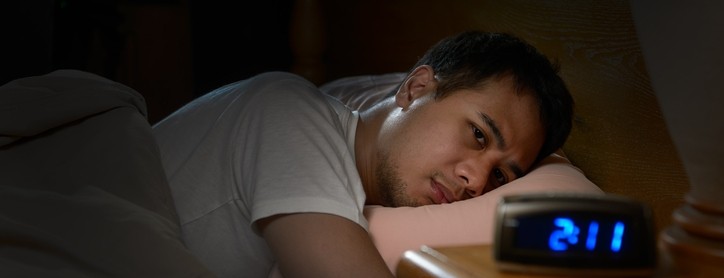
Featured photo at top of a person awake in the middle of the night. Photo/amenic181/iStock Photo.
Related Stories
‘Designer drug’ shows early neuroprotective signal in acute ischemic stroke
October 28, 2025

Medscape highlighted new trial results led by the University of Cincinnati's Eva Mistry that found an experimental drug shows promise in protecting injured brain cells for patients with acute ischemic stroke.
UC Board votes to fund design for YMCA renovation
October 28, 2025
At its October 28, 2025 meeting, the University of Cincinnati Board of Trustees approved $5 million in funding to complete all design and pre-construction services required to renovate the interior of a former YMCA building located at 270 Calhoun Street.
Is menstrual fluid ‘the most overlooked opportunity’ in women’s health?
October 27, 2025

The Guardian recently reported that period blood has long been thought of as ‘stinky and useless’, but startups are exploring using the fluid to test for a wide range of health conditions — including endometriosis.