Should the FDA reconsider antidepressant boxed warnings?
UC expert featured in Medscape article

The University of Cincinnati's Jeffrey Strawn, MD, spoke with Medscape about whether the Food and Drug Administration should reevaluate boxed warnings on antidepressants linking the medications to an increased risk for suicidal thoughts and behaviors in young people.
The warnings have been in place for almost two decades, but evidence suggests they may have led to fewer depression diagnoses, reduced prescriptions and higher suicide rates.
Strawn said there was not as much data on the risks and benefits of antidepressants in youth when the warnings were instituted, but the current evidence suggests it's time to reevaluate the warnings.
“I don’t think that they’ve been useful. They’ve actually been harmful,” Strawn, professor in the Department of Psychiatry and Behavioral Neuroscience in UC’s College of Medicine and a UC Health child and adolescent psychiatrist, told Medscape Medical News. “These boxed warnings have decreased physicians’ and other clinicians’ comfort and tendency to prescribe.”
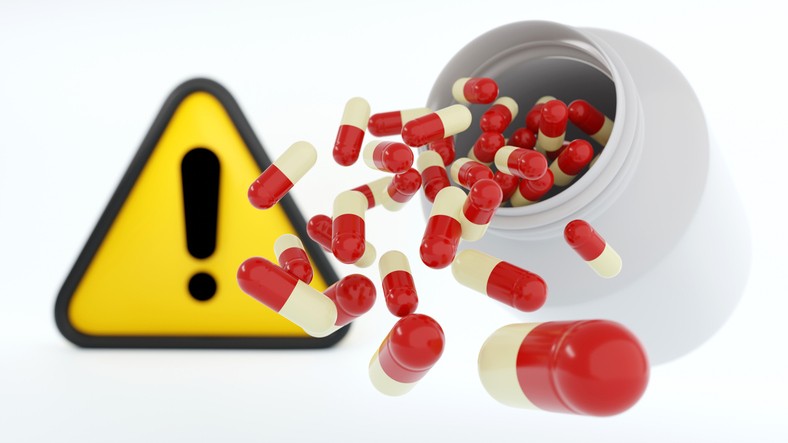
Featured photo at top of medication spilling out of a bottle with a warning symbol in the background. Photo/Arthit Pornpikanet/iStock.
Related Stories
‘Designer drug’ shows early neuroprotective signal in acute ischemic stroke
October 28, 2025

Medscape highlighted new trial results led by the University of Cincinnati's Eva Mistry that found an experimental drug shows promise in protecting injured brain cells for patients with acute ischemic stroke.
UC Board votes to fund design for YMCA renovation
October 28, 2025
At its October 28, 2025 meeting, the University of Cincinnati Board of Trustees approved $5 million in funding to complete all design and pre-construction services required to renovate the interior of a former YMCA building located at 270 Calhoun Street.
Is menstrual fluid ‘the most overlooked opportunity’ in women’s health?
October 27, 2025

The Guardian recently reported that period blood has long been thought of as ‘stinky and useless’, but startups are exploring using the fluid to test for a wide range of health conditions — including endometriosis.