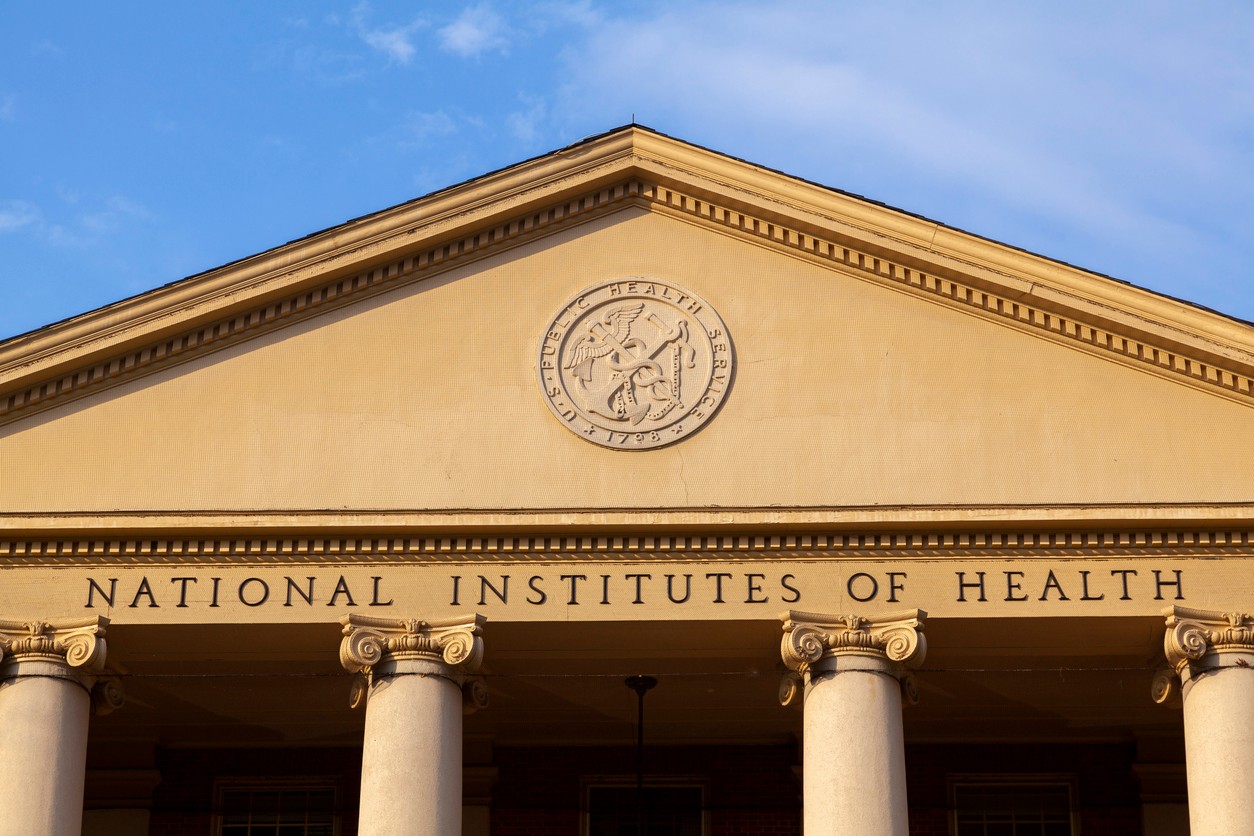
The Hill: NIH funding cuts imperil lifesaving drugs and US prosperity

Professor Jennifer S. Bard, University of Cincinnati College of Law, recently co-authored an opinion editorial for The Hill concerning the health and economic benefits of National Institute of Health (NIH) funding and the societal impact of reducing its funding. The editorial, co-authored by Professor Lawrence Gostin, O’Neill Institute for National and Global Health Law at Georgetown University and Director of the World Health Organization Center on Global Health Law, explained what the co-authors believe to be the critical importance of government funding to the work of the NIH, the historical success of the NIH’s work supported through government funding, and the potentially negative impact of a loss of funding, particularly to support vital clinical studies.
Wrote the authors, “The NIH funds basic “high-risk and pre-commercial research” that no private capital venture or pharmaceutical company would invest in due to the long horizon for finding cures. Across the board — from Alzheimer’s disease to cancer and heart disease — NIH’s funding of basic research has turned out to be a spectacularly successful investment.”
They noted that a recent study found that the NIH supported 354 out of 356 drugs approved from 2010-2019. “That means that most of the lifesaving medications we take for granted today would not have been possible without the NIH.”
The authors go on to discuss the impact of funding reduction, including decimating biomedical research, the potential job loss for thousands of highly trained researchers, and the negative impact on patients currently enrolled in clinical trials who would lose access to those cutting-edge treatments.
Concluded Bard and Gostin, “The NIH funding model has made the U.S. the world’s science superpower and our universities the premier destination for students from every nation. Slashing NIH funding will not save money, but it will unravel a biomedical system that has powered our economy and protected our population for generations.”
Read the entire editorial here: NIH funding cuts imperil lifesaving drugs and US prosperity
Learn more about Professor Jennifer S. Bard and her scholarship.
Learn more about Professor Lawrence Gostin and his scholarship.
Lead photo: instockphoto.com
Related Stories
‘Designer drug’ shows early neuroprotective signal in acute ischemic stroke
October 28, 2025

Medscape highlighted new trial results led by the University of Cincinnati's Eva Mistry that found an experimental drug shows promise in protecting injured brain cells for patients with acute ischemic stroke.
UC Board votes to fund design for YMCA renovation
October 28, 2025
At its October 28, 2025 meeting, the University of Cincinnati Board of Trustees approved $5 million in funding to complete all design and pre-construction services required to renovate the interior of a former YMCA building located at 270 Calhoun Street.
Is menstrual fluid ‘the most overlooked opportunity’ in women’s health?
October 27, 2025

The Guardian recently reported that period blood has long been thought of as ‘stinky and useless’, but startups are exploring using the fluid to test for a wide range of health conditions — including endometriosis.