Volcanic ash buried huge herd of Nebraskan rhinos
UC researchers discover prehistoric rhinos lived in super-herds

Discover magazine highlighted research by the University of Cincinnati that found prehistoric rhinos lived in super-herds 12 million years ago.
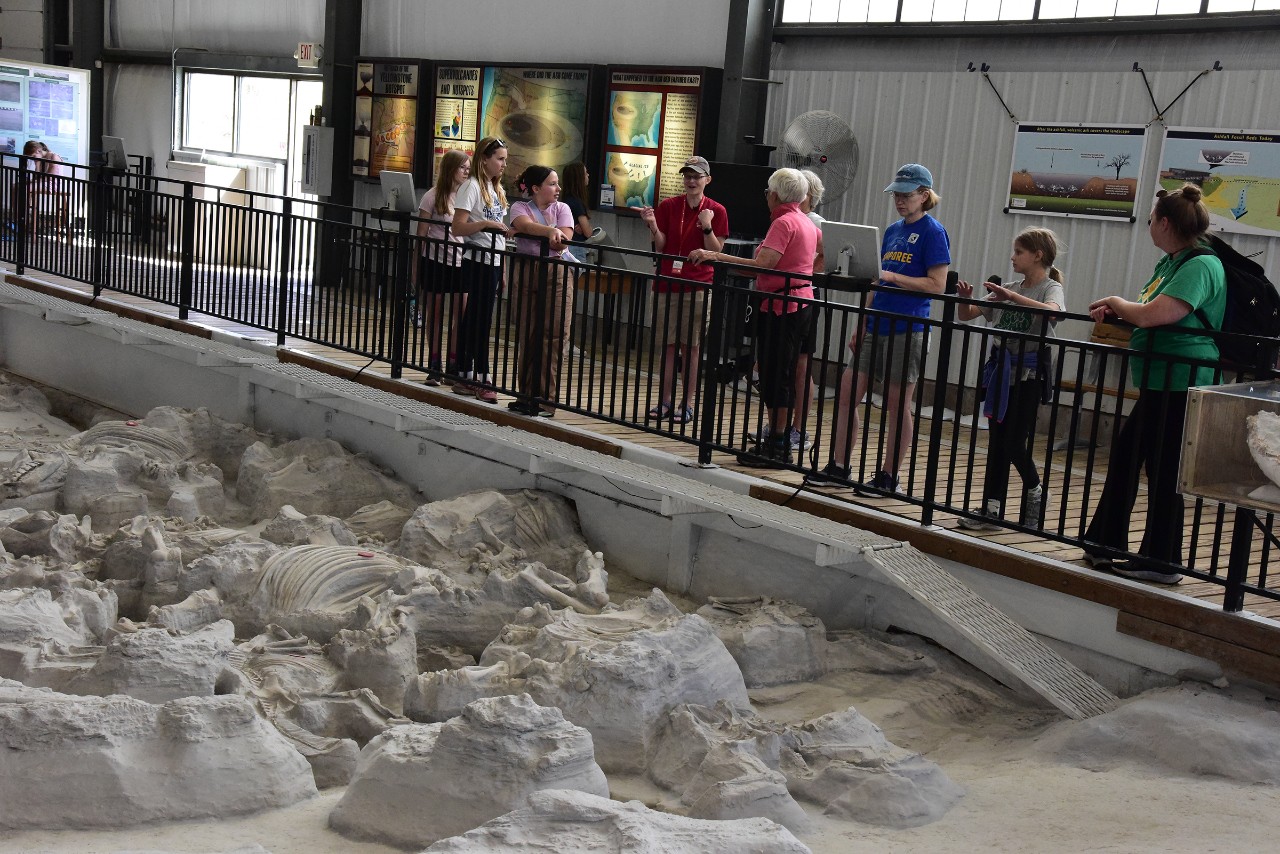
Researchers studied the isotopes of rhino teeth found in what is now northeast Nebraska. Here, more than 100 rhinos at a single water hole died and were entombed in ash from an eruption of the Yellowstone supervolcano.
Since the discovery of rhinos at Nebraska’s Ashfall Fossil Beds State Historical Park in 1971, researchers have wondered what drew so many animals together in the same place. Did they converge from far away, perhaps to seek shelter from the unfolding natural disaster of the volcanic eruption with its choking ash?
“We found they didn’t move very much,” lead author and UC graduate Clark Ward said. “We didn’t find evidence for seasonal migration or any evidence of a response to the disaster.”
Read the Discover magazine story.
Featured image at top: Visitors listen to a docent at Nebraska's Ashfall Fossil Beds State Historical Park. Photo/John Haxby/The University of Nebraska State Museum
More UC Geosciences in the news

Ashfall Fossil Beds State Historical Park features more than 100 specimens of prehistoric rhino. Photo/John Haxby/The University of Nebraska State Museum
- BBC Wildlife Magazine: In the 1970s, over 100 ancient rhinos were found entombed in Yellowstone ash — we finally know what happened
- Billings Gazette: Prehistoric rhinos lived in super-herds
- All That's Interesting: Scientists investigate fossils from massive herd of prehistoric rhinos
Related Stories
‘Designer drug’ shows early neuroprotective signal in acute ischemic stroke
October 28, 2025

Medscape highlighted new trial results led by the University of Cincinnati's Eva Mistry that found an experimental drug shows promise in protecting injured brain cells for patients with acute ischemic stroke.
Is menstrual fluid ‘the most overlooked opportunity’ in women’s health?
October 27, 2025

The Guardian recently reported that period blood has long been thought of as ‘stinky and useless’, but startups are exploring using the fluid to test for a wide range of health conditions — including endometriosis.
What is squalane, and how does it work to moisturize skin?
October 27, 2025

The University of Cincinnati's Kelly Dobos was featured in a Women's Health article discussing squalane, an ingredient being increasingly used in moisturizing skincare products.