ChemoID test leads to better outcomes in platinum-resistant ovarian cancer
MSN highlights research published in npj Precision Oncology

MSN and MSN UK highlighted results from a new Phase 3 trial published in the journal npj Precision Oncology that found a cancer stem cell test can accurately choose more effective treatments and lead to improved outcomes for patients with platinum-resistant ovarian cancer.
The University of Cincinnati Cancer Center’s Thomas Herzog, MD, the study’s first author, said epithelial ovarian cancer often initially responds to chemotherapy treatment and then enters a period of resistance to therapy and tumor regrowth.
“This is partly due to the selection and reactivation of cancer stem cells (CSCs) that rebuild and repair the tumor from the damage received from chemotherapy,” said Herzog, a Cancer Center physician researcher, the Paul and Carolyn Flory Professor in Gynecologic Oncology in the UC College of Medicine and director of UC Health’s Gynecologic Cancer Disease Center.
Pier Paolo Claudio, MD, who codeveloped the clinical test, said the ChemoID platform challenges the CSCs found in individual patients' tumors against specific anticancer drugs to identify which drugs are likely to be the most effective.
The 81 patients with platinum-resistant ovarian cancer (cancer recurrence within six months of receiving a platinum-based chemotherapy) enrolled in the trial were randomized to have the choice of chemotherapy treatment decided through ChemoID or to have physicians choose using standard methods. Herzog said doctors selecting treatments typically rely on approved therapies, past experiences, patients’ prior treatments, and toxicity or side effects patients have already experienced.
The overall response rate of patients in the ChemoID arm was 50%, compared to 5% for patients in the physician-choice arm. Median progression free survival for patients in the ChemoID arm was 11 months, compared to a median of three months for the physician-choice arm. ChemoID patients had a median duration of response of eight months, compared to five-and-a-half months for physician-choice.
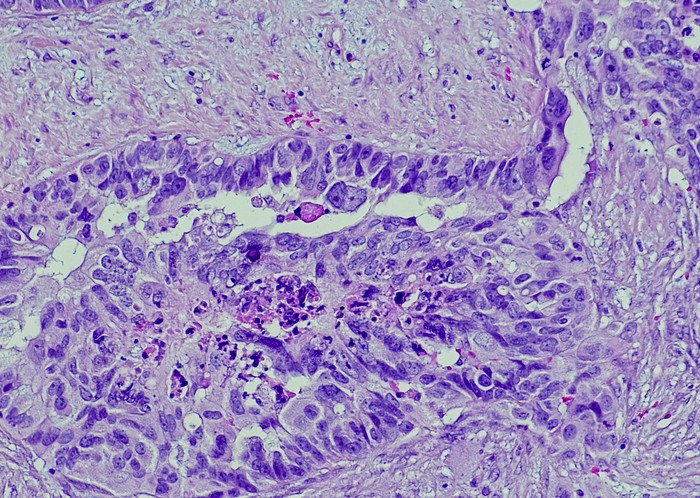
Featured photo at top of ovarian cancer cells. Photo/OGPhoto/iStock.
Related Stories
‘Designer drug’ shows early neuroprotective signal in acute ischemic stroke
October 28, 2025

Medscape highlighted new trial results led by the University of Cincinnati's Eva Mistry that found an experimental drug shows promise in protecting injured brain cells for patients with acute ischemic stroke.
UC Board votes to fund design for YMCA renovation
October 28, 2025
At its October 28, 2025 meeting, the University of Cincinnati Board of Trustees approved $5 million in funding to complete all design and pre-construction services required to renovate the interior of a former YMCA building located at 270 Calhoun Street.
Is menstrual fluid ‘the most overlooked opportunity’ in women’s health?
October 27, 2025

The Guardian recently reported that period blood has long been thought of as ‘stinky and useless’, but startups are exploring using the fluid to test for a wide range of health conditions — including endometriosis.