
How are tariffs impacting your retirement plans?
Lindner professor explains the latest on tariffs in WVXU interview

WVXU sat down with University of Cincinnati’s Michael Neugent for a look into how tariffs impact the markets, retirement funds and inflation.
Neugent, associate professor-educator at Lindner College of Business and Director of the MS Finance Program, said that investors in the stock market prefer certainty in fiscal policy to help them map out investment decisions. “Right now, that lack of certainty is providing some angst within the market and investors,” he told WVXU. Many U.S. companies will face challenges from tariffs, but pauses on tariff plans can sometimes lead to more questions than answers.
Neugent also said it is important to keep in mind that not every company will hurt from an increase in tariffs. “Certain companies are more exposed than others to the tariffs. There are others that are relatively immune, and actually may benefit from what’s happening,” he explained.
To Neugent, that’s where having a financial adviser can come in handy, as they can parse out which companies can benefit even as markets may overall falter. “If you have a financial adviser, talk to them. If you don’t have one, get one,” he told WVXU.
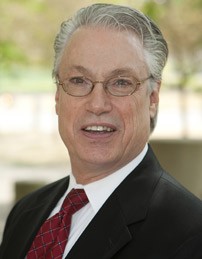
Michael Neugent is an associate professor-educator at Lindner College of Business and Director of the MS Finance Program. Photo/UC Marketing + Brand
In terms of retirement funds, Neugent said to slow down and focus on the long-term. “A lot of times people make the mistake of looking only at a retirement portfolio and not all of their assets,” he said. “So, they don't realize that while the market may be exposed, other assets are not exposed; for example, real estate.”
Neugent said that as people get closer to retirement, it is common to “de-risk” portfolios and invest into more fixed income regardless of the state of the market. “As you get closer to retirement it’s not so much about what you make - it’s about what you don’t lose,” he said. “Each person has to decide what their risk tolerance is.” He also said a financial adviser can help people figure out which avenues to pursue for retirement, such as annuities, IRAs and 401(k)s, as each come with their own fees and nuances.
WXVU also asked Neugent about inflation risks for consumer goods. “I would look at this kind of like we saw in COVID. People stocked up out of fear more so than necessity. Everything’s not going to be equally impacted,” he said. While consumers may buy less discretionary goods, they will still need staple products, and likely continue to buy them regularly.
Neugent said even with volatility and uncertainty dependent on the news cycle, markets tend to bounce back, noting that the S&P 500 index is already near the levels it was before the first round of tariffs were announced. “The question is going to be to what degree that is going to sustain itself,” he said. “The market is obviously looking for hope.”
Listen to the full interview on WVXU.
Featured image at top of a retirement fund jar. Photo/Adobe Stock/pinkomelet
Related Stories
UC launches Bearcats Affordability Grant
January 7, 2026
The University of Cincinnati is making college more attainable for students across Ohio with the creation of the Bearcats Affordability Grant. The new grant will provide a pathway to tuition-free college for students of families who make less than $75,000 per year. Beginning in fall 2026, the Bearcats Affordability Grant will cover the remaining cost of tuition for Ohio residents who are Pell eligible.
BearcatGPT AI platform now available to all UC faculty and staff
December 9, 2025
University of Cincinnati Digital Technology Solutions is excited to announce that BearcatGPT, the university’s private, secure AI platform, is now available to all UC faculty and staff.
‘Designer drug’ shows early neuroprotective signal in acute ischemic stroke
October 28, 2025

Medscape highlighted new trial results led by the University of Cincinnati's Eva Mistry that found an experimental drug shows promise in protecting injured brain cells for patients with acute ischemic stroke.