Ohio medical regulators raise concerns over retail IV therapy clinics
UC liver transplant expert spoke on Cincinnati Edition

On May 15, the State Medical Board of Ohio, Ohio Board of Pharmacy and Ohio Board of Nursing issued a joint regulatory statement addressing patient safety concerns when it comes to retail IV therapy clinics. The clinics administer a combination of saline, vitamins, electrolytes and amino acids, as well as headache relief and anti-nausea medications through an intravenous drip. Clinics in the Cincinnati area have made claims that their treatments can cure hangovers and dehydration better than water alone, while also boosting immunity, improving gut health and maintaining healthy joints.
On Cincinnati Edition on 91.7 WVXU News, experts including the University of Cincinnati's Michael (Mick) Schoech, MD, talked about the risks associated with retail IV hydration and if these services offer effective solutions to the health concerns they target.
Schoech is an associate professor in the Division of Digestive Diseases in the Department of Internal Medicine in the UC College of Medicine and director of UC Health's transplant hepatology program.
"Typically, with a hangover, you're getting symptoms as your blood alcohol level nears zero, so headache, fatigue, nausea, anxiety, sensitivity to light and sound, poor concentration," said Schoech. "So, IV fluids are really treating only one part of the problem that is the dehydration associated with it, and it's not going to speed up the process of recovering from a hangover. Really it's time, rest and rehydrating, and IV fluids aren't typically going to counteract those effects."
Schoech went on to say that typically rehydrating with water is a more cost-effective way to treat a hangover.
"There is no evidence to support that IV hydration for minor flu-like symptoms, jet lag and hangovers has any benefit to the person or kind of speeding up the recovery from either or those conditions," he said.
"It's really about drinking in moderation," said Schoech. "And there's really no easy, quick fix that's going to undue the effects of alcohol."
Listen as Schoech described possible risks involved with getting an IV.
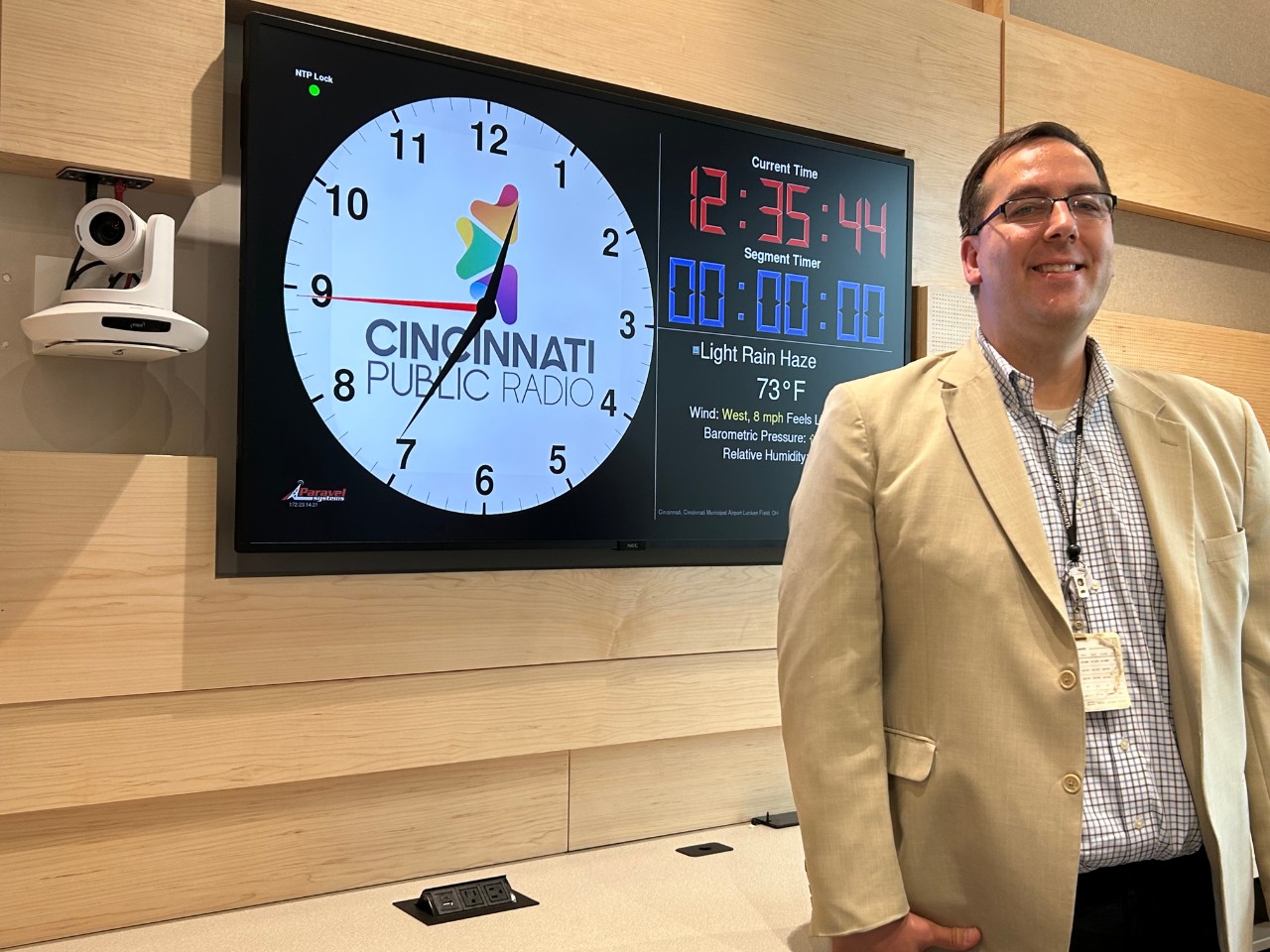
Featured image at top: Michael (Mick) Schoech, MD, inside the WVXU studios. Photo/Megan Burgasser/UC Media Relations + Content.
Related Stories
‘Designer drug’ shows early neuroprotective signal in acute ischemic stroke
October 28, 2025

Medscape highlighted new trial results led by the University of Cincinnati's Eva Mistry that found an experimental drug shows promise in protecting injured brain cells for patients with acute ischemic stroke.
UC Board votes to fund design for YMCA renovation
October 28, 2025
At its October 28, 2025 meeting, the University of Cincinnati Board of Trustees approved $5 million in funding to complete all design and pre-construction services required to renovate the interior of a former YMCA building located at 270 Calhoun Street.
Is menstrual fluid ‘the most overlooked opportunity’ in women’s health?
October 27, 2025

The Guardian recently reported that period blood has long been thought of as ‘stinky and useless’, but startups are exploring using the fluid to test for a wide range of health conditions — including endometriosis.