How Minnesota conspiracy theories took over social media
UC professor explains why politicians use misinformation

NBC News turned to a University of Cincinnati expert on conspiracy theories to explain why politicians immediately spread unfounded rumors on social media in the wake of the shootings of two Minnesota state lawmakers and their spouses.
Police on Sunday arrested suspect Vance Boelter in connection with the shootings.
Police said Boelter had a hit list of 47 politicians — all Democrats.
But prominent Republicans and social media influencers immediately alleged on social media that Boelter was a left-wing terrorist.
Elon Musk tweeted, “The far-left is murderously violent.“
U.S. Sen. Mike Lee, R-Utah, wrote on X, “This is what happens when Marxists don't get their way.“
According to NBC News: ”It’s now a pattern after tragic news events: Moments after a notable death or a crime, social media influencers accuse political rivals of guilt or complicity with little to no evidence, and when their theories turn out to be unfounded or false, neither the influencers nor the social media companies are held accountable.”
Experts said conspiracy theories like the ones about Minnesota serve two aims: to make the political opposition appear evil and to preempt claims about extremism on your own side.
“These types of conspiracy theories or disinformation campaigns — they serve political interests,” Blevins told NBC News.
Blevins studies misinformation and the way conspiracy theories take hold. He is co-author of the 2024 book “Social Media and Digital Politics: Networked Reason in an Age of Digital Emotion.” He teaches in UC's School of Public and International Affairs.
“Instead of, ‘Look how radicalized my side of the aisle has become’ — oh, no, ‘it’s their side of the aisle that is radicalized, and we don’t have to deal with this now. It’s their fault,’” he said.
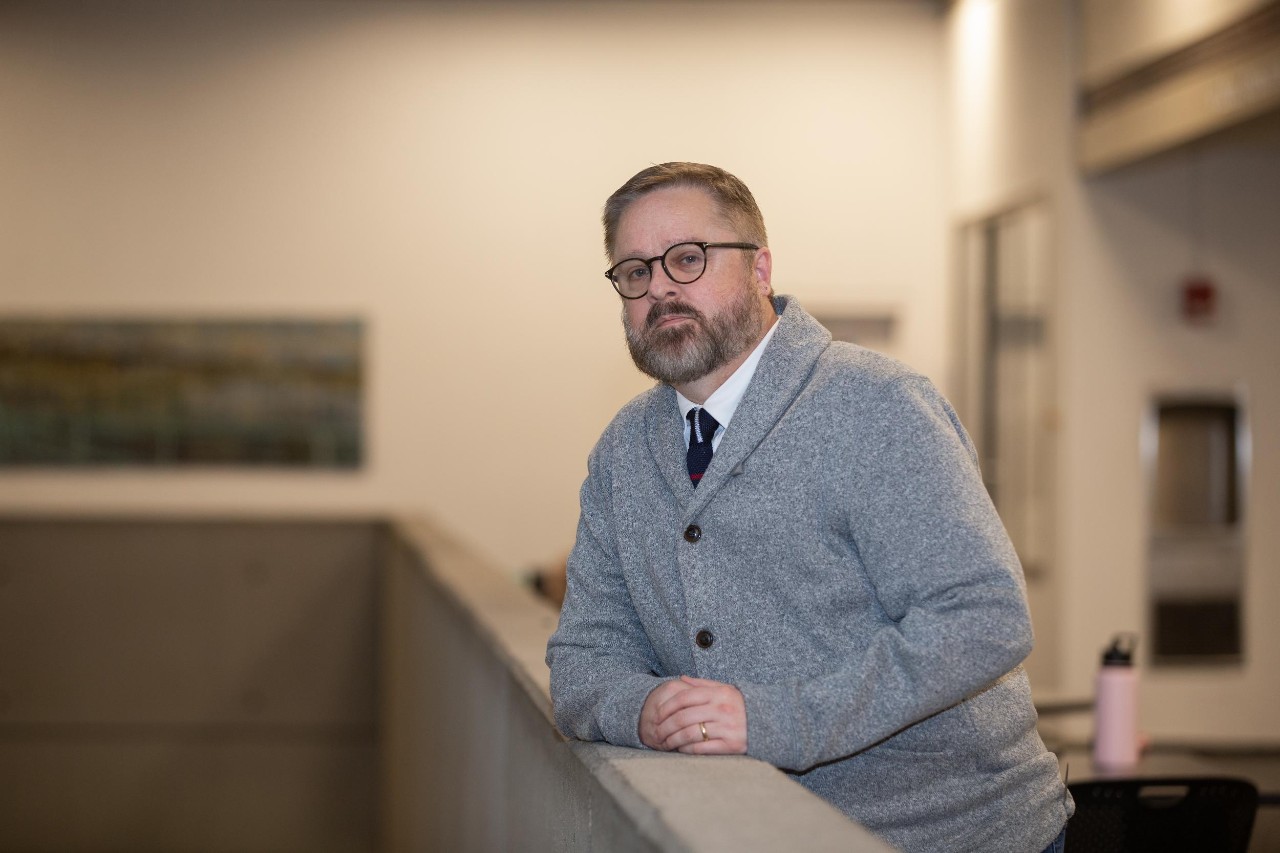
Featured image at top: UC College of Arts and Sciences Professor Jeffrey Blevins is an expert in misinformation and conspiracy theories. Photo/Andrew Higley/UC Marketing + Brand
Related Stories
‘Designer drug’ shows early neuroprotective signal in acute ischemic stroke
October 28, 2025

Medscape highlighted new trial results led by the University of Cincinnati's Eva Mistry that found an experimental drug shows promise in protecting injured brain cells for patients with acute ischemic stroke.
Is menstrual fluid ‘the most overlooked opportunity’ in women’s health?
October 27, 2025

The Guardian recently reported that period blood has long been thought of as ‘stinky and useless’, but startups are exploring using the fluid to test for a wide range of health conditions — including endometriosis.
What is squalane, and how does it work to moisturize skin?
October 27, 2025

The University of Cincinnati's Kelly Dobos was featured in a Women's Health article discussing squalane, an ingredient being increasingly used in moisturizing skincare products.