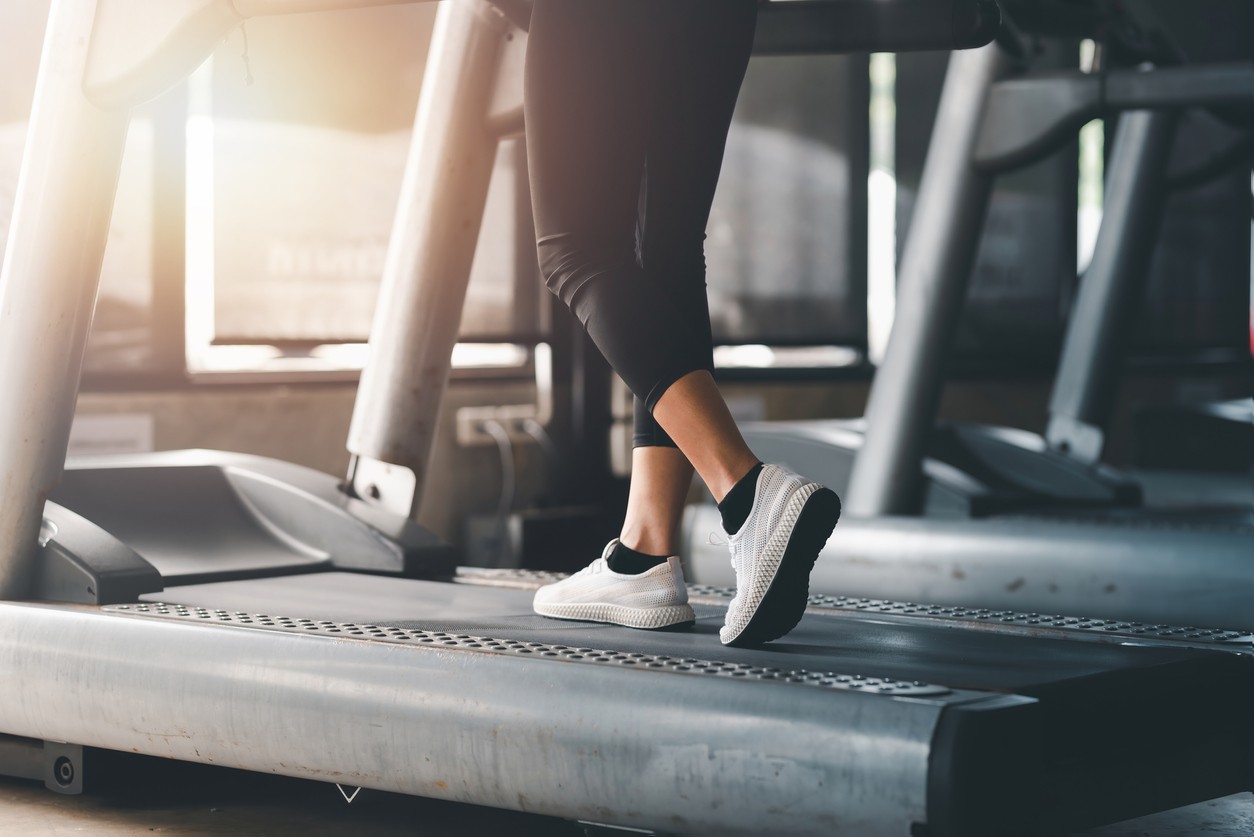
Is Japanese walking the exercise you’ve been searching for?
UC expert featured in WebMD article

The University of Cincinnati's Barbara Walker, PhD, was featured in a WebMD article discussing the benefits and science behind interval walking training, or "Japanese walking."
The Japanese walking method involves switching between slow and fast walking. You walk slowly for three minutes, then pick up the pace for three minutes, and repeat this cycle five times for a total of 30 minutes.
Research has found that Japanese walking at least four days a week can improve your aerobic fitness and lower your blood pressure.
"The Japanese walking method is also more efficient. In general, the routine takes two hours per week. That’s compared to the roughly 10 hours it takes to get the recommended 10,000 steps daily," said Walker, PhD, associate professor in UC's College of Medicine and a UC Health integrative health and performance psychologist.
Walker noted the method's other benefits can include building muscle strength and endurance, boosting your mood and improving your motivation to exercise since you have to stay engaged and pay attention to time and pace.
"The variety makes it easier to stay motivated," she said.
Featured photo at top courtesy of iStock.
Related Stories
‘Designer drug’ shows early neuroprotective signal in acute ischemic stroke
October 28, 2025

Medscape highlighted new trial results led by the University of Cincinnati's Eva Mistry that found an experimental drug shows promise in protecting injured brain cells for patients with acute ischemic stroke.
UC Board votes to fund design for YMCA renovation
October 28, 2025
At its October 28, 2025 meeting, the University of Cincinnati Board of Trustees approved $5 million in funding to complete all design and pre-construction services required to renovate the interior of a former YMCA building located at 270 Calhoun Street.
Is menstrual fluid ‘the most overlooked opportunity’ in women’s health?
October 27, 2025

The Guardian recently reported that period blood has long been thought of as ‘stinky and useless’, but startups are exploring using the fluid to test for a wide range of health conditions — including endometriosis.