Healthline: For homemade masks, 3 layers better than 1
UC biologists found homemade silk masks repelled virus better than cotton or polyester

Healthline examined a University of Cincinnati study that found that silk face masks might be a better barrier to coronavirus than those made from polyester or cotton.
UC biologist Patrick Guerra, an assistant professor in UC's College of Arts and Sciences, and UC postdoctoral researcher Adam Parlin put face masks to the test in their biology lab. They found that silk masks were the best alternative to single-use N95 respirators.
Silk masks are comfortable, breathable and repel moisture, which is a desirable trait in fighting the virus.
The study was published in the preprint server MedRxIV.
“We’re trying to address this critical problem. Healthcare workers still don’t have enough personal protective equipment, namely N95 respirators or basic surgical masks,” Guerra said. “Cotton traps moisture like a sponge. But silk is breathable. It’s thinner than cotton and dries really fast.”
According to Healthline, masks made of multiple layers of material are far more effective than single-layer masks.

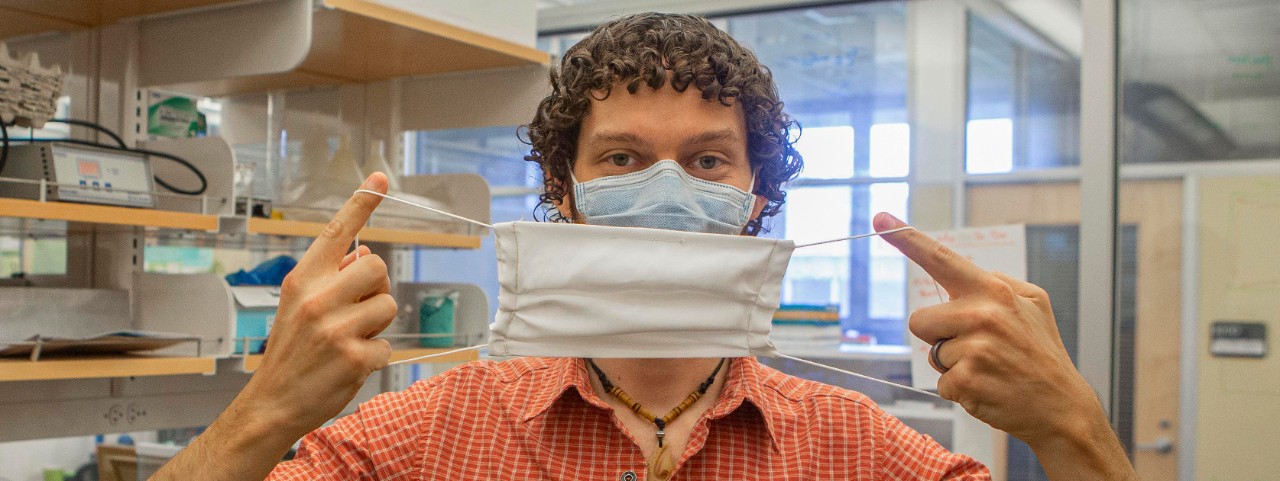
UC biologist Patrick Guerra studies the properties of silk produced by silkworms in his biology lab. Photo/Lisa Ventre/UC Creative + Brand
Impact Lives Here
The University of Cincinnati is leading public urban universities into a new era of innovation and impact. Our faculty, staff and students are saving lives, changing outcomes and bending the future in our city's direction. Next Lives Here.
Stay up on all UC's COVID-19 stories, read more #UCtheGood content, or take a UC virtual visit and begin picturing yourself at an institution that inspires incredible stories.
Related Stories
‘Designer drug’ shows early neuroprotective signal in acute ischemic stroke
October 28, 2025

Medscape highlighted new trial results led by the University of Cincinnati's Eva Mistry that found an experimental drug shows promise in protecting injured brain cells for patients with acute ischemic stroke.
Is menstrual fluid ‘the most overlooked opportunity’ in women’s health?
October 27, 2025

The Guardian recently reported that period blood has long been thought of as ‘stinky and useless’, but startups are exploring using the fluid to test for a wide range of health conditions — including endometriosis.
What is squalane, and how does it work to moisturize skin?
October 27, 2025

The University of Cincinnati's Kelly Dobos was featured in a Women's Health article discussing squalane, an ingredient being increasingly used in moisturizing skincare products.