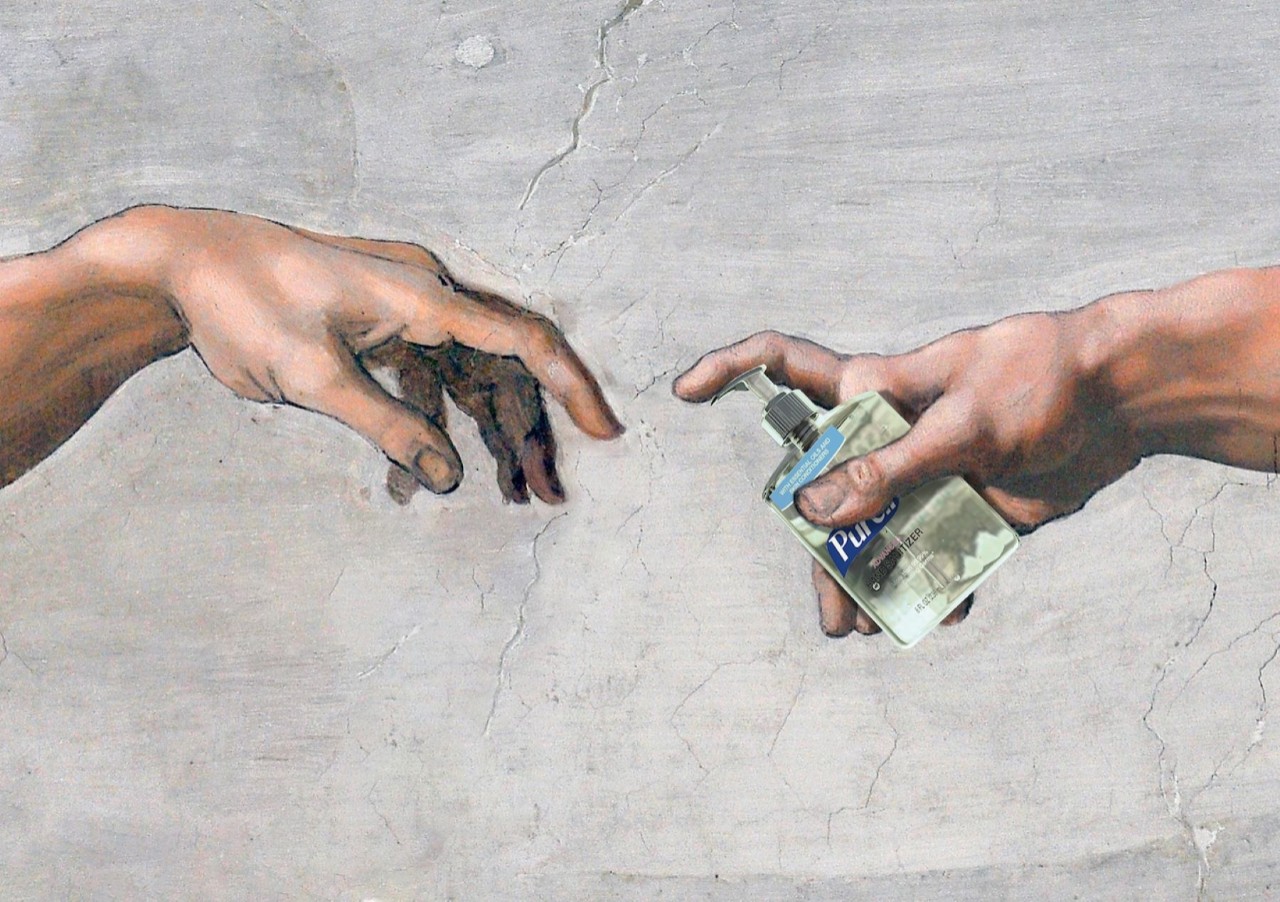
The Washington Post: The history and mystery of Purell
Use it as a supplement, or a Plan B, not as a miracle goo, say UC-affiliated experts

An article in The Washington Post describes the medical and cultural impact of hand sanitizers, predominately Purell, during the COVID-19 virus outbreak. Looking back to the late 1980s, the article explains how the company Gojo developed a clear, alcohol-based, emollient-enriched, disinfecting substance that was dispensed by a pump bottle and required no water at all.
Experts representing UC’s James L. Winkle College of Pharmacy weigh in on the efficacy and proper use of the soap and water alternative. The article quotes Pharmaceutical Sciences Alumna Kelly Dobos, a former Gojo cosmetic chemist who now sits on the college’s Board of Advisors, and Professor K.P. Ananth, director of the cosmetic sciences program at the college.
Note: Some platforms require you to disable the ad blocker.
Featured image/Pablo Delcan for The Washington Post
Related Stories
‘Designer drug’ shows early neuroprotective signal in acute ischemic stroke
October 28, 2025

Medscape highlighted new trial results led by the University of Cincinnati's Eva Mistry that found an experimental drug shows promise in protecting injured brain cells for patients with acute ischemic stroke.
Is menstrual fluid ‘the most overlooked opportunity’ in women’s health?
October 27, 2025

The Guardian recently reported that period blood has long been thought of as ‘stinky and useless’, but startups are exploring using the fluid to test for a wide range of health conditions — including endometriosis.
What is squalane, and how does it work to moisturize skin?
October 27, 2025

The University of Cincinnati's Kelly Dobos was featured in a Women's Health article discussing squalane, an ingredient being increasingly used in moisturizing skincare products.