New York Times: What to expect when a coronavirus vaccine arrives
Audiences are reliving contributions by UC's Albert Sabin as part of historical vaccine talk

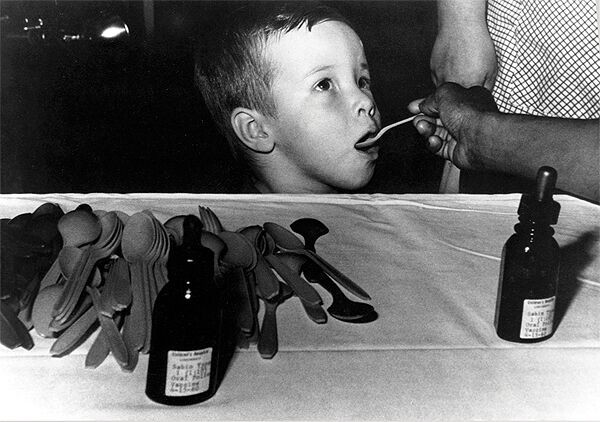
An article in today’s New York Times discusses the contributions of UC’s famed doctor Albert Sabin, who developed the live oral polio vaccine.
In 1958, “the federal government approved an oral polio vaccine, developed by Sabin’s laboratory in Cincinnati, containing weakened, not inactivated, virus,” states the article. “By the end of that year, polio infections were down 90 percent from 1955 levels. In 1979, the country recorded its last community-transmitted case.
"Today, decades into a global vaccination campaign, polio persists in just three countries. The battle against the disease has been a century-long march. And it has required a sustained commitment to continuing polio vaccination — a commitment now compromised as global polio vaccination efforts have been put on hold to slow the coronavirus’s spread."
Impact Lives Here
The University of Cincinnati is leading public urban universities into a new era of innovation and impact. Our faculty, staff and students are saving lives, changing outcomes and bending the future in our city's direction. Next Lives Here.
Stay up on all UC's COVID-19 stories, read more #UCtheGood content, or take a UC virtual visit and begin picturing yourself at an institution that inspires incredible stories.
Related Stories
‘Designer drug’ shows early neuroprotective signal in acute ischemic stroke
October 28, 2025

Medscape highlighted new trial results led by the University of Cincinnati's Eva Mistry that found an experimental drug shows promise in protecting injured brain cells for patients with acute ischemic stroke.
Is menstrual fluid ‘the most overlooked opportunity’ in women’s health?
October 27, 2025

The Guardian recently reported that period blood has long been thought of as ‘stinky and useless’, but startups are exploring using the fluid to test for a wide range of health conditions — including endometriosis.
What is squalane, and how does it work to moisturize skin?
October 27, 2025

The University of Cincinnati's Kelly Dobos was featured in a Women's Health article discussing squalane, an ingredient being increasingly used in moisturizing skincare products.